
For decades, supporters of Israel have spoken about "winning allies." The phrase is understandable, but it conceals a strategic mistake. People do not want to be recruited into someone else’s cause. They want to become authors of a common one.
This insight is particularly relevant as Israel and American Jewish organizations seek to rebuild relationships with communities whose support has weakened. Too often, outreach begins with the assumption that these communities lack information, have been misled, or need to hear better arguments. Facts matter, but political attachments are sustained as much by identity, dignity, and purpose as by evidence.
Every mature community seeks opportunities to confer recognition as well as receive it; to defend as well as be defended; and to shape the moral direction of society as well as obtain a place within it.
The African American community illustrates this dynamic particularly well.
One of the defining achievements of the civil rights movement was that it transformed a community denied equal citizenship into one of America’s foremost moral and political voices. That transformation did not end with the acquisition of rights. It produced institutions, leaders, methods of mobilization, and a political tradition that many African Americans understand as resources to be placed at the service of causes beyond their community’s immediate interests.
Angela Davis expressed this principle with unusual clarity when she argued that Black Americans have “a very deep historical responsibility to assist others who are subjugated or oppressed." One may reject many of Davis’s conclusions while still recognizing the psychological truth contained in that sentence: dignity reaches its fullest expression when a person or community becomes capable of helping others.
That aspiration helps explain the appeal of international activism. It allows African Americans to act as protagonists, teachers, organizers, defenders, and givers. Their community appears as a producer of solidarity and political knowledge, rather than merely its recipient.
Israel should understand the power of this aspiration.
The Alliance That Did Not Endure
This is especially painful because American Jews contributed immensely to the civil rights struggle.
Jewish lawyers, rabbis, students, donors, and organizations helped establish, finance, litigate, and sustain some of the movement’s most important institutions. Approximately half of the young volunteers who traveled to Mississippi for Freedom Summer in 1964 were Jewish. Andrew Goodman and Michael Schwerner were murdered alongside James Chaney while working to register Black voters.
Rabbi Abraham Joshua Heschel marched beside Martin Luther King Jr. from Selma to Montgomery. Jewish organizations supported landmark civil rights litigation and helped build national coalitions against segregation.
These were acts of genuine courage and generosity. They deserve remembrance and gratitude.
Yet the very magnitude of that contribution may sometimes tempt Jews to misunderstand how political alliances work. Historical service does not create a permanent mortgage on another community’s loyalty. A relationship cannot survive indefinitely because one party remembers what it once gave and expects the other to remember what it once received.
The traditional Black-Jewish alliance was often narrated, particularly by Jews, as a story of Jewish assistance to African Americans. However honorable that assistance was, such a narrative assigns unequal roles: one community becomes the giver, advocate, lawyer, donor, and protector; the other becomes the beneficiary.
Communities eventually resist being defined by what others did for them.
The alliance therefore required renewal on different terms. African Americans needed to be engaged as equal political agents possessing moral authority, organizational knowledge, leadership, and gifts of their own. Jewish organizations needed to create causes and institutions in which Black partners could contribute something indispensable.
Instead, too much Jewish outreach continued to ask, implicitly or explicitly: After everything Jews did for the civil rights movement, why do African Americans not support us?
The question itself reveals the problem. It appeals to a debt when the relationship should offer a vocation.
A durable alliance cannot be based on one community’s expectation of gratitude. It must give both communities the opportunity to become generous.
The Meeting I Once Dismissed
I learned this lesson slowly and, in retrospect, embarrassingly.
As an Ivy League sophomore in the late 1990s, I was asked by the director of the local Anti-Defamation League chapter to attend a pro-Palestinian event on campus, which was held on a Saturday morning.
I attended and surveyed the organizations represented there. Many spoke for people from modest socioeconomic backgrounds. They possessed little visible representation in corporate boardrooms and a negligible presence in the Fortune 500.
I scoffed.
From the hauteur of an elite university, I thought Palestinian Arab activism was a joke. What political force could emerge from a collection of small community associations, religious congregations, immigrant organizations, campus activists, and local groups lacking access to the commanding heights of American decision-making?
I understood power vertically. I saw prestige, money, professional status, and proximity to influential decision-makers. I failed to recognize the power being accumulated horizontally.
The pro-PLO and pro-Hamas activists in that room were building relationships patiently: campus by campus, neighborhood by neighborhood, county by county, congregation by congregation, and parish by parish. They were giving groups with little direct connection to the Middle East an opportunity to participate in a morally significant struggle. They offered them responsibilities, language, leadership roles, and a place within a common political story.
Decades of that work have paid off extraordinarily well.
I was looking for executives. They were cultivating citizens.
I was counting Fortune 500 leaders. They were building networks capable of shaping how millions of voters, students, clergy, union members, teachers, and local organizers interpret the conflict.
Whatever one thinks of the ideas they disseminated-and what has been disseminated about Israel is distorted, dishonest, or openly hostile-their organizing method deserves serious study. They understood that people become committed to a cause when they are trusted to carry it, adapt it, and make it partly their own.
The Limits of Elite Advocacy
Much of establishment Jewish advocacy followed the opposite model.
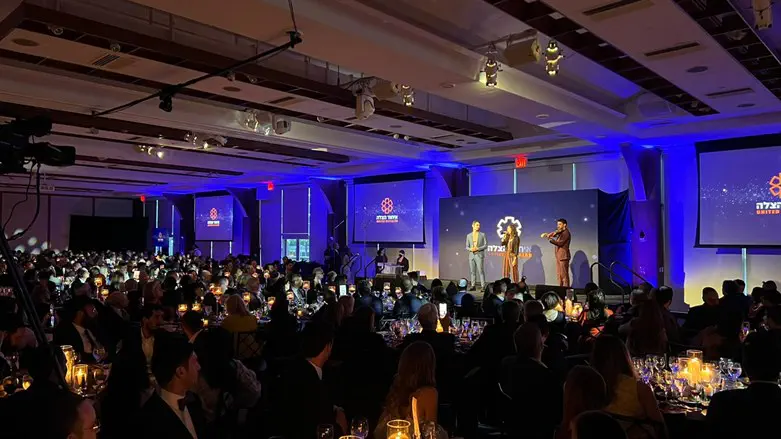
It developed exceptional access to political leaders, wealthy donors, journalists, university administrators, diplomats, and corporate executives. It held prestigious conferences and elegant galas. It assembled rooms filled with accomplished people and mistook access to elites for lasting democratic power.
Such access does have real value. Israel needs relationships with presidents, governors, business leaders, philanthropists, and university officials. But influence at the top cannot substitute for sympathy at the base.
An elite ADL gala may gather more wealth, education, and institutional prestige in one ballroom than a grassroots coalition possesses across an entire state. Yet the grassroots coalition may have a more sustainable political future.
In a democracy, voters ultimately decide. Legislators respond to constituencies. Party platforms change when organizers capture local committees, unions, congregations, campuses, and civic associations. Public language changes when thousands of ordinary people repeat ideas that were once confined to marginal meetings.
The prince opened his palace to Jewish notables. The local paritz-the powerful patron upon whom vulnerable Jewish communities once depended-could ensure their protection. But democratic societies are not governed by the goodwill of aristocrats. They are governed through citizens, institutions, elections, and organized public sentiment.
Jews learned to navigate courts and palaces because Jewish history required it. Diaspora Jews became extraordinarily skilled at persuading people with power. But the Jewish community has been less consistent in making ordinary people feel that they possess something valuable to contribute to our common cause. They have not put their energies there.
A gala tells participants that they are supporters.
A movement tells participants that they are protagonists.
From Audiences to Co-Authors
The strategic question should therefore cease to be: "How do we persuade African Americans to support Israel?"
The better question is: "What can Jewish and African American communities build together that neither could build alone?"
That project cannot consist merely of inviting Black leaders to defend Israel against libels. Nor can it be limited to explaining Israeli history more effectively. Education is necessary, but an audience remains an audience even after it has been educated.
Partnership requires shared authorship.
African American educators, clergy, entrepreneurs, jurists, neighborhood leaders, artists, and civic organizations should be invited to design and lead initiatives whose value extends beyond defending Israel: combating religious and racial hatred, strengthening vulnerable families, supporting minority-owned businesses, protecting houses of worship, developing educational technology, mentoring disadvantaged young people, improving emergency preparedness, and building partnerships between Israeli and American communities.
In such relationships, African Americans would not serve as validators summoned when Israel is under attack or as props in a Tikkun Olam performance. They would become indispensable partners whose experience, institutions, networks, and judgment shape the undertaking from its inception.
This principle applies far beyond Black-Jewish relations. Hispanic Americans, Asian Americans, Native Americans, Armenians, Indians, Africans, Christians, Muslims, Kurds, Druze, and many other communities possess memories, capacities, and ambitions that cannot be reduced to seconding Jewish social idealism or serving as demographic targets in a public relations strategy.
People do not want merely to appear in coalition photographs. They want to know what would be missing if they were absent.
Generosity Must Flow in Both Directions
Genuine relationships are built through reciprocal generosity. This does not require equal wealth, identical histories, or agreement on every political question. It requires each side to possess something the other respects and needs.
The Jewish community has immense gifts to offer: institutional memory, educational traditions, legal expertise, philanthropy, entrepreneurship, international networks, and the accumulated experience of maintaining solidarity across geographic distance.
The African American community also has immense gifts to offer: religious and rhetorical traditions, cultural reach, organizing experience, civic legitimacy, political creativity, and a profound capacity to translate moral claims into the language of American democracy.
A renewed alliance should allow both communities to give these gifts freely.
This would not guarantee agreement over Israel. Equal partners sometimes disagree sharply. But disagreement within a relationship of reciprocal contribution is fundamentally different from hostility between strangers or resentment between a supposed benefactor and an alleged beneficiary.
Israel’s adversaries have understood something that many of its friends have overlooked: solidarity is strongest when it offers people a protagonistic identity. Their activists tell each new constituency, in effect: “You possess knowledge, experience, and moral power that this struggle needs."
The pro-Israel message has too often been: “Here are the facts that you don’t know. Once you know them, you will support us."
One summons a partner. The other instructs an audience.
Israel and the Jewish world must learn to summon partners.
The strongest friendships are rarely built by asking others to stand behind us. They are built by creating opportunities for others to stand at our side, contributing their experience, talents, and convictions to a common purpose.
People remember those who helped them.
But they usually become even more deeply attached to those who appreciated them enough to accept their help.
That is the difference between an alliance commemorated in faded photographs and a living partnership capable of enduring for generations.
Rafael Castro is a Yale- and Hebrew University-educated independent political analyst. An Italian Noahide, Rafael can be reached at rafaelcastro78@gmail.com