
The sheer lunacy of European anti-Semitism was on full display earlier this month, when Ireland refused to enter into a defense contract with the Israeli defense firm Elbit Systems to incorporate Elbit’s FalconEye system, which allows for safer landing in low visibility weather, into new Irish government jets. Ireland did not object, however, to the purchase of new helicopters and a maritime patrol aircraft - which include equipment manufactured by Elbit and other Israeli companies - but only to the incorporation of the FalconEye system, as it was the FalconEye system that would require signing a defense contract with Elbit.
It is difficult for rational minds to fathom the state of affairs that would cause a European country to choose to prioritize the hatred of the Jewish State over the safety of its own government officials. Yet Israel up until now has allowed Europe to have its cake and eat it too - Ireland can choose what parts of an Israeli plane to purchase, while allowing political considerations to dictate the bounds of the transaction. European countries can fund illegal Arab construction in Area C (an area of Judea and Samaria allocated to Israel’s civil and security control under the Oslo Accords), while still purchasing products from Israel, including Judea and Samaria, but at the same time labeling, or threatening to ban entirely, products from Judea and Samaria on its grocery shelves.
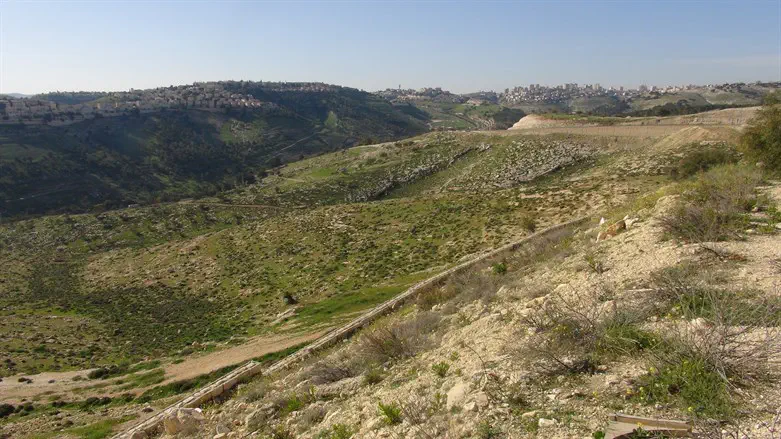
And Europe can obsess over the notion that Israeli construction in the E1 area - an approximately 4.5 mile zone between Jerusalem and Ma’ale Adumim - thwarts a two-state solution, while ignoring the decades of Arab terrorist attacks against Jews in Jerusalem that the E1 construction is designed to prevent.
In spite of, or perhaps because of, the unchecked anti-Semitism currently permeating European society - which European officials claim they will address but which they cannot fix because they themselves are anti-Semitic - Israel is continuing to expand its diplomatic, economic and military alliances, including in Latin America, India, and Somaliland. Israel is therefore no longer in the position of having to passively accept Europe’s two-faced approach to the Jewish State.
As Europe threatens Israel with sanctions, including the labeling of all Israeli products, in response to Israel’s plans to finally begin construction in the E1 zone, Israel must inform Europe that it will take proactive measures should Europe follow through with its threats.
Israel should consider the following concrete actions against Europe if it imposes E1 sanctions against Israel:
1) Limit intelligence sharing: In recent years, Israeli intelligence has played a vital role in preventing mass-casualty terrorist attacks by ISIS, Hamas, and Iran-backed terrorist groups in Europe. In an incredible display of irony, Europe strengthens its security by relying on Israeli intelligence, while simultaneously threatening punitive action against Israel for taking measures to strengthen its own security through building in the E1 area.
Without risking harm to the Jewish communities in Europe, Israel must threaten a concrete reduction in intelligence sharing with Europe if Europe continues down the path of jeopardizing Israel’s safety.
2) Reevaluate offensive and defensive arms deals: Israel’s sales of weapons, both offensive and defensive, have skyrocketed in recent years, surpassing $19 billion in 2025, even while European countries cancel arms deals with Israel and prevent Israel from attending defense exhibitions - all while still quietly purchasing arms from Israel (Europe remains Israel’s largest purchaser of defense exports). In response to Europe’s behavior, Israel has already taken certain steps, including blocking defense acquisitions from France.
Israel must now consider limiting Europe’s ability to acquire weapons from Israel, thereby flipping the script - Europe can no longer decide when it is in Europe’s interest to buy Israeli weapons and equipment, and when it better suits Europe politically to criticize Israel and performatively ban Israel from entering into weapons deals and attending defense exhibits. Israel must now decide what deals are in Israel’s interest to agree to, such as the series of Arrow 3 defense deals with Germany worth over $6 billion, and what deals with Europe are better to forgo in favor of more friendly partners, including in the Asia-Pacific region where Israel’s weapons sales almost doubled between 2024 and 2025.
3) Reduce natural gas exports: With Europe struggling to phase out Russian gas following a January 2026 EU regulation to end Russian gas imports by the end of 2027, and with the ongoing Iran conflict increasing oil prices, Europe will become increasingly reliant on new energy sources in the years to come, particularly from the eastern Mediterranean. In 2022, Israel, Egypt, and the European Union signed a memorandum of understanding for the transfer of natural gas from Israel’s offshore gas fields to Egypt, where Egypt processes the natural gas into liquified natural gas for shipment to Europe. However, in part due to Egypt's own energy needs, actual shipments of liquified natural gas from Egypt to Europe have been limited, and additional sources of natural gas, such as the underwater pipeline that Cyprus is building to transfer natural gas from a gas field off the coast of Cyprus to Egypt, will take years to complete.
Israel is therefore in a position to significantly impact Europe’s energy supply in the coming years. If Europe makes good on its threat to label all Israeli products or pursue other economic sanctions against Israel, Israel must decide whether it is in Israel’s economic interest to reserve its natural gas supply for less hostile countries.
4) Actively enforce against European-funded construction in Area C: Europe is proudly funding the construction of illegal Arab structures in Area C of Judea and Samaria, including with signage openly displaying “Funded by: the European Union". Israel has for too long tolerated this unacceptable intervention by Europe in Judea and Samaria which threatens Israel's security, particularly in the Jerusalem area near the E1 zone. If Europe begins to sanction Israel due to Israel’s E1 construction, Israel must systematically work to dismantle the illegal European-funded structures that Israel considers to be a security threat, while also sanctioning the Palestinian Authority for working with Europe to support this illegal construction.
By implementing the measures outlined in this article, Israel can show Europe that playing politics with Israel’s security is not acceptable, and that sanctioning the Jewish State for taking measures to protect itself will negatively impact Europe’s own security and economy - in other words, an eye for an eye.
The writer is a Jewish American attorney and a proud Zionist and Israeli activist. His real name is known to the editors.