

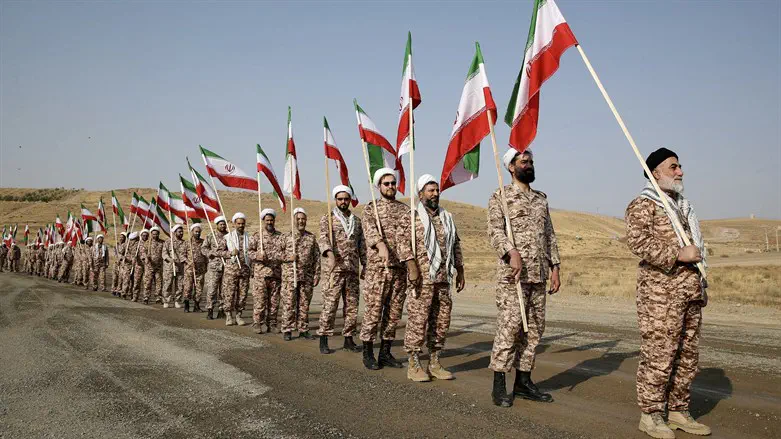
The Trump administration used Iraqi Kurdistan President Nechirvan Barzani as a backchannel to Iran's Islamic Revolutionary Guard Corps (IRGC) during efforts to negotiate an end to the war, according to an Axios report.
According to the report, the unusual channel was opened after US officials became concerned that Iranian negotiators were not empowered to reach an agreement and that key decisions were instead being made by the IRGC.
Around May 10, then-Director of National Intelligence Tulsi Gabbard contacted Barzani and asked him to determine whether IRGC Commander Gen. Ahmad Vahidi supported the negotiations being conducted by Iranian Parliament Speaker Mohammad Bagher Ghalibaf and Foreign Minister Abbas Araghchi.
Barzani was chosen because of his relationships with both Washington and senior Iranian officials. He lived in Iran during the Iran-Iraq war, studied at the University of Tehran, and speaks Farsi.
According to three sources cited by Axios, Barzani subsequently contacted the IRGC and requested a direct conversation with Vahidi. On May 14, an IRGC official arrived at Barzani's office in Erbil with an encrypted phone for a secure call.
During the conversation, Barzani asked Vahidi whether he supported the Iranian negotiators. Vahidi responded that he did and said the IRGC favored resolving the crisis through negotiations, according to a source familiar with the exchange.
Barzani then briefed Gabbard, who conveyed the Iranian response to the White House.
The Trump administration subsequently proposed holding secret US-Iran talks in Erbil, with Barzani hosting the negotiations. Iranian officials did not reject the proposal outright but expressed concerns about their security, including fears that Israeli intelligence could target them in Iraqi Kurdistan or during their travel.
The proposed Erbil meeting ultimately did not take place.
The backchannel effort came as the war had significantly altered Iran's internal power structure. The killing of Supreme Leader Ali Khamenei and other senior officials, followed by weeks of fighting, strengthened the IRGC's influence over national security and foreign policy. Questions surrounding the condition and public absence of new Supreme Leader Mojtaba Khamenei also contributed to the uncertainty over who held authority in Tehran.
The US and Iran eventually reached a memorandum of understanding, but the arrangement quickly collapsed.
Pakistani and Qatari mediators continue to exchange messages between Washington and Tehran, although regional sources cited in the report said there has been no significant progress.
Barzani has more recently sent messages to the White House offering to assist in restarting US-Iran negotiations, according to a source familiar with the matter.