

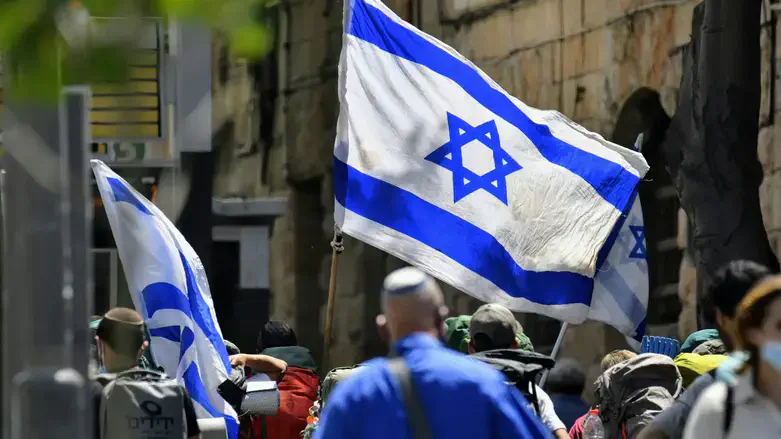
There's a particular kind of tired that hits around day four. Not the jet lag - though that's still very much in your system - but the accumulated weight of forms, appointments, and the slow realization that the phone plan you set up at home doesn't actually work the way you assumed it would. If you made aliyah this summer, or you're about to, you already know this feeling. Nobody warns you about day four.
The good news, if it counts as good news this early, is that almost everyone goes through some version of it, and most of it resolves faster than it feels in the moment. The first month in Israel isn't one big adjustment. It's a dozen small ones, stacked on top of each other - banking, healthcare, Hebrew, heat, the occasional wave of homesickness - sometimes all arriving in the same afternoon.
Money First, Everything Else Waits
Start with the bank account, because almost everything else downstream depends on it. Misrad Haklita hands you your first Sal Klita payment in cash at Ben Gurion, which feels almost old-fashioned, but the rest arrives by wire transfer - and that requires an account already set up with your actual teudat oleh details loaded in, not a placeholder you plan to fix later. Israeli banks are not famous for moving quickly. Bring a folder of physical documents, not a phone full of half-organized PDFs, and expect at least one trip back for something you didn't know you'd need.
Pick a kupat cholim [health services provider] while you're at it, even if healthcare feels like the last thing on your mind. Coverage kicks in fast once you're registered, but the four funds aren't identical - they differ in clinic locations, specialist wait times, and how much English you'll get at the front desk, which matters more than people expect in month one. Ask around before you default to whichever one your absorption coordinator mentions first.
Digital Life Doesn't Move as Smoothly
Here's something nobody mentions in the official briefings: your digital habits don't transition as cleanly as your physical ones do. Streaming platforms notice the new IP address almost immediately. US banking apps sometimes flag the login as suspicious activity from an unfamiliar country. A fair number of recent arrivals quietly get a trusted VPN client for Windows, i.e., download it, and run it in the background during that first week or two, mostly just to keep familiar logins and subscriptions behaving the way they expect while everything else settles. Nothing dramatic about it. Just one more small fix in a season already full of them.
The Heat Has Its Own Logic
Then there's the heat, which deserves its own paragraph and possibly its own warning label. July and August here don't behave like summer anywhere most North American olim have lived. It settles in by mid-morning and doesn't really lift until well after dark, and fighting it - scheduling your day the way you would back home, expecting an afternoon to function normally - is a losing game. Locals plan around it instinctively: errands before nine, an actual midday slowdown, dinner once the sun's gone down enough to sit outside without melting. You'll pick up the rhythm faster than you think. The first couple of weeks of resisting it are genuinely rough, though.
You're also not going through this alone, even on the mornings it feels that way. This is one of the busiest stretches of the year for aliyah, and the flights keep coming - dozens of new olim from North America have been landing steadily through these summer months, many heading toward the same handful of cities and neighborhoods you're probably weighing right now. There's a strange comfort in that, even if you never actually meet most of them.
Finding Your People
Ulpan helps more than people expect, and not just with grammar. For a lot of new olim it's the first place they build a social circle that isn't family, mostly because everyone in the room is equally lost on day one, and there's something bonding about that.
If you land somewhere with a strong Anglo presence - Ra'anana, Modi'in, Beit Shemesh, a handful of Jerusalem neighborhoods - you'll likely find WhatsApp groups for your street, your shul, your kids' school, sometimes all three, often before you've finished unpacking the second box.
Don't underestimate the small, unglamorous version of community either - the neighbor who shows you where the good produce stand is, the woman from shul who explains how the building's vaad bayit actually works. Nobody puts that in a welcome packet, but it ends up mattering more than half of what does.
Words That Don't Quite Translate
Language catches people off guard, surprising even those who studied hard before arriving. You can show up with solid vocabulary and still feel completely lost mid-conversation because tone, bureaucratic phrasing, and the unspoken rules of how things are actually said here don't live in any textbook. One new immigrant captured this better than most official guides manage, in a Times of Israel piece called “A Letter to New Olim" - worth reading less for tips than for the reminder that feeling unmoored for a while isn't evidence you're doing something wrong.
A few mistakes show up again and again, regardless of background or how prepared people thought they were going in:
- Trying to clear every bureaucratic errand in a single day, then burning out by week two
- Skipping Ulpan because work feels more urgent, and regretting it by October
- Measuring their own pace against someone else's aliyah story on social media, which is rarely a fair comparison and occasionally just discouraging
None of these is a fatal mistake. They just make the summer harder than it has to be.
By September, most of this settles into something closer to background noise than crisis management. The bank account behaves the way it's supposed to. The heat has taught you its logic, even if you never quite love it. You probably know three or four neighbors by name, maybe more, and at least one of them has already fed you dinner without being asked twice. None of that erases how strange the first few weeks felt. It just means that strange eventually turns into normal, which might be the most honest thing anyone can promise a new oleh.