

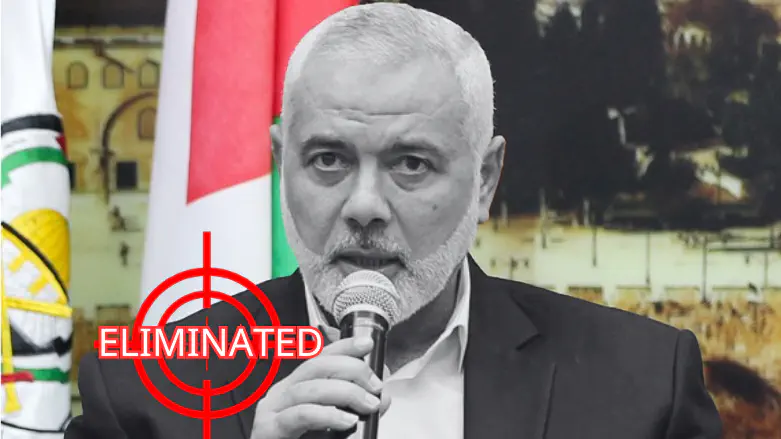
The Man Israel Did Not Kill
The first mystery surrounding Ismail Haniyeh is not how he died. It is how long he remained alive.
Israel killed Hamas founder Sheikh Ahmed Yassin in Gaza on March 22, 2004. Yassin was a quadriplegic, nearly blind, and moved in a wheelchair. None of that prevented Israel from locating him as he left morning prayers and firing missiles at him.
Twenty-six days later, Israel killed Yassin’s successor, Abdel Aziz al-Rantisi, by striking his car in Gaza.
In November 2012, Israel killed Ahmed Jabari, the commander of Hamas’s military wing, by striking the vehicle in which he was traveling.
Israel has killed Hamas operatives in their homes, cars, offices and hotel rooms. It reached Mahmoud al-Mabhouh in a Dubai hotel in 2010. It reached Hamas deputy leader Saleh al-Arouri in Beirut in January 2024. Israel’s record establishes that neither borders, diplomatic consequences nor elaborate security arrangements necessarily protected a Hamas leader whom Israel had decided to eliminate.
Yet for years, Haniyeh remained untouched. He was not an obscure bureaucrat. He became Palestinian Authority prime minister after Hamas won the 2006 legislative election. After Hamas seized control of Gaza in 2007, he became the political head of the government ruling the territory.
He lived in Gaza during repeated confrontations with Israel. He was there during the 2008-2009 Gaza war. He was there during the 2012 war. He was there during the 2014 war. Israel knew where he lived. In July 2014, an Israeli strike destroyed his house in the Shati refugee camp.
Israel could destroy Haniyeh’s home. It did not kill Haniyeh.
He remained in Gaza until late 2019, when he left on an international tour and eventually established himself primarily in Qatar. He then traveled among Qatar, Turkey, Egypt, Lebanon and Iran as Hamas’s most recognizable international political leader.
For years, therefore, Haniyeh passed through two distinct periods of exposure.
First, he lived inside Gaza, where Israeli aircraft, surveillance systems and intelligence networks repeatedly identified and killed senior Hamas commanders. Then he lived abroad and traveled openly through countries in which Israeli intelligence had demonstrated both reach and patience. Still, he survived.
Then came October 7.
Less than ten months later, Israel reached him inside Tehran.
The question driving this investigation is therefore simple:
What changed?
Perhaps Haniyeh had once been more valuable alive than dead.
And perhaps after October 7, the reason for keeping him alive became the reason he had to be killed. And killed in such a dramatic fashion.
Exhibit One: The Family Bridge into Israel
Haniyeh was not completely sealed off from Israel. Three of his sisters married members of Israel’s Bedouin community and lived in Tel Sheva in southern Israel. They possessed Israeli identification and the legal rights that accompanied it. One of those sisters, Sabah al-Salem Haniyeh, remained an Israeli resident for decades.
Consider what that meant from an intelligence perspective.
The head of Hamas had sisters living under Israeli jurisdiction. Their homes could be observed legally. Their telephone contacts could be mapped. Their travel could be recorded. Their financial relationships could be examined. Their relatives, neighbors, physicians, employers and associates existed inside an environment saturated with Israeli security capabilities.
An intelligence service searching for a path to Haniyeh would not have needed to invent one. The path already existed. A clandestine relationship does not necessarily begin with a Mossad officer introducing himself and requesting treason. It may begin with a relative’s difficulty, a permit, an interrogation, a favor, a warning, or an offer of protection.
The family connection created repeated opportunities for Israeli officials to learn what Haniyeh feared, whom he trusted, what his family needed and which intermediaries could reach him without attracting attention.
This was not one accidental contact. It was a permanent human bridge.
Exhibit Two: The Medical Favors
The family connection was accompanied by a remarkable series of medical interactions.
In November 2013, Haniyeh’s infant granddaughter was transferred from Gaza for treatment in an Israeli hospital.
In June 2014, his mother-in-law received cancer treatment in a Jerusalem hospital.
Only months later, shortly after the 50-day Gaza war of 2014, one of Haniyeh’s daughters was quietly admitted for emergency treatment at Ichilov Hospital in Tel Aviv after complications from a medical procedure in Gaza. Her hospitalization reportedly lasted approximately one week. This sequence is striking.
During the summer of 2014, Hamas fired thousands of rockets toward Israel. Israeli forces fought Hamas in Gaza. Haniyeh’s own house was destroyed. Yet when his daughter required urgent medical care, she entered Israel and was treated in the center of Tel Aviv.
Years later, the pattern continued. In 2024, one of Haniyeh’s Israeli sisters gave birth prematurely at Soroka Medical Center in Beersheba, where the baby received intensive treatment. Reports also identified additional relatives who had entered Israel for medical care.
Humanitarian treatment is entirely consistent with Israeli medical ethics. But a prosecutor examining a possible intelligence relationship would ask a different question:
Could Israeli intelligence have failed to recognize the extraordinary access these events provided?
A sick child creates urgency. Urgency creates dependency. Dependency creates communication. Communication creates an opportunity to request a favor in return. The patient may know nothing. The physicians may know nothing. Most family members may know nothing.
But somewhere between Gaza authorities, Israeli crossing officials, hospital administrators, security screening, transportation and approval, a channel necessarily existed.
A senior Hamas leader repeatedly entrusted people closest to him to systems controlled by Israel. That does not prove recruitment. It describes the ideal conditions for it.
Exhibit Three: Haniyeh’s Position Was Perfect
A useful source does not need to command fighters. He needs access to decisions.
Haniyeh sat near the top of Hamas for years. He understood the organization’s finances, political strategy, foreign patrons, internal rivalries and relations with Iran, Qatar, Turkey and Egypt.
After becoming head of Hamas’s political bureau in 2017, he was able to speak with foreign governments while maintaining authority within the movement. His information could answer questions no drone or listening device could answer reliably:
Was Hamas preparing for war or merely threatening one?
Was Yahya Sinwar bluffing?
Would Hamas accept another Qatari payment?
Did it fear losing work permits for Gazans?
Was it primarily concerned with preserving its government?
Could economic incentives keep the border quiet?
These were questions about intention.
Israel could observe Hamas training. It could count rockets. It could intercept communications. It could photograph tunnels. But none of those systems could look inside the minds of the leadership.
Haniyeh appeared able to do exactly that. If he became a source, he could have been one of the most valuable sources Israel ever possessed.
Exhibit Four: The Evidence Israel Saw-and Dismissed
Before October 7, Israel did not suffer from a complete absence of warning.
Israeli intelligence reportedly possessed a Hamas attack document known as “Jericho Wall" more than a year before the assault. The plan described a massive rocket barrage, drones disabling border surveillance, fighters breaching the barrier, and armed men entering Israel by motorcycle, on foot and by paraglider.
That was not a vague threat. It closely resembled what Hamas eventually did.
In July 2023, an Israeli intelligence analyst reportedly warned that Hamas training exercises matched elements of the plan. Her warning was dismissed.
Female surveillance soldiers stationed along the Gaza border repeatedly reported Hamas fighters approaching the fence, studying Israeli positions, practicing attacks and behaving in ways that appeared increasingly abnormal. Their observations were also discounted.
The "conceptzia" survived: Hamas was deterred. Hamas wanted money. Hamas wanted work permits. Hamas wanted to govern Gaza. Hamas did not want a war that could destroy its rule.
In the early hours of October 7, Israeli officials detected additional unusual activity, including Hamas operatives activating Israeli SIM cards. Senior officers met at approximately 3 a.m. Yet Israel did not place the ground forces along the border on the alert required to repel a mass invasion.
At 6:30 a.m., Hamas attacked through dozens of routes. These were not isolated scraps lost in a filing cabinet. They formed a visible pattern.
The important question is not merely why Israel failed to collect the truth. It had collected much of it. The question is why Israeli intelligence trusted its interpretation of Hamas’s intentions more than it trusted what Hamas was visibly doing.
A trusted human source at the top of Hamas could explain that confidence. He could tell Israel:
Yes, the exercises are real, but they are intended to strengthen Hamas’s bargaining position.
Yes, the plan exists, but it is aspirational.
Yes, Sinwar speaks about war, but he knows that war would destroy everything Hamas has built.
Yes, Hamas is preparing, but preparation does not mean intention.
The source would not need to conceal the evidence. He would only need to explain it away.
Exhibit Five: How a Double Agent Builds the Trap
A successful double agent does not begin with the decisive lie. He begins with years of truth.
Suppose Haniyeh was a double agent. Suppose he warned Israel about internal disputes. Suppose he accurately described Iran’s financial support. Suppose he disclosed the positions Hamas would take in negotiations. Suppose he provided names, travel plans, organizational changes or political developments that Israel could independently verify. Each correct report would increase his credibility.
Eventually, Israeli analysts might stop asking whether Haniyeh was truthful and begin asking what Haniyeh’s information meant. That is when the relationship would become dangerous. Once a source is considered reliable, contradictory evidence may be brought back to him for interpretation.
Why is Hamas training to overrun Israeli communities? It is psychological warfare.
Why are fighters practicing attacks against military bases? They are preparing for a future that Hamas knows has not yet arrived.
Why is Hamas mapping Israeli communities? Every resistance organization develops contingency plans.
Why are border observers seeing increasingly aggressive activity? Local commanders are acting dramatically to impress their superiors.
Each answer is plausible. Together, they become fatal. A double agent’s greatest achievement is not making his handlers blind. It is persuading them to distrust their own eyes.
Exhibit Six: Was Haniyeh Kept Outside the Final Circle, or Was He the Head of the Snake?
The October 7 attack was compartmentalized with extraordinary discipline.
Thousands participated in the assault, but knowledge of the complete plan appears to have remained within a far smaller leadership circle. That structure becomes particularly meaningful under the double-agent hypothesis. If Sinwar or Mohammed Deif suspected that Haniyeh had contact with Israel, they did not necessarily need to expose or execute him. That would alert Israel immediately. It would tell Israeli intelligence that a channel had been compromised.
A more sophisticated strategy would leave him in place. Haniyeh could continue speaking with foreign governments. He could continue representing Hamas. He could continue providing information his handlers found valuable. He could continue assuring them that Hamas was not seeking an existential confrontation.
Meanwhile, the details that could expose the attack would remain with Sinwar, Deif and a narrow operational circle inside Gaza.
A more convincing theory supports a hypothesis that Haniyeh may have knowingly joined the deception. He may have been confronted and turned. Or he simply decided to exact his ideological path and root for the destruction of Israel.
His value to Hamas’s ideology would lie in the confidence Israel placed in him.
Exhibit Seven: The Calculation Reverses
For years, Israel did not kill Haniyeh. After October 7, that changed.
Israel’s response cannot be understood only as anger directed against Hamas generally. Israel began hunting the organization’s leaders systematically.
But Haniyeh’s case was different. He was not hiding in Gaza with the hostages. He was not commanding battalions. He was not directing battlefield operations. He lived abroad and participated in negotiations conducted through Qatar and Egypt.
Killing him could complicate hostage negotiations, provoke Iran, damage relations with Qatar, and accelerate regional escalation.
Nevertheless, Israel chose to reach him during a visit to Tehran. Under the hypothesis, the reversal is easy to understand.
Before October 7, Haniyeh’s seeming and real intelligence value protected him.
After October 7, Israel reviewed the reports, warnings and assumptions that preceded the massacre. The Mossad might have concluded that it had been duped.
Investigators would have compared what sources had said with what Hamas actually done. They would have identified who had reassured them. They would have examined which assessments arrived when contradictory warnings were accumulating. They would have reconstructed how the conception survived.
If that reconstruction pointed toward Haniyeh, he would cease to be a failed source. He would become the man who had turned Israel’s trust against it.
An ordinary Hamas leader helped wage war against Israel. A rogue Israeli asset may have convinced Israel to leave its own border undefended.
Exhibit Eight: Why Tehran?
Haniyeh was killed on July 31, 2024, after attending the inauguration of Iran’s new president. He was a guest of the Iranian regime. He was staying at a protected location in the Iranian capital.
Yet the people responsible for his death knew where he would sleep and possessed the operational ability to reach him there. The location transformed the assassination into a message.
Iran had financed Hamas. Iran had armed Hamas. Iran presented itself as the protector of the “axis of resistance." Haniyeh stood in Tehran as an honored ally. Then Israel killed him under Iran’s protection.
If he had once worked with Israeli intelligence and later betrayed it, the message could not have been more personal:
You may travel with guards. You may hide behind governments. You may stand beside presidents. You may believe that your former handlers will never expose what once connected you. But Israel has reconstructed the deception.
And Israel has closed the account.
One more clue that strengthens this thinking is Israel’s treatment of Haniyeh’s family. If one accepts the working hypothesis that Haniyeh consciously participated in Hamas's strategic deception, then the motive for his assassination extends beyond removing a senior Hamas leader. In this reconstruction, Israel's objective was not simply retribution for October 7, but revenge against a man who had allegedly transformed years of accumulated trust into a weapon. Under that hypothesis, Haniyeh's perceived offense was not merely helping plan an attack. It was helping convince Israel that the attack would never come. Such a betrayal, if Israeli investigators came to believe it had occurred, would occupy a unique place in the history of Israeli intelligence. The assassination in Tehran would therefore carry symbolic as well as operational significance: the public settling of an intelligence account.
Under this hypothesis, investigators would naturally reexamine Haniyeh's entire network of family relationships and long-standing points of contact. Any change in how Israeli authorities interacted with relatives, permissions, or other channels would become analytically interesting.
There are three developments that stand out.
1. His sister was arrested (the strongest clue)
For many years, Haniyeh's sisters lived in Israel with little public friction despite their close relationship to one of Israel's principal enemies.
Then, after October 7, everything changed.
In April 2024, Israeli police arrested his sister Sabah Haniyeh. She was later indicted for incitement and support for Hamas based on messages allegedly praising the October 7 attack.
2. The humanitarian pattern largely disappeared
Before October 7 there was a long sequence of reports involving treatment of relatives:
- sister and husband receiving cardiac treatment,
- granddaughter,
- mother-in-law,
- daughter,
- other reported relatives.
After October 7, I do not find comparable reports. That is not proof that treatment stopped. It may simply reflect that no such requests arose. But the visible pattern changes.
3. Israel began directly striking Haniyeh's immediate family
This is probably the biggest behavioral change. For years Israel left Haniyeh alive and his immediate family generally outside the battlefield.
After October 7:
- three sons were killed,
- several grandchildren were killed,
- additional relatives died during the war.
Whether one accepts Israel's operational explanation or not, the treatment of the family clearly became much harsher.
The Case
The case is circumstantial. So are many of history’s most enduring intelligence theories.
But the clues point in the same direction. Haniyeh survived for years while Israel killed leaders above, below and around him. His sisters lived inside Israel. His closest relatives repeatedly entered Israeli-controlled systems for medical treatment. His position gave him access to Hamas’s strategic thinking.
Israel displayed extraordinary confidence that Hamas did not intend to launch a major war. That confidence survived a detailed attack plan, military exercises, border warnings and abnormal activity hours before the assault.
After the massacre, Israel’s treatment of Haniyeh changed completely. The man who had remained alive through years in Gaza and years of international travel was suddenly pursued into the heart of Tehran.
Perhaps these are unrelated facts. Perhaps Haniyeh was spared for conventional political and operational reasons and killed simply because he led Hamas. But there is another possibility. Haniyeh may once have been one of Israel’s most valuable intelligence sources. He may have earned trust by supplying years of accurate information. Then, at the moment that mattered most, he may have turned that trust into a weapon.
He did not need to reveal the October 7 plan. He needed only to convince Israel that Hamas had no intention of carrying it out. If that is what happened, Haniyeh did far more than participate in Hamas’s war against Israel. He helped create the illusion that made the massacre possible.
And that would explain both mysteries:
Why Israel kept him alive.
And why, after October 7, Israel was determined to kill him-and especially, in Tehran.