

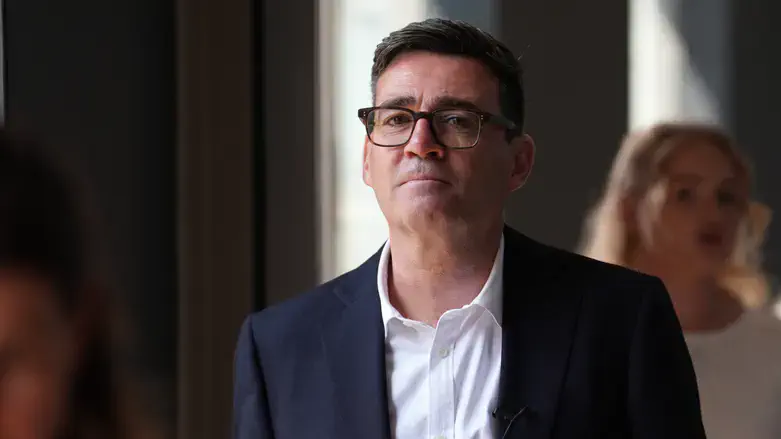
Andy Burnham secured victory Friday as the new head of Britain’s ruling Labour Party, setting the stage for his arrival at Downing Street next week.
Running unopposed to succeed outgoing Prime Minister Keir Starmer, the former Greater Manchester mayor gained backing from 379 out of 403 Labour members of Parliament, according to The Associated Press. His victory was widely anticipated after Starmer succumbed to internal party revolt.
In his inaugural speech as party chief, Burnham addressed lawmakers, trade unionists, and party members, vowing to serve "people and places who have been waiting too long for politics to let them hope again."
"We´re going to give them hope back," he declared, adding, "I am ready."
Addressing a party whose public standing has plummeted since its massive election triumph two years prior, Burnham sought to ease concerns and call for internal harmony.
"I have a plan," he asserted, stressing that "we won’t beat Britain´s new right if we are consumed by infighting and pulling in different directions."
Though he re-entered Parliament through a by-election a month ago, Burnham has revealed sparse details about his ultimate governance agenda, leaving him largely unfamiliar to voters outside northern England.
He signaled a desire to decentralize authority, advocating for "good growth in every post code" through a shift away from London-centric governance.
"We will take power back from Westminster and Whitehall and give it to the place you live," Burnham promised. "More power over life’s essentials so you can make them work better."
Starmer's departure follows a tumultuous two-year tenure plagued by self-inflicted mistakes, slumping poll ratings behind Reform UK, and a dismal showing in May's local contests. Starmer will remain in office through Monday before offering his resignation to King Charles III, who will subsequently invite Burnham to form a cabinet.
Under the UK parliamentary system, a ruling party may change its leader without calling a general election, meaning a national vote is not required until 2029. Burnham will mark the nation's seventh prime minister since 2016.
Burnham recently laid out an anti-Israel platform, apologizing for Labour's initial response to Israel's military campaign in Gaza and promising a stronger approach toward the Jewish state if he becomes prime minister.
Burnham said a future government under his leadership would seek to increase pressure on the Israeli government, including by considering additional sanctions against individuals and entities and examining a ban on trade in goods originating from what he described as illegal settlements.
He declined to describe the situation in Gaza as genocide, saying such a determination should be left to international courts.
Burnham said he remained committed to combating antisemitism and reiterated his condemnation of the Hamas attacks of October 7th.
(Arutz Sheva-Israel National News' North American desk is keeping you updated until the start of Shabbat in New York. The time posted automatically on all Israel National News articles, however, is Israeli time.)