
The Shabbat before Tisha B’Av is known as Shabbat Chazon, named for the opening words of this week’s Haftorah: “Chazon Yeshayahu ben Amotz" - “The vision of Isaiah, son of Amotz" (Isaiah 1:1).
Isaiah begins with a sharp condemnation of the people of Judah for allowing corruption, injustice and spiritual hypocrisy to take root. He rebukes the nation for continuing to offer sacrifices and observe religious rituals while ignoring the suffering of the vulnerable and permitting dishonesty to flourish.
“What need have I of all your sacrifices?" (verse 11), G-d asks through the prophet. Prayer and worship cannot substitute for ethical conduct. Religious devotion that is divorced from justice is not merely incomplete; it is offensive.
And that is why the Haftorah is read right before Tisha B’Av, when we mourn the destruction of the First and Second Temples and the long exile that followed. It is a jolting reminder that our relationship with the Creator hinges too on how we treat our fellow man.
Yet Isaiah does not conclude with despair.
After delivering a blistering indictment of Jerusalem’s failures, the prophet ends the Haftorah with two remarkable verses:
“I will restore your judges as at first, and your counselors as in the beginning. Afterward you shall be called the City of Righteousness, the Faithful City. Zion shall be redeemed through justice, and those who return to her through righteousness" (Isaiah 1:26-27).
These words contain an important message.
Isaiah promises that Jerusalem’s greatness will be restored. Its institutions will once again be characterized by wisdom, integrity and faithfulness. The city that had become corrupt will again be known as the “City of Righteousness."
But this transformation will not occur automatically.
Note that the prophet does not say that Zion will be redeemed through military strength alone, nor through economic prosperity, diplomatic recognition or technological achievement. All of these are essential to Israel’s survival and success, but they are not sufficient.
The ultimate redemption of Zion depends upon the moral character of the society that is built there.
And that message speaks directly to our generation.
After nearly two thousand years of exile, the Jewish people have returned to their ancestral homeland. Hebrew has been revived as a living language. Jerusalem has been rebuilt. Millions of Jews have come home from every corner of the earth, and the State of Israel has become a military, economic and technological power.
Previous generations could scarcely have imagined the miracles that we have been privileged to witness.
But Isaiah reminds us that physical return is only the beginning.
The rebuilding of Zion is not complete merely because Jews once again live there. The Jewish state must also strive to become a society worthy of the name Zion - a society grounded in justice, honesty, compassion and fidelity to the values of the Torah.
That means demanding integrity from our leaders and fairness from our courts. It means ensuring that government institutions serve the public rather than themselves. It means protecting the weak, assisting the needy and treating every individual with dignity.
Isaiah’s vision requires us to build a nation in which justice and righteousness shape daily life. National unity cannot depend solely upon external threats. It must be rooted in a shared understanding of our purpose and destiny.
There is also a profound significance in the prophet’s promise to “restore your judges as at first."
A healthy society depends upon institutions that command public trust. Judges, leaders and counselors must act with humility, wisdom and integrity. When citizens believe that institutions are driven by politics, favoritism or personal interest, the social fabric begins to unravel.
Isaiah’s message is therefore not only spiritual. It is intensely practical.
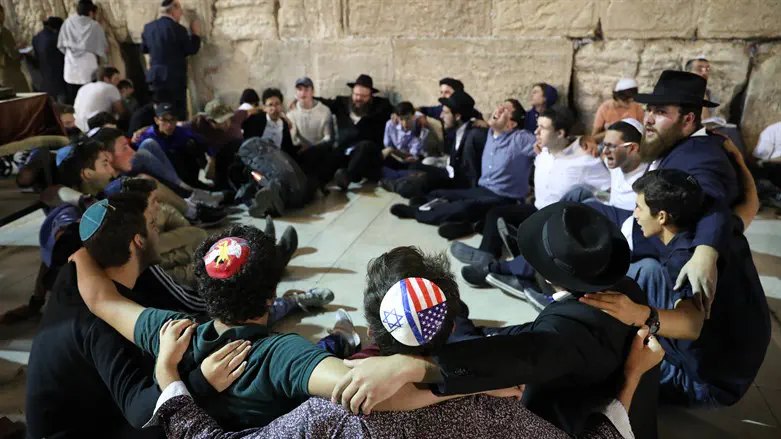
As we prepare to sit on the floor on Tisha B’Av and mourn the destruction of Jerusalem, we should not view the day merely as a commemoration of ancient tragedy.
It is also a summons to action.
Yes, the Jewish people have returned to Zion, but the full vision of redemption has yet to be realized.
Our task is not merely to lament the Jerusalem that was destroyed, but to help build the Jerusalem that Isaiah foresaw: a city of justice, righteousness and faithfulness.
“Zion shall be redeemed through justice, and those who return to her through righteousness."
Those words were spoken more than 2,700 years ago.
They remain both a promise and a challenge for Israel today.