

The arrival of Egyptian Defense Minister Ashraf Salem Zaher in Ankara represents a profound structural shift in the geopolitics of the Eastern Mediterranean. For over a decade, Western strategic planning rested on a comfortable assumption that the ideological enmity between Turkish President Recep Tayyip Erdogan and Egyptian President Abdel Fattah el-Sisi was a permanent feature of the regional landscape. The bitter rivalry between Ankara’s Islamist populism and Cairo’s military praetorianism was treated as a reliable geopolitical anchor. That anchor has been cut loose; the military convergence unfolding in July 2026 exposes the limits of viewing foreign policy through a purely ideological lens.
What is currently materializing is a highly pragmatic, transactional alliance between two distinct autocracies. These regimes are setting aside deep historical grievances to build a revisionist security architecture designed to project collective power, alter maritime boundaries, and directly challenge the strategic interests of Israel and its Western allies.
To understand the latent danger of this alignment, one must look past the diplomatic theater and analyze the unique internal pressures driving both leaders.
Erdogan remains a committed neo-Ottoman Islamist ideologue who has systematically transformed Turkey into a primary state sponsor for destabilizing actors across the Levant, most notably Hamas. His grand strategy seeks to dismantle the post-Cold War regional status quo, positioning Ankara as the undisputed leader of a revisionist bloc capable of dictating terms in the Mediterranean and the Red Sea.
Sisi, conversely, presides over an economically bankrupt military dictatorship that is currently hollowed out by a catastrophic fiscal crisis. Characterized by runaway inflation and a crushing debt burden managed by a privileged military class, Egypt is inherently unstable. While autocrats in Cairo traditionally relied on domestic coercion to maintain stability, Sisi is increasingly looking to external defense diversification and regional posturing to mask profound internal fragility.
By pooling their strategic assets, both regimes gain vital leverage. Sisi secures access to advanced military technology without Western human rights conditions, while Erdogan gains a massive conventional partner to legitimize his maritime ambitions.
The military cooperation between Cairo and Ankara has quickly evolved past superficial diplomacy into deep, structural integration. The joint maneuvers executed over the past weeks reveal an alarming level of operational alignment. The Anatolian Eagle aerial exercises in Turkey allowed Egyptian pilots to train under simulated high-threat environments alongside Turkish assets, which was immediately paired with the Golden Eagle special forces drills in Egypt focusing on cross-theater command interoperability.
These are not routine bilateral exchanges; they are deliberate calibration exercises aimed at synthesizing the doctrine of two of the region's largest standing armies.
This operational blending is reinforced by an aggressive defense-industrial partnership. Under current frameworks, Cairo and Ankara have established localized production lines for advanced vertical take-off and landing combat drones. Far more critical, however, is Egypt's formal entry into Turkey’s KAAN fifth-generation stealth fighter program as both a development and manufacturing partner. The co-development of the KAAN platform is a calculated attempt to bypass Western export controls and systematically erode Israel’s Qualitative Military Edge. If successful, this partnership will provide an authoritarian axis with domestic stealth capabilities, directly challenging the long-term air superiority that has guaranteed Israeli security for decades.
For Israel, this alignment presents an immediate, multi-domain national security threat. Israel's maritime safety and energy independence have long relied on a fragmented Eastern Mediterranean, which allowed Israel to cultivate deep, democratic trilateral partnerships with Greece and Cyprus. A unified Turkish-Egyptian front effectively isolates Athens and Nicosia, leaving them vulnerable to Ankara’s aggressive Blue Homeland maritime doctrine.
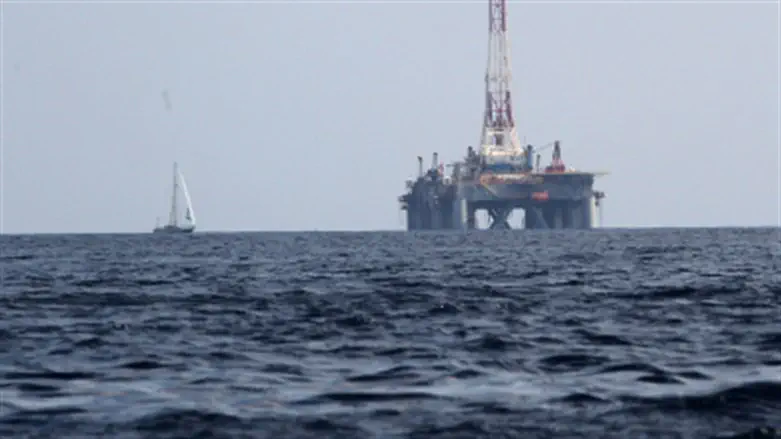
With Egypt acting as a strategic multiplier rather than a regional counterweight, Turkey gains unprecedented freedom of action to dominate vital shipping lanes, international communication cables, and transit corridors in the Levant Basin. Furthermore, Israel's multi-billion-dollar offshore natural gas infrastructure sits squarely within this contested zone, where a coordinated Turkish-Egyptian naval and drone presence creates a permanent conventional challenge on Israel's western flank.
The most volatile danger, however, is the risk of a diversionary conflict. Because both the Erdogan and Sisi regimes are ideologically brittle and facing deep domestic vulnerabilities, anti-Israel hostility remains their most effective political currency. If Egypt's economic collapse sparks renewed domestic unrest, or if Erdogan faces severe political headwinds at home, a manufactured crisis in the Mediterranean offers both autocrats a highly effective tool to redirect public anger outward.
The rapid expansion of the Ankara-Cairo axis demands an immediate, clear-eyed shift in strategic posture from both Israel and the United States. The US must move beyond routine conditionality and treat Egypt’s deepening integration with Turkey as a de facto realignment. Washington should immediately freeze new major arms packages and place Egypt’s Foreign Military Financing under a strict “strategic decoupling" review, tying future disbursements not only to the suspension of joint KAAN and drone programs with Turkey, but also to verifiable limits on Egyptian port access for Turkish naval vessels and intelligence-sharing protocols.
American taxpayers must not underwrite a regime that is actively helping build an alternative authoritarian defense ecosystem hostile to US interests.
For Israel, the response must be multi-layered and proactive. Israel should accelerate the development and deployment of an integrated “Mediterranean Shield" - a networked system combining AI-driven drone swarms, autonomous maritime patrol vessels, and advanced directed-energy weapons optimized to counter coordinated Turkish-Egyptian aerial and naval operations. Beyond hardware, Israel must launch a sophisticated “Energy Diplomacy Initiative," offering joint development and revenue-sharing agreements on Eastern Mediterranean gas fields to European nations (particularly France, Italy, and Germany) in exchange for formal security guarantees and forward-deployed naval assets. This would transform Israel’s gas fields from vulnerable targets into magnets for Western strategic presence.
Finally, Israel should move decisively to institutionalize a new “Eastern Mediterranean Democratic Security Forum" - an expanded, operational alliance that upgrades the existing Greece-Cyprus-Israel trilateral into a standing framework with rotating joint command elements, shared maritime domain awareness satellites, and pre-positioned munitions stockpiles. This forum should actively court additional partners such as India (for drone and naval technology cooperation) and select Gulf states wary of Turkish overreach. Covert and overt information operations should also be intensified to highlight the authoritarian character of the Erdogan-Sisi axis and its inherent instability to both domestic audiences in Egypt and Turkey and key audiences in the US and Europe.
The Erdogan-Sisi axis is not a temporary diplomatic anomaly; it is a calculated, militarized partnership born of geopolitical ambition and domestic survival. Israel cannot afford to treat this realignment as business as usual. It must act with urgency and creativity to reinforce its strategic depth before the balance of power in the Eastern Mediterranean tilts decisively against it.
Amine Ayoub, a fellow at the Middle East Forum, is a policy analyst and writer based in Morocco. Follow him on X: @amineayoubx