

The newly unveiled blueprint by the Washington-backed Peace Council presents a familiar temptation: an elegant, technocratic solution to an intractable asymmetric conflict. The proposed pilot project in Rafah outlines an experimental humanitarian zone to house tens of thousands of displaced civilians under the dual stewardship of a Cairo-based Palestinian Arab technocratic committee and an International Stability Force.
This initiative forms the vanguard of a broader twenty-point post-war transition framework designed to stabilize the Gaza Strip. Yet, behind the polished vocabulary of international state-building lies a foundational strategic error. By establishing an enclave explicitly insulated from the Israel Defense Forces, the plan does not build a bridge to long-term stability. Instead, it constructs a sovereign blind spot and a sanctuary for the reconstitution of hostile forces, threatening to forfeit the profound security gains achieved since the implementation of the October truce.
The Vetting Illusion in Asymmetric Theaters
The Peace Council's architecture depends entirely on the premise that a committee of technocrats, currently operating by proxy from Egyptian diplomatic circles, can execute a rigorous security screening process. This expectation reflects a profound misunderstanding of contemporary asymmetric warfare.
In a theater where the adversary deliberately discards conventional uniforms, abandons traditional command structures, and embeds its military infrastructure within dense civilian populations, vetting cannot be treated as an administrative exercise. It is a continuous, high-stakes intelligence and combat operation.
A remote committee lacks the granular, ground-level human intelligence networks and the tactical agility required to distinguish a genuine refugee from an active insurgent. When thousands of individuals are granted unrestricted movement into and out of an unpoliced zone, superficial screening protocols inevitably collapse. Without direct, unhindered access to domestic biometric databases and the immediate coercive authority to detain suspects, foreign administrative bodies remain highly vulnerable to local intimidation and systemic corruption.
In the unforgiving arithmetic of Middle Eastern security, a single administrative failure does not equal a bureaucratic error; it represents a lethal security breach on Israel's immediate periphery.
The Fatal Psychology of Third-Party Peacekeeping
To secure this experimental enclave, the Peace Council relies on an International Stability Force, structured specifically to act as a buffer separating Palestinian Arab civilians from Israeli troops. This reliance on third-party security guarantees repeats a historical error that Israel has repeatedly exposed across multiple decades. The institutional psychology of international peacekeeping operations is fundamentally mismatched with the brutal demands of active counter-terrorism.
Historical precedents demonstrate that foreign forces invariably prioritize force protection over mission enforcement. When United Nations Security Council Resolution 1701 established an expanded peacekeeping mandate in southern Lebanon following the 2006 war, it was heralded by Western capitals as a permanent check against cross-border aggression. Instead, that international presence became a passive, bureaucratic shield under which Hezbollah constructed a massive, sophisticated rocket arsenal along Israel's northern border.
Foreign troops ultimately answer to sovereign capitals thousands of miles away, where the political appetite for combat casualties is non-existent. When an international force is confronted by a radicalized asymmetric adversary utilizing human shields or suicide tactics, foreign peacekeepers routinely freeze, negotiate for their own safety, or withdraw entirely. Delegating the defense of a state's border to a coalition of shifting international allegiances is an existential gamble that no sovereign nation can afford to take.
The Irreplaceable Strategic Geography of Rafah
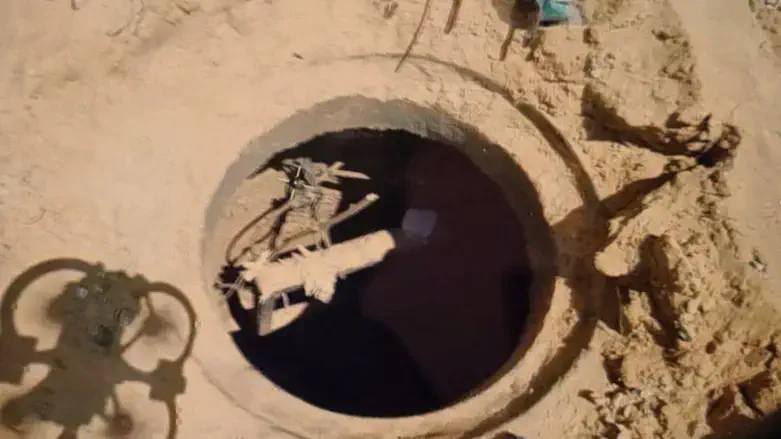
The selection of Rafah as the specific geographic location for this pilot project increases the operational danger exponentially. Rafah is not merely another dense urban node within the Gaza Strip; it is the geostrategic throat of the territory. For two decades, the subterranean network running beneath Rafah and the Philadelphi Corridor served as the indispensable artery for the weapon proliferation, financial capital, and dual-use logistics that enabled the construction of a terrorist state.
Since the truce took effect last October, the Israeli military has established a firm security footprint over more than sixty percent of the Gaza Strip, precisely to dismantle these underground supply lines and prevent their reconstitution.
Relinquishing direct, preemptive operational access to any portion of Rafah creates an immediate intelligence vacuum. If the International Stability Force fails to police the complex sub-surface terrain, or if the civilian committee succumbs to administrative capture, the smuggling networks will inevitably reactivate.
A designated safe zone free of Israeli military presence would rapidly transform into a logistical hub where militant factions could rebuild their command structures, manufacture improvised explosive devices, and stockpile weaponry entirely beyond the reach of defensive interdiction.
Sovereignty, Survival, and Strategic Realism
The ongoing transition toward a stable post-war order requires pragmatic administrative solutions, but civil governance must never be purchased at the price of defensive integrity. The Peace Council's twenty-point plan treats security as a divisible asset that can be safely outsourced to international intermediaries. In the uncompromising strategic landscape of the Middle East, however, security and sovereignty are fundamentally indivisible.
True stabilization will never emerge from diplomatic experiments or artificial buffer zones that tie the hands of the defender while offering a geographic shield to the aggressor. A sustainable security policy must be anchored in the unyielding reality that only the state facing the existential threat possesses the enduring national will to neutralize it.
Israel must maintain absolute, unhindered operational freedom across the entirety of the Gaza Strip, including Rafah.
Any future civilian authority must operate under the explicit shadow of Israeli security oversight, rather than behind the artificial protection of an international buffer force.
Peace is not maintained by creating spaces where the army cannot go; it is preserved by ensuring that no threat can find a place to hide.
Amine Ayoub, a fellow at the Middle East Forum, is a policy analyst and writer based in Morocco. Follow him on X: @amineayoubx