

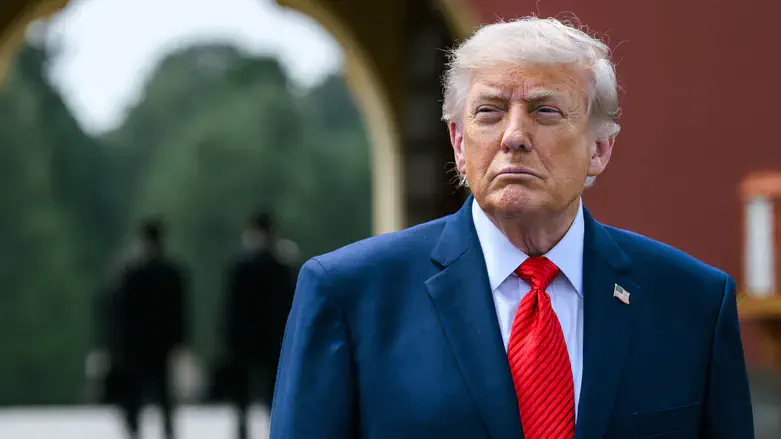
US President Donald Trump recently evaluated the possibility of restarting a large-scale military offensive against Iran, according to US officials familiar with internal deliberations who spoke to The Wall Street Journal.
The President held several discussions regarding potential new operations with Secretary of War Pete Hegseth and General Dan Caine, who serves as the Chairman of the Joint Chiefs of Staff, the sources told the newpaper. Despite these consultations, the president has chosen to prioritize diplomatic efforts for the time being.
Insiders noted that these high-level conversations explored whether the United States should walk away from the current mediation framework to launch a comprehensive assault, a strategy described by certain officials as “finishing the job."
Though he has not foreclosed future military options, Trump expressed concern to his team that a massive new bombardment could wreck ongoing diplomatic tracks and jeopardize Washington's ultimate objective of neutralizing Tehran’s atomic ambitions.
Furthermore, the president indicated to advisers that he is willing to let the current diplomatic tract continue even if it surpasses the August 18 target date established for a nuclear accord, a move intended to give international negotiators additional breathing room.
In the interim, Trump remains content with executing isolated, targeted operations against Iranian forces whenever they violate the existing bilateral agreements, according to The Wall Street Journal. This strategy of limited containment sparked a series of weekend skirmishes, testing the resilience of a delicate truce brokered just two weeks prior.
While routine Pentagon briefings regarding combat contingencies are standard practice for any administration, these recent exchanges highlight Trump's desire to dismantle the current diplomatic logjam without completely discarding the prospect of military force. Certain administrative officials acknowledged to The Wall Street Journal that returning to open warfare would essentially serve as a quiet recognition that the highly publicized peace initiative had fallen short.
An executive branch official told the newspaper that Trump's primary inclination remains anchored in statecraft, suggesting that the Iranian government would benefit from securing an agreement with Washington. Representatives for both Hegseth and Caine chose not to offer statements regarding the private meetings.
The report follows clashes over the weekend, when the US twice struck Iranian targets in the Strait of Hormuz in response to Iranian violations of the ceasefire.
Trump warned on Saturday night that the US may be forced to “militarily complete the job" if Iran continued to violate the ceasefire.
However, on Monday, Trump told reporters that the US would hold meetings in Qatar with Iranian officials, after Iran denied that its negotiators would be meeting with Americans in Qatar.
Subsequent reports indicated that US Special Envoy Steve Witkoff was en route to Doha for the meetings with Iranian representatives.