

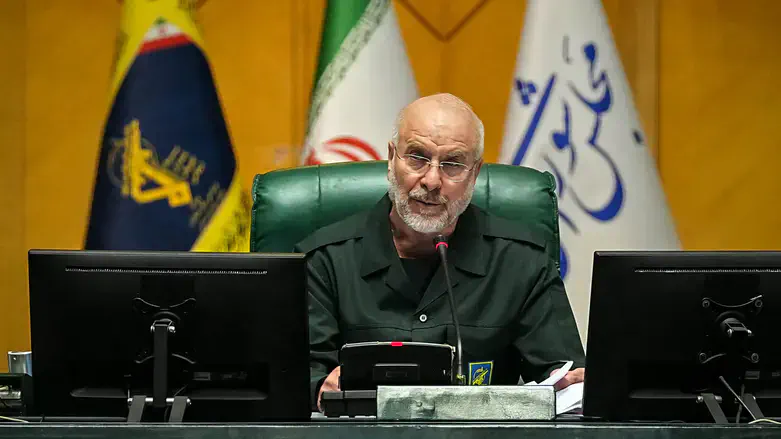
Mohammad Bagher Ghalibaf, the Speaker of the Iranian Parliament and the nation's primary diplomatic envoy, announced on Tuesday that Tehran will refuse to engage in additional diplomatic rounds until the baseline requirements outlined in the existing memorandum of understanding with the US are completely fulfilled.
During a broadcast interview on state television, he clarified that the current diplomatic forums are restricted solely to executing pre-existing pledges.
Evaluating the geopolitical milestones achieved so far, Ghalibaf observed, as quoted by Iran International, “The announcement of the end of the war by Pakistan’s prime minister and Donald Trump’s tweet about the lifting of the maritime blockade were among the major successes of the memorandum of understanding,"
He acknowledged that the transition from open warfare to peace would naturally bring operational friction.
“In implementing the end of the war, differences will certainly arise," Ghalibaf added. “We are following up the process of talks to implement Article 13 of the memorandum of understanding."
The specific provision in question, Article 13, dictates that following the ratification of the memorandum - and contingent upon the initiation and preservation of the operational steps outlined in paragraphs 1, 4, 5, 10, and 11 - the United States and Iran will launch subsequent negotiations aimed at a comprehensive final treaty, focusing strictly on the unresolved sections.
Ghalibaf also detailed the severe economic impacts of the preceding American naval embargo, contrasting that period with a sharp, recent rebound in energy revenue.
“From the day the blockade was lifted until today, we have exported more than 40 million barrels of oil," he said in the interview. “By contrast, during the previous 50 to nearly 60 days, we were genuinely unable to export even a single barrel of oil."
The comments came a day after Iran denied that its negotiators would be meeting with Americans in Qatar.
Iran had claimed that, while a delegation of experts would travel to Qatar's capital this week for discussions on the implementation of the memorandum of understanding with the US, no meetings would be happening between the two countries.
Trump later told reporters that the planned meetings in Qatar with Iranian officials would be "perhaps important, perhaps not".
“We are winning militarily. It's almost won militarily, I would say," stated Trump. And it's really very simple. It's the denuclearization of Iran. We don't want them to have a nuclear weapon, and they're not going to have a nuclear weapon. And they've agreed to that, in all fairness."
Subsequent reports indicated that US Special Envoy Steve Witkoff was en route to Doha for the meetings with Iranian representatives.
Over the weekend, the US twice struck Iranian targets in the Strait of Hormuz in response to Iranian violations of the ceasefire.
Trump warned on Saturday night that the US may be forced to “militarily complete the job" if Iran continued to violate the ceasefire.
“United States aircraft just struck Iranian missile and drone storage locations, and coastal radar sites, for violating the Cease Fire Agreement, AGAIN! It is very possible that they will never learn!" Trump wrote.
He added, “There may come a point when we are no longer able to be reasonable, and will be forced to militarily complete the job that we very successfully started. If that happens, the Islamic Republic of Iran will no longer exist!"