

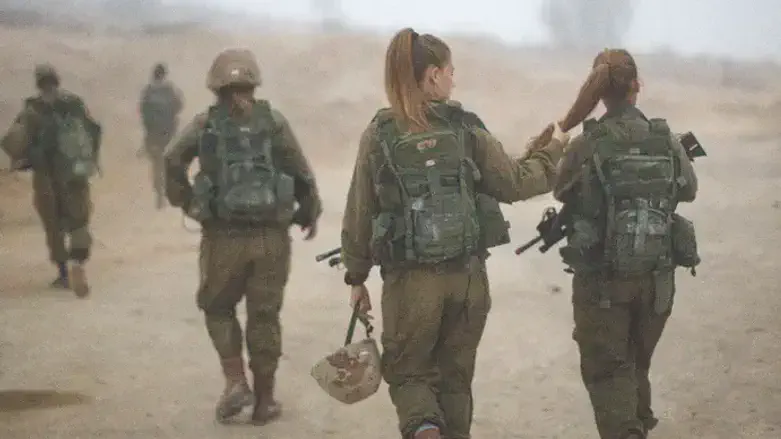
A new survey reveals a deep divide in Israeli public opinion over the integration of women into the IDF Armored Corps compared with prioritizing the recruitment of religious soldiers seeking separate service arrangements.
According to the findings, the public is almost evenly split: 50.1% of respondents said priority should be given to recruiting religious fighters, while 49.9% said efforts to expand the integration of women in the Armored Corps should continue.
The survey also highlighted unexpected trends among female respondents. Despite assumptions that women would overwhelmingly favor expanding opportunities for female tank soldiers, only 52.4% of women supported continued integration of women in the Armored Corps over prioritizing the needs of religious recruits. Nearly half said the army should first address the concerns of religious soldiers, even if that limits the expansion of women’s roles in armored units.
Among male respondents, the gap was similarly narrow. A total of 52.6% of men favored prioritizing the recruitment of religious fighters, suggesting that the disagreement is not primarily a gender-based issue.
Age differences played a more significant role. Among respondents aged 18 to 29, 59% supported prioritizing the recruitment of religious soldiers. Support for integrating women into armored units increased among older age groups, reaching 58% among respondents aged 65 and above.
Religious background was another major factor influencing opinions. A large majority of Haredi respondents (90.3%) and religious respondents (80.6%) said the recruitment of religious fighters should take priority. By contrast, 65.2% of secular respondents supported continuing the integration of women into the Armored Corps.
Following the publication of the survey, Rabbi David Stav, chairman of the Tzohar rabbinical organization, said the findings reflected a broader social challenge.
"When we examine the data, we see a real and difficult problem within Israeli society," Stav said.
He explained that many in the religious community do not fully understand how significant the issue of women’s military service is for the broader Israeli public. At the same time, he said, many secular Israelis do not always understand the importance that religious communities place on maintaining separate service frameworks for men and women, particularly in combat units.
Stav called for a more constructive public discussion, warning that many debates in Israel have become driven by camps rather than substance.
"Our discourse on almost every issue has stopped being substantive and has become factional," he said. "This is a warning sign and a call for all of us to come together, define our values, and find a solution that will not harm the IDF’s ability to remain the army of the people."