
The sages wanted to include the Parsha of Balak to form part of the daily Shema. This was because Bilaam alluded to the Shema recited by the Jewish people twice each day in his curses-turned-blessings.
Bilaam proclaimed “He (the Jewish people) crouched, he lies down like a lion, and like a lioness, who dares to rouse them?". This alludes to the Shema recited in the evening “when you lie down" and in the morning “when you arise".
The only reason they did not include it, was because as a lengthy addition, it would be a burden on the congregation.
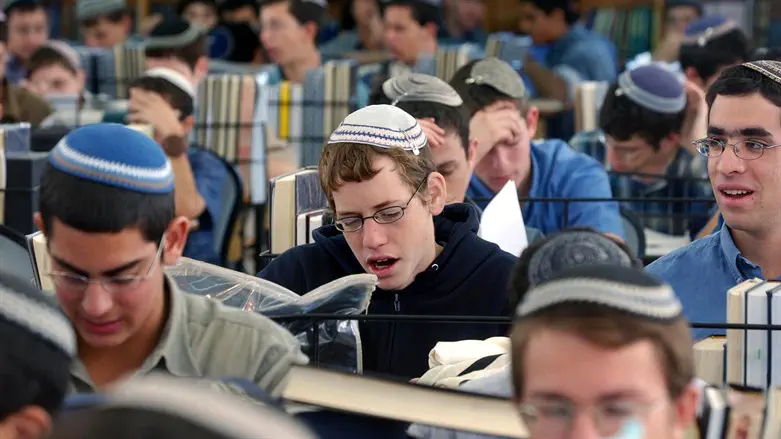
None the less, one of the verses of the Parsha did make it into our daily Davening. In an almost universal practice, at the start of Shacharis as we enter the Shul, we recite מה טובו אהליך יעקב משכנותיך ישראל - “How goodly are your tents Yaakov, and your sanctuaries, Yisroel."
The earliest source for this inclusion in the Nusach of our Tefillot, in the Seder of Rav Amram Gaon - 9th Century, Baylon. He writes “when one enters the Beis Hakeneset, they should say ’Mah Tovu…’". This should be followed by the verse from Tehillim (5:8) ואני ברב חסדך אבא ביתך אשתחוה אל היכל קדשך ביראתך “and I, in Your abundant kindness, will enter Your house; I bow down in awe at Your holy temple."
The 11th Century Siddur attributed to Rashi also mentions this practice. It lists a number of Pesukim that should be recited before Pesukei Dezimra, which speak about the reverence of the House of Hashem and the joy that we have in coming there to pray. One of the Pesukim listed is Mah Tovu.
Whilst Rabbi Moshe Isserles (Ram’o) mentions Mah Tovu in his work Darkei Moshe, he does not mention it explicitly in the Shulchan Aruch. The Acharonim, including the Magen Avraham and Shulcha Aruch Harav, likewise do not mention it explicitly, even though they mention other Pesukim that are said.
However, most Siddurim, including the Siddur of the Alter Rebbe himself, do include this Pasuk.
A noted voice of dissent is the Maharshal, Rabbi Shlomo Luria, the great 16th Century Polish Posek and Talmudic commentator, who was a cotemporary and relative of the Ram"a. In one of his responsa, he wrote “When I come to Shul, I begin with the verse ‘and I in Your abundant kindness…’ and I skip the first verse (in the Siddur) ‘Mah Tovu’." He explains that this is because “it was said by Bilaam, and he too intended for it to be said as a curse, as taught in Mesechet Sanhedrin".
The Gemara there teaches, that from the words of the blessings conferred by Bilaam, we can infer what his intended curses were. When he said “how goodly are your tents Yaakov", he intended to curse the Jewish people that they should not have Batei Knesiot and Batei Midrash, tents of Torah study and prayer. Similar inferences are made from other verses.
The Gemara concluded that ultimately all of the intended curses were realised. The only exception was the curse behind Mah Tovu. No matter what curses have befallen us throughout our history and no matter to where we have been exiled, we have always built houses of Torah study and Tefillah.
The commentators draw a parallel between the tents - אוהליך in this verse, and the Torah’s description of Yaakov as a איש תם יושב אוהלים, “a wholesome man, who dwelled in tents". Here too the meaning is the tents of Torah study, the hallmark of the nation who would descend from him.
Not only have our places of Torah study and prayer been a place of refuge, they are also a source of blessing and protection.
The Pasuk refers to two types of structure, an Ohel - a tent, and a Mishkan, which refers to a more fixed and permanent structure. The Ohr Hachaim explains that these represent to two different groups of Jews. The tent, which is more temporary, represents those who work, but maintain regular, fixed times for Torah study. The permanent Mishkan reflects those whose primary occupation is the study of Torah, who attend the Beit Midrash in a fixed manner. The Pasuk refers to both as being Tov - good.
The Sfat Emet explains that the tents refer to the weekday, when our primary involvements relate to the physical world and matters of the body. On this level we are called Yaakov, facing struggle and tension. The Mishkanot refer to the spiritual, matters relating to the soul and to Olam Haba. This is our focus on Shabbat, when we rise to the rank of Yisrael.
During the week, with the our pre-occupation in earning a living, the Beit Hakeneset and Beit Midrash may be like the temporary Ohel. But on Shabbos, when we disconnect from our engagements in the physical, every Jew can and should call the Beit Midrash and Beit Hakneset our Mishkan, making Torah study and prayer a fixed place of dwelling for our souls.
The Midrash teaches that our greatest blessings came from Bilaam, so that they will be lasting. How much more so the blessing of Mah Tovu, which we have ensured will never revert back to a curse.
Just like the “goodness" of the tents of the Jewish people in the desert protected them from Bilaam’s curses, may our tents and houses of Torah and Tefillah protect us and bring us blessing, until we have the ultimate Ohel and Mishkan, the Beit Hamikdash Hashlishi.