

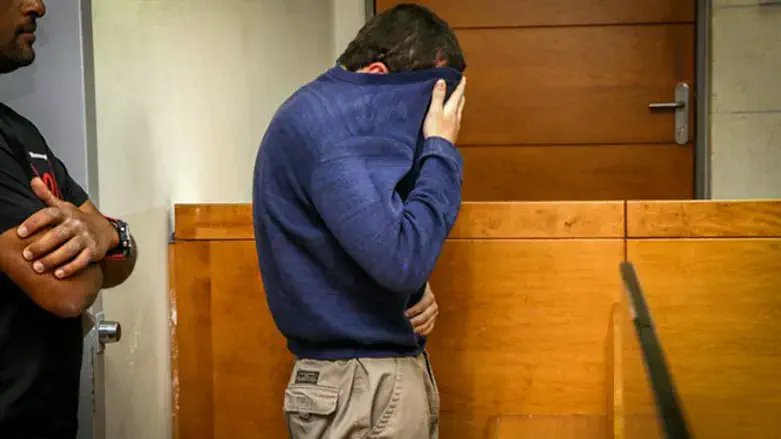
The 27-year-old American-Israeli citizen Michael Kadar, known as the “Hacker from Ashkelon," was extradited last week to U.S. authorities and appeared for the first time before a federal court in Orlando, where the indictment against him was read.
Kadar, who was convicted in Israel of sending terror threats targeting Jewish institutions and served seven years in prison, will now stand trial in Florida for the same alleged offenses.
The U.S. indictment accuses him of committing hate crimes and interfering with religious freedom by targeting Jewish community institutions across Florida, including community centers, schools, and preschools.
According to court documents, Kadar allegedly launched a coordinated intimidation campaign in early 2017 involving fake bomb threats and reports of active-shooter incidents. The threats targeted Jewish community centers and educational institutions, often resulting in temporary closures, emergency evacuations, and the deployment of security forces that searched the sites, ultimately finding no explosives.
If convicted, Kadar could face a lengthy prison sentence of up to 35 years. The U.S. Department of Justice said hate crime charges carry a maximum penalty of 20 years in prison per count, bomb threat charges carry up to 10 years, and interstate threat charges carry up to five years. The court may also order compensation payments to affected institutions and victims.
Although the trial is taking place in Orlando, the case stems from a much broader investigation. An FBI complaint filed in 2017 alleged that between January and March of that year, Kadar made at least 245 threatening calls involving bomb and shooting threats, many of them targeting Jewish community centers, Jewish schools, and Anti-Defamation League offices.
He was later convicted in Israel for making roughly 2,000 false threats against Jewish and non-Jewish institutions worldwide, including schools, police stations, and airports.
Investigators determined that Kadar operated from Ashkelon and used technological methods to conceal his identity and the origin of the calls, leading Israel to prosecute him first.
The case caused widespread alarm in the United States over a wave of anti-Semitic threats against Jewish institutions. After Kadar’s arrest, authorities revealed that the main suspect was himself a young Jewish man holding dual citizenship. His motive remains disputed: U.S. prosecutors classify the alleged attacks as hate crimes because of the choice of Jewish targets, while during Israeli proceedings Kadar reportedly told psychiatrists that he carried out the threats “out of boredom."
U.S. officials condemned the alleged actions. The Assistant Attorney General said the crimes caused serious harm to Jewish communities and described attacks using technology to threaten places of worship and community centers as an assault on religious freedom and public safety. The Florida district prosecutor added that targeting people or institutions because of their religious identity violates constitutional protections and said such acts “will not be tolerated."