
The Prophet Joshua led us across the River Jordan and into the Land of Israel on the 10th of Nissan (Joshua 4:19), and in short order we captured Jericho, in the Jordan Valley, and Ai, in the Samarian Mountains, about 3 km (2 miles) east of the northern edge of the present-day of Ramallah (the Biblical Ramah).
Ai was strategically crucial to the conquest of Israel, controlling the natural mountain-passes leading upwards from the Jordan valley to the inhabited region of the mountain-range which stretches north-south from the Galil (Galilee) in the north to Beer Sheva in the south, where it levels down into the lowlands of the Negev Desert.
Joshua consolidated Israelite sovereignty over the area by keeping a garrison in Ai, and then led the bulk of the nation northwards along the Samarian mountains, where he erected an altar at Mount Ebal overlooking Shechem (Joshua 8:30), following Moshe’s directive towards the end of his life (Deuteronomy 11:29 and 27:1-26).
Shechem, 33 km (20 miles) north of Ai, is another strategically crucial junction, controlling the natural north-south axis traversing half of Israel as well as the mountain-passes eastwards to the Jordan valley and westwards to the Mediterranean coast.
So capturing Jericho, Ai, and Shechem as a prelude to conquering the entire Land.
From Shechem, Joshua led the nation southwards, towards Giv’on (Gibeon) (Joshua 9:3-27), heading towards Jerusalem.
This, too, is a strategically sound military campaign, perfectly suited to the natural topography of the Land of Israel.
And then came the battles for the region west and south of Jerusalem - Upper Beit Horon, Lower Beit Horon, then Azekah, 25 km (15 miles) west and slightly south of Jerusalem, and Makkedah, 30 km (19 miles) south-west of Hebron, or 13 km (8 miles) north and slightly east of Beer Sheva.
Having pursued the enemy through the night, Joshua and his forces launched a surprise attack on them at dawn at Giv’on (Gibeon) (Joshua 10:9-10), and pressed the attack throughout the day.
And then came the famous episode when Joshua stopped the sun and moon:
Then Joshua spoke to Hashem, on the day that Hashem delivered the Amorites before the Children of Israel, and he said: ‘In the eyes of Israel - Sun! Stand still in Giv’on! And Moon - in the Ayalon Valley!’ So the Sun stood still, and the Moon halted, until the entire nation and avenged itself of its enemies… The Sun stood in the midst of the Heavens, not moving to set for about an entire day" (Joshua 10:12-13).
Though the Tanach does not record the date, our tradition records that this occurred on the 3rd of Tammuz (Seder Olam Rabbah 11).
Our commentators have much to say about this miracle. But here, I will offer an explanation which our commentators could not have known, because the postscript came 3,220 years later, in a series of battles in the same region, in Israel’s War of Independence.
Though Israel was still a colony of the British Empire, British troops still nominally controlling the country, Jewish and Arab forces were already battling for control. The Arab forces had blockaded the road from Tel Aviv to Jerusalem, effectively besieging the city.
On 25th Adar 2 5708 (5th April 1948), the Haganah launched Operation Nachshon, whose purpose was to break the siege by capturing hills on both sides of the Jerusalem-Tel Aviv road. This road (today called Road Number 1) winds its way through the defile in the Judean Mountains, following the natural contours of the land. It is the same path that travellers have used for as long as Israel has been inhabited, to travel from the coastal plain to Jerusalem.
Some 1,500 Haganah troops participated in Operation Nachshon - by far the biggest force that Jewish fighters had yet committed to any battle. No one knew if it was possible to coordinate so many troops, if it was possible to fight so large-scale a battle, if the Haganah had sufficient ammunition, if the troops were sufficiently trained, how many Arab troops were there, if British forces would decide to intervene.
With all these unknowns, Operation Nachshon was a massive leap of faith - hence the name, honouring Nachshon ben Aminadav, who had shown the way forward at the Red Sea by plunging forward into the waters even before the sea had split (vide Sotah 37a, Bamidbar Rabbah 13:4 et al.).
Operation Nachshon was partially successful: the Haganah succeeded in capturing the road and some of the high ground to both sides, as far as Sha’ar Ha-Gai (Bab el-Wad), where the mountain defile suddenly opens out onto the Ayalon Plain. But the Latrun salient remained occupied by the Arab Legion - the highly trained and motivated Army of King Abdullah of Trans-Jordan (today Jordan).
Jewish forces (after independence Israeli forces) fought several times over the next few months to liberate the area, with varying degrees of success.
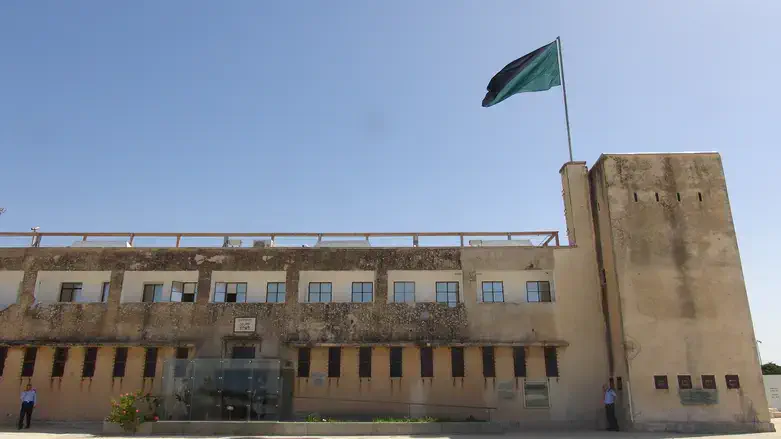
On 1st Sivan 5708 (8th June 1948) the Haganah launched Operation Yoram, commanded in the field by Commander of the Palmach Yigal Alon. They managed to capture much ground, advancing toward the formidable British Police fortress which Britain had turned over to the Arab Legion.
But that night, taking advantage of the darkness of a moonless night, the Arab Legion succeeded in driving the Palmach forces back, and under withering artillery and mortar fire, Alon was forced to withdraw.
On the night of 9th Tammuz (15th-16th July), the Palmach attempted yet again to capture the region around the Ayalon Valley. This time they attacked the Latrun Fortress from the east, taking the high ground during the night and then advancing towards the fortress during the day.
And as the sun set they had to call off the advance, the Arab forces regrouped, and the Palmach again lost the ground that they had captured during the day.
The same pattern was repeated a few more times, until eventually the entire Latrun salient remained part of Jordan until the Six Day War of 1967.
Joshua was a brilliant military commander, who understood perfectly well how any military gains made during daylight would be lost when the enemy counter-attacked during darkness.
Go outside tonight and see how, on the 3rd of Tammuz, the moon is far too dim to give light for battle. Knowing and understanding this, Joshua commanded the Sun to stand still over the Ayalon plain, so that he and his troops could complete the battle and achieve resounding victory.
This is the explanation of Joshua’s battle for Ayalon which our commentators couldn’t possibly have known. It would take another 3,220 years, and Jewish forces fighting the same battles in the same area, to understand how halting the Sun for a complete day made absolute victory possible.