

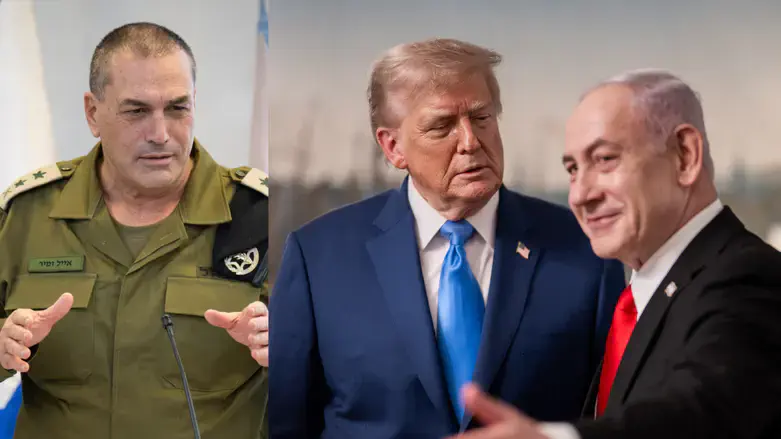
In the span of mere hours on June 8, the Middle East teetered once more on the brink of a wider regional conflict. Following an Iranian ballistic missile barrage aimed at Israeli targets as a direct retaliation for Israeli strikes on Hezbollah positions in Beirut, Israel responded with highly precise strikes on Iranian military and petrochemical sites.
Yet, by the end of the day, the region saw a sudden pause. Following consultations with President Donald Trump, Prime Minister Benjamin Netanyahu announced that Israel's "fire is on hold." Iran mirrored this de-escalation, albeit wrapped in its familiar rhetoric of future threats. This rapid cycle of escalation and containment highlights a complex web of strategic maneuvering.
The immediate trigger for this latest flare-up traces back to Hezbollah. Defying fragile ceasefire understandings, the Iran-backed militia launched rockets into northern Israel. Israel's response was swift and calculated, targeting a Hezbollah command center in the Dahieh, a well-known stronghold in Beirut's southern suburbs. This was not a random escalation but a continuation of Israel’s systematic operations in southern Lebanon. Despite nominal truces, Israeli forces actively neutralize immediate border threats, dismantle extensive tunnel networks built with Iranian expertise, and eliminate key operatives to degrade the militia's long-term capabilities.
Reeling from significant leadership and operational losses over recent months, Hezbollah is desperately trying to maintain relevance. However, its continued rejection of broader diplomatic deals and reliance on drone and rocket attacks only invite calibrated, destructive responses from Israel.
Meanwhile, Lebanese President Joseph Aoun has expressed reluctance to engage in high-level talks until calm returns, further underscoring Beirut's lack of control over the militia.
Iran's missile barrage marked a severe escalation, targeting Israeli airbases with dozens of projectiles. However, the attack was largely thwarted by Israel's multilayered air defense systems. Israel's counterstrikes, in contrast, successfully hit key Iranian infrastructure, demonstrating immense reach and intelligence superiority. The fact that casualties remained remarkably low on both sides is a testament to precision and preparedness rather than inherent restraint.
Tehran's decision to launch this strike occurred just as nuclear negotiations with the Trump administration were reportedly making progress. This suggests conflicting internal motives. The regime likely sought to project strength to internal audiences amid severe economic woes while simultaneously demonstrating commitment to its isolated regional proxies.
Ultimately, by rapidly de-escalating following Trump's intervention, Iran blinked, fitting a historical pattern of avoiding sustained direct confrontation. President Trump's phone calls with Prime Minister Netanyahu proved pivotal. By urging restraint to preserve diplomatic openings and warning of isolation if the escalation continued unchecked, the US played a crucial stabilizing role. Netanyahu's decision to hold fire demonstrates statesmanship, prioritizing long-term strategic gains over immediate spectacle. Through its initial counterstrike, Israel successfully delivered a clear message that it retains the ability to strike deep within Iranian territory if provoked again.
This northern and eastern flare-up does not exist in a vacuum. Israel is currently managing a multi-front reality. In Gaza, the IDF continues its operations against Hamas remnants, successfully eliminating Islamic Jihad figures and dismantling terror infrastructure. At the same time, Houthi threats continue to disrupt distant waters in the Red Sea. On the home front, northern Israel endures intermittent threats, but civilian resilience remains strong. Communities are adapting to daily challenges, and aliyah immigration continues unabated. Each proxy action by Hezbollah, Hamas, or the Houthis invites disproportionate Israeli responses that slowly degrade their collective capacity.
Critics may occasionally misinterpret restraint as weakness. In reality, Israel's current posture reflects immense strength. By combining military excellence with diplomatic agility, Israel dictates the tempo of the conflict, choosing battles that advance its national security without exhausting its resources or straining vital alliances. While the pause allows for temporary stability, the April ceasefire remains severely strained.
True, sustainable de-escalation will demand strict enforcement, including the total disarmament of Hezbollah south of the Litani River, the permanent severing of Iranian supply lines, and unforgiving accountability for ceasefire violations. As tensions simmer, Israel's strategic posture remains robust. Vigilance is essential, as Iranian rhetoric and Hezbollah drones will continue to test the borders. Ultimately, sustainable peace in the region will flow not from concessions to aggressors, but from their unambiguous defeat.
Amine Ayoub, a fellow at the Middle East Forum, is a policy analyst and writer based in Morocco. Follow him on X: @amineayoubx