
In a recent and much-commented-on article, I argued that the greatest moral failure of large segments of the anti-Zionist haredi world is not their opposition to Zionism itself. Jews have debated Zionism for more than a century. The deeper failure is something far more basic: a shocking absence of gratitude toward the Israeli soldiers and taxpayers whose sacrifices make haredi life possible.
That article generated intense reaction.
Some readers accused me of attacking Torah Judaism itself. Others insisted that anti-Zionist theology deserves greater understanding before criticism. Many asked the same question: What exactly did Rabbi Yoel Teitelbaum, the Satmar Rebbe and intellectual architect of modern haredi anti-Zionism, actually believe?
The question matters because Rabbi Teitelbaum was no marginal figure. He was one of the towering rabbinic leaders of the twentieth century, founder of the Satmar movement and author of Vayoel Moshe, the single most comprehensive theological assault ever written against Zionism.
And while I profoundly reject his conclusions, I do not dismiss his sincerity, his piety, or his stature as a global Torah luminary.
Rabbi Teitelbaum believed that Zionism represented a rebellion against Heaven.
His worldview revolved around the famous Talmudic passage known as the Three Oaths in Tractate Ketubot. According to his interpretation, God imposed restrictions upon the Jewish people during exile: Jews were forbidden from ascending collectively to the Land of Israel “by force," forbidden from rebelling against the nations, and the nations, in theiir turn, were not to persecute them. He believed the Torah commanded Jews to await divine redemption rather than create sovereignty through political means.
For centuries, these passages occupied a relatively secondary role in Jewish theology.
Rabbi Teitelbaum transformed them into the very foundation of his worldview.
In Vayoel Moshe, he argued that the establishment of a Jewish state before the arrival of Mashiach violated God’s decree of exile. Redemption, he believed, could come only miraculously and divinely-not through armies, elections, diplomacy, or nationalism.
This was not merely political disagreement.
It was an entirely different understanding of Jewish destiny.
For Religious Zionists, the return of Jews to Israel represented the beginning of Redemption. (Religious Zionist rabbis showed that the Three Oaths were not applicable because the Balfour Declaration, League of Nations and the UN recognized the Jewish right to return to their homeland, thereby voiding the first two Oaths - and that the natiions voided the third by massacring and persecuting Jews. Torah sources indicate that there are two ways Redemption can occur - in a miraculous way or by a gradual process. Religious Zionism's belief in the religious, existential and historical justification for a Jewish State - as voiced by Rabbi Avraham HaCohen Kook ZT"L and many other rabbinic figures - led them to take an active part in the country's survival and success, ed.)
For Rabbi Teitelbaum, Zionism represented a catastrophic attempt to seize Redemption prematurely.
For Religious Zionists, Jewish sovereignty was sacred because it was part of the Redemption process.
For Rabbi Teitelbaum, Jewish sovereignty before Mashiach was dangerous spiritual arrogance.
One may disagree completely while still acknowledging the seriousness of the argument.
Indeed, one of the mistakes made by many defenders of Israel is to caricature Rabbi Teitelbaum as some irrational extremist. He was not.
He was a deeply learned Torah scholar wrestling with one of the most painful questions in Jewish history: How should Jews return home after two thousand years of exile?
But acknowledging the seriousness of the question does not require accepting the answer.
And more importantly, it does not excuse what many of his ideological heirs have become.
Because Rabbi Teitelbaum’s followers today often display something that goes far beyond theology.
They display ingratitude.
And Judaism without gratitude is not Judaism at all.
A Jew who cannot say thank you to those protecting Jewish lives has forgotten the very foundation of Torah.
The Hebrew word for Jew-Yehudi-comes from Leah’s declaration upon the birth of Judah:
“Hapa’am odeh et Hashem."
“This time I will thank God."
A Jew is someone who thanks.
Gratitude is not peripheral to Judaism. It is central to Judaism.
The rabbis elevate gratitude to staggering levels of moral sensitivity. The Midrash teaches that Moses himself could not strike the Nile River during the first plague because the river had once protected him as an infant hidden among the reeds. Aaron had to strike it instead.
Likewise, Moses could not strike the dust during the plague of lice because the dust had once concealed the Egyptian taskmaster he killed after witnessing him brutalize a Hebrew slave.
Think carefully about the moral revolution embedded here.
The river is not alive.
The sand cannot feel appreciation.
Yet the Torah insists that a decent human being must still express gratitude even toward inanimate objects from which he once benefited.
If Moses owed gratitude to sand, what do Jews owe to soldiers who literally die protecting Jewish lives?
That is the question modern anti-Zionist extremism cannot answer.
Because today there are anti-Zionist Jews who live under the protection of Israeli soldiers while publicly humiliating those very soldiers. There are people who receive Israeli government subsidies funded overwhelmingly by secular and Modern Orthodox taxpayers while denouncing the state that supports them. There are communities that rely on Israeli hospitals, ambulances, intelligence agencies, police, roads, airports, and infrastructure while cursing the legitimacy of the country that provides them.
And still they cannot utter two simple words:
Thank you.
That is not piety.
It is moral blindness.
And after October 7, it became unbearable.
Without secular Israelis and Religious Zionists standing on the border, there would be no safe Mea Shearim, no safe Bnei Brak, no safe Beit Shemesh.
October 7 shattered illusions across the Jewish world.
Hamas terrorists butchered Jews in their homes. Women were raped. Families were burned alive. Holocaust survivors were dragged into Gaza. Children were kidnapped.
It was the greatest massacre of Jews since the Holocaust.
And who ran toward the gunfire?
Israeli soldiers.
Secular Israelis.
Religious Zionists.
Reservists who abandoned businesses and families.
Young women barely out of high school.
Thousands who risked-and many who gave-their lives so Jews, including anti-Zionist Jews, could survive.
One would think that after October 7, there would be a moment of humility from anti-Zionists. One would think they would say: Whatever our theological disagreements, we owe these people our lives. (We would think those in Iisrael not learning full time in yeshivas would admit that their place is among those defedners, certainly not in demonstrations against the IDF, ed.)
Instead, many doubled down.
Some continued protesting military service while funerals filled Israel.
Some continued denouncing Zionism with the same fury they reserve for Hamas.
Some, albeit members of the Neturei Karta fringe group, marched beside Palestinian Arab flags while Jewish blood was still fresh on Israeli streets.
Some continued screaming at Israeli police and soldiers as if the true enemy were not the murderers of Jews but the Jews defending themselves.
It was spiritually grotesque.
And it exposed a deeper truth:
Large parts of the non-Zionist haredi world have become disconnected from the reality of Jewish vulnerability.
Because the truth is this: without the State of Israel, hundreds of thousands of non-Zionist and anti-Zionist haredim would either be dead, God forbid, or refugees.
Without the IDF, there would be no flourishing haredi communities in Jerusalem.
Without Israeli pilots, Hezbollah missiles would devastate Jewish neighborhoods.
Without Mossad operations, Iranian terror networks would slaughter Jews globally.
Without Israeli soldiers dying in Gaza, Hamas would massacre Jews indiscriminately-including Satmar Jews, Neturei Karta Jews, those thousands of haredi young men who are not learning but protest against the draft -- and every other Jew they encountered.
Hamas does not ask whether you believe in the Three Oaths before murdering you.
Neither did Hitler.
The Nazis did not separate Satmar Jews from secular Jews before sending both to Auschwitz.
Jew-hatred has never cared about internal Jewish theological disputes.
Antisemites see one thing only:
Jews.
The anti-Zionist extremist who attacks an Israeli soldier while living under his protection has confused ideological rigidity with moral greatness.
And this is where the contradiction becomes impossible to ignore.
A significant portion of the anti-Zionist haredi world survives economically because secular and Modern Orthodox Israelis work, serve, innovate, build businesses, pay taxes, and defend the country.
The very Israelis some extremists mock as spiritually inferior are the ones carrying the burden of national survival.
Israeli reservists are collapsing under endless deployments.
Businesses are failing because fathers disappear for months at a time into reserve duty.
Mothers bury sons killed in Gaza.
Families live with national trauma.
And meanwhile, large sectors of the anti-Zionist haredi world insist not only on exemption from military service but on moral superiority over the very people sacrificing for them.
This is unsustainable.
No society can endure indefinitely when sacrifice is borne disproportionately by one population while another population insists simultaneously on exemption, dependence, and contempt.
And let us stop pretending this is only about theology.
Because many haredim themselves recognize the problem.
Many quietly appreciate Israel.
Many pray quietly for Israeli soldiers.
Many understand that without the state, Jewish blood would again flow freely.
Indeed, one of the great tragedies of modern Jewish life is that the loudest anti-Zionist extremists increasingly define Diaspora and Israeli public perception of the broader haredi world.
Demonstrations that show the public that thousands of young haredi men have no problem with spending hours away from the Beit Midirash.
And, for the extremists among them:
Even flag burnings.
Spitting on soldiers.
Calling Israeli police “Nazis."
Marching with Palestinian Arab banners while Israeli funerals take place.
This is not Kiddush Hashem.
It is Chilul Hashem on a catastrophic scale.
A Torah that cannot produce gratitude toward those defending Jewish lives has ceased functioning as Torah.
To be clear: criticizing Israeli policies is legitimate.
Opposing secularism is legitimate.
Worrying about nationalism replacing Torah is legitimate.
But there is a difference between theological disagreement and moral ingratitude.
A Jew may oppose Zionism and still embrace gratitude.
A Jew may reject secular nationalism and still honor the soldier protecting Jewish children. (And if he has pledged that Torah is his occupation but has long stopped attending yeshiva, he should be one of those soldiers, ed.)
A Jew may await Mashiach while still acknowledging the miracle of Jewish self-defense after two thousand years of helplessness.
And this is perhaps the greatest failure of anti-Zionist extremism: it has mistaken ideological purity for holiness.
Judaism was never meant to produce Jews incapable of gratitude.
The essence of Torah is not only ritual precision.
It is menschlichkeit.
Humility.
Decency.
Empathy.
Responsibility.
The rabbis teach:
“Kol Yisrael arevim zeh bazeh."
All Jews are responsible for one another.
Not only Jews who share our politics.
Not only Jews who share our theology.
All Jews.
Including the secular Israeli pilot flying missions so haredi children can sleep safely in Jerusalem.
Especially him.
The tragedy is that Rabbi Yoel Teitelbaum himself, despite his opposition to Zionism, still emerged from a world deeply shaped by Torah ethics and moral seriousness. He himself barely survived the holocaust and lost innumerable family members to the gas chambers of the crematorium. He himself experienced the consequences of Jews living without a state with an army that would take them in and protect them.
Many of his ideological heirs have inherited his opposition to Zionism while abandoning the ethical balance that should accompany disagreement.
They inherited the protest but forgot humility.
Inherited the condemnation but forgot gratitude.
Inherited the ideology but forgot the humanity.
And this matters because the Jewish people today face existential threats on every side.
Iran openly calls for genocide.
Hamas glorifies Jewish murder.
Antisemitism explodes across Europe and America.
Jewish students are assaulted on campuses.
Synagogues require armed guards.
Israel fights for survival.
At such a moment, Jewish unity and gratitude should be obvious.
Instead, some Jews reserve more fury for fellow Jews than for those trying to exterminate us.
That is not holiness.
It is distortion.
For two thousand years Jews wandered stateless across the earth begging kings and princes for temporary mercy. We were expelled from England, France, Spain, and Portugal. We endured ghettos, pogroms, blood libels, forced conversions, inquisitions, massacres, and finally industrialized extermination.
Then history changed.
After Auschwitz, Jews rebuilt sovereignty in their ancestral homeland.
Hebrew returned.
Jewish power returned.
Jewish dignity returned.
For the first time in millennia, Jews could defend themselves.
That miracle alone should inspire gratitude from every Jew alive.
Not blind nationalism.
Not worship of the state.
Not political conformity.
But gratitude.
Simple gratitude.
Because a Jew must know how to say thank you.
And today, far too many do not.
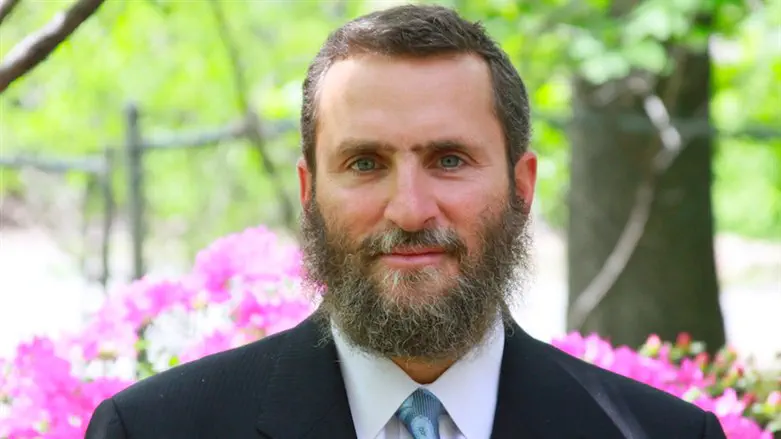
Rabbi Shmuley Boteach is the international bestselling author of thirty-eight books, translated into more than twenty languages. He has been hailed as “the most famous rabbi in America" (The Washington Post, Newsweek), “arguably the most famous Orthodox Jew on earth" (The New York Observer), and named one of the fifty most influential Jews in the world (The Jerusalem Post). One of Israel and Jewry’s most eloquent defenders, Rabbi Boteach has appeared on virtually every major television network and media platform across the globe. For eleven years, he served as Rabbi at Oxford University, where he founded the L’Chaim Society and built it into one of the largest student organizations in the university’s history. Rabbi Boteach is the only rabbi ever to receive the London Times Preacher of the Year Award, and remains the competition’s record-holder. He lives in New Jersey with his Australian wife, Debbie, and together they have, thank God, nine children and twelve grandchildren. Follow him on Instagram and X @RabbiShmuley.