
I. Iran: Danger and Determination
The Iranian danger does not lie in enriched uranium as a chemical element. It lies in the regime that possesses it and in the use it publicly declares it intends to make of it. Iran is not a state that aspires to the bomb as a generic deterrent - like Pakistan or India - but a theocratic regime that has named its enemies with geographic precision and has spent decades building its supreme determination: to eliminate them in order:
1) Israel, the small Satan; 2) the United States, the Great Satan; and finally 3) the elimination of EVERYTHING that is not radical Shia Islam.
II. The United States: Power and Doubt
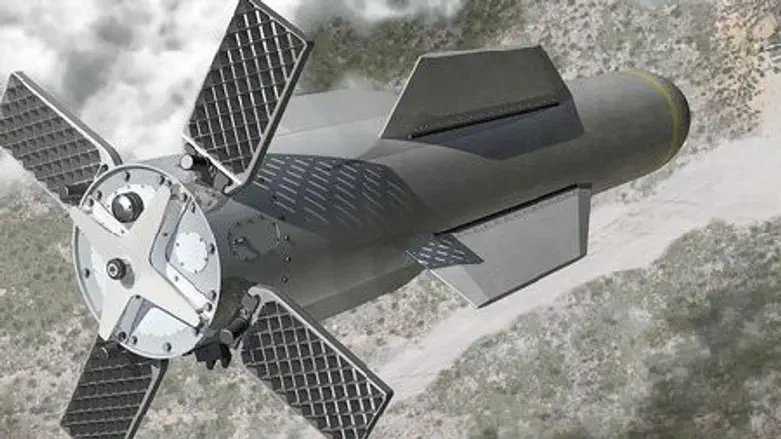
The United States has the military capacity to definitively destroy Iran's nuclear program. It possesses the bunker-busting munition - the GBU-57 - capable of reaching the deepest underground facilities, including Fordow. It has the intelligence, the logistics, and the air superiority. What it lacks, at this historical moment, is the sustained political will to exercise that power to its final consequences.
Trump is a symptom of that doubt, not its cause. Washington has been hesitating since Obama's concessions. The JCPOA of 2015 was the consecration of that hesitation: an agreement that dismantled nothing, that merely delayed, and that returned to Iran tens of billions of dollars in frozen assets that went directly to finance Hezbollah, Hamas, and the Houthis. The architecture of the agreement was, in essence, a purchase of time for the U.S. (and opportunity for Iran) disguised as diplomacy.
The source of America's doubt is concrete: there is no immediate risk to American lives. U.S. territory is not threatened today by an Iranian missile. That makes determination optional, negotiable, domestic - subordinated to electoral cycles and presidential image. Trump does not want to be remembered for the images of destroyed cities and civilian casualties that inevitably accompany a military campaign of that scale.
But the risk exists. It is not immediate - it is medium-term. A nuclear Iran that exports its ideological model through a network of proxies already established on three continents represents a threat of progressive ideological conquest that no American administration has been able to articulate with the urgency it deserves. Today's doubt finances tomorrow's danger.
The 60-day extension negotiated this week is, in this context, functionally an Iranian advantage. Without real verification, without on-site inspection, without verifiable dismantlement, every pause is time that Tehran uses to reconstitute missile launchers, relocate centrifuges, and disperse its infrastructure.
Iran negotiates with Trump's psychology, not against it.
III. Israel: Solution and Determination
Israel is the only actor whose existence is directly at stake. It is the first target, the first frontier, surrounded on all sides - its entire surface fits approximately 1,300 times within the combined territory of Islamic countries. Not in the abstract, not in the medium term - today, as declared by the adversary itself.
That condition makes Israel's determination categorically different in nature from that of the other actors. It is neither ideological nor electoral: it is existential. And existential determination does not waver.
But Israel also brings the most solid strategic argument in this conflict, the one most often lost in the debate: the problem was never the nuclear technology. It was the regime that possesses it. A post-ayatollah Iran with the same uranium, the same facilities, the same scientists, is a classic non-proliferation problem - manageable diplomatically, integrable into international inspection frameworks. A theocratic Iran with the bomb is an existential threat that has no possible diplomatic solution.
The solution, therefore, is not to destroy the uranium. It is to change the hands that hold it. Regime change in Iran - accelerated by a sufficiently devastating attack on the infrastructure of theocratic power, not on the civilian population - would trigger an internal collapse process already underway.
Iran has a civil society with pre-revolutionary memory, a youth that took to the streets in 2019 and 2022, and a regime that has no real popular legitimacy. It has only repression and the narrative of external threat.
The precedent exists and is documented: Osirak in 1981, the Syrian reactor in 2007. In both cases Israel acted alone, the United States maintained public distance, and the strategic result was unequivocal.
The question today is not whether Israel has the will to act. It does.
The question is whether Washington will provide the GBU-57s that make the necessary depth possible, or whether it will find in that omission a way to avoid being burdened with the images.
What Israel calculates - and what the logic confirms - is that this could also be the solution for Trump: Israel strikes, Trump gave no order, he can distance himself with a lukewarm condemnation, and simultaneously benefit from the strategic result. It is a known model. And in the absence of diplomacy with real teeth, it is the only path that resolves the problem rather than postponing it.
The Lesson the West Has Yet to Learn
In this scenario, determination outweighs power. A power plagued by doubt, facing actors with existential determination, tends historically to lose - even when it holds superiority of means. Iran has known this for decades. Israel has known it since its founding. The United States has yet to fully learn it.
The 60-day extension changes none of the original positions:
-Iran cannot concede on the nuclear issue without the regime losing its reason for being.
-The United States cannot commit to a sustained campaign without political will that does not currently exist.
-And Israel cannot wait indefinitely for Washington to resolve its ambivalence.
The history of Iran's nuclear program is, in large measure, the history of opportunities the West failed to seize. Every extension was a closed window. The defining question of this moment is not whether there will be an agreement. It is who will act first when it becomes clear - as it is already becoming clear - that there will not be one.
“While Israel fights, Europe sleeps the sleep of cowards."
Leon J. Halac is an accountant and businessman. He is also a great-grandfather, Argentinian, and Zionist who has been publishing opinion pieces in Iton Gadol and AJN since 2025.