

A historic milestone in New York's cultural and spiritual landscape: the largest and most magnificent Jewish library in the city has been inaugurated at the world center of Yeshivat Shuva Yisrael, located in a monumental building at 122 East 58th Street in the heart of Manhattan.
The vast Torah complex, housing tens of thousands of sacred books across two floors, was established under the leadership of the Rabbi Yoshiyahu Pinto and with the generous support of billionaire Jay Schottenstein. At the dedication ceremony, Rabbi Pinto paid an unusual tribute to Schottenstein, saying, "Jay Schottenstein is the Abraham of our generation, spreading the light of Torah in the broadest possible way."
The building itself carries a remarkable history. Completed in 1929 on the eve of the Great Depression, it was designed by architect Alexander Buel Trowbridge for the prominent Morgan banking family. For most of its existence, until 2007, it served as the official home of the New York Genealogical and Biographical Society, housing vast historical archives and research libraries.
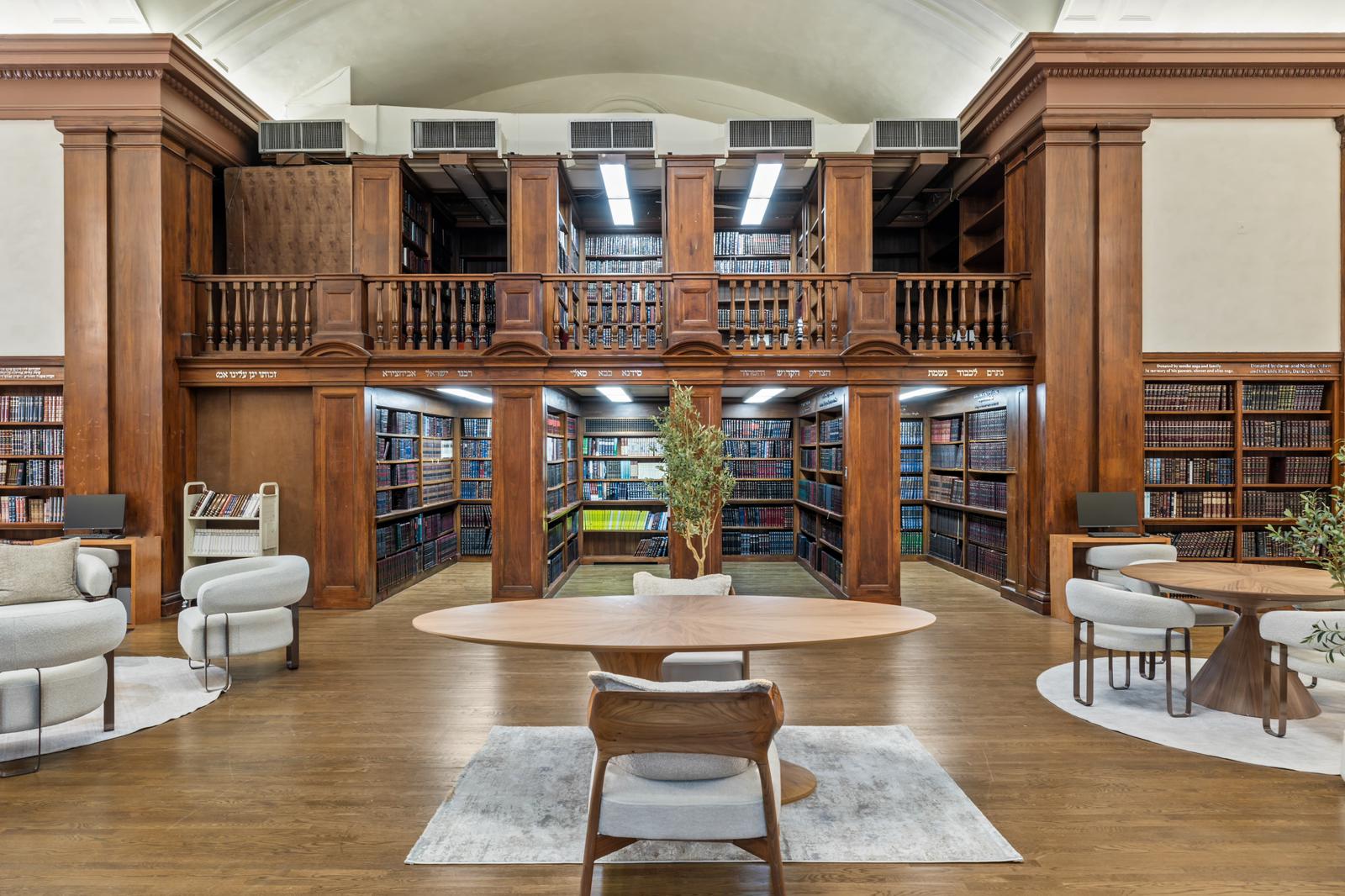
In 2007 it was purchased and converted into the world center of Shuva Yisrael. With the opening of the new library, a remarkable historical circle has been closed: a building that served for nearly a century as a research library has once again become one - this time dedicated entirely to the Jewish bookshelf.
The library currently holds more than 20,000 volumes arranged across dedicated sections covering the full breadth of Jewish literature: Bible and commentaries, Sephardic and Ashkenazi scholars, Lithuanian tradition, Hasidic thought, Kabbalah, Jewish law, responsa literature, Talmud, Midrash, and Jewish history.
The first floor alone houses approximately 14,000 volumes, arranged with meticulous care in a thematic layout where every room and space is dedicated to a distinct area of Jewish literature. Visitors can move between wings devoted to the Five Books of Moses, major biblical commentaries and Tanakh, leading into a dedicated commentators' room and spaces devoted to Jewish thought and tradition across the generations. These include three rich libraries of Sephardic scholars, two libraries of Ashkenazic authorities, and a large wing dedicated entirely to the Lithuanian Torah tradition.
Adjacent to these, the world of Jewish mysticism and philosophy unfolds across two spacious rooms devoted to Hasidic masters and a separate room for Kabbalistic literature. From there, the scholarly journey continues into the realms of Jewish law and halachic ruling, with two rooms of halachic literature, a responsa room, and a central hall dedicated entirely to the Talmud, Gemara and Mishnah. The first floor concludes with a research and knowledge wing offering two Midrash libraries and two libraries devoted to Jewish history, biography and the chronicles of the Jewish people.
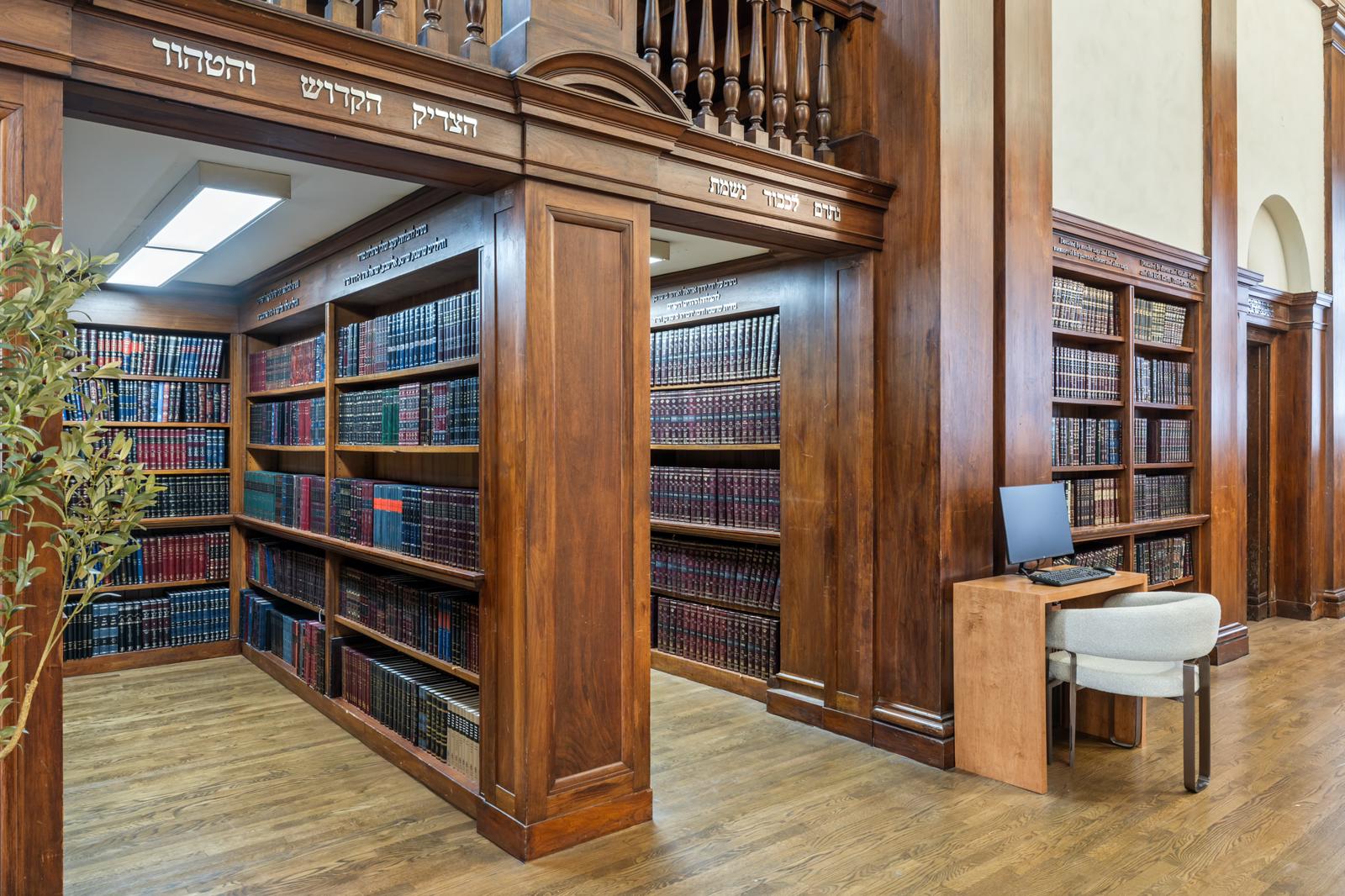
The second floor reveals an additional dimension of international reach, with a substantial English-language Torah literature section currently holding around 2,000 volumes and expected to grow to 5,000. On the other side of this floor sits a rare and cherished collection of approximately 6,000 personal books belonging to Rabbi Pinto and the rabbinic members of the Pinto family.
A dedicated reception room is currently being completed, and advanced computers running the Otzar HaHochma database have been integrated throughout to allow rapid navigation and source retrieval across the vast collection.
"Thousands of Jews live in Manhattan and its surroundings, and we already see the place becoming a center of learning where the public can sit and engage with Torah at any hour," said Rabbi Pinto at the opening. The stated goal of the project is to make the Jewish bookshelf accessible to all - New Yorkers and visitors from around the world alike, scholars and laypeople, religious, secular and traditional.
The new Manhattan library stands not only as an architectural and engineering achievement, but as a new spiritual lifeline - continuing the building's century-old tradition of preserving and sharing knowledge, and bringing the Jewish literary heritage to the heart of one of the world's great cities in its most magnificent form.