

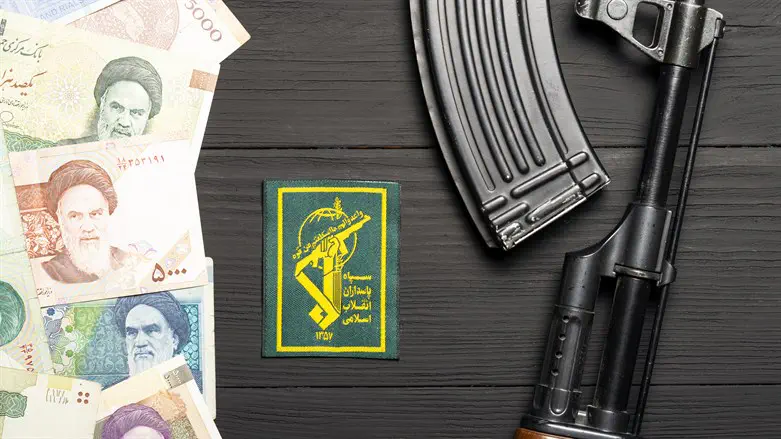
There is a category error embedded in how Western governments have responded to Iran's assassination campaigns inside Europe. They have treated the problem as a law enforcement challenge, a matter of arrests, indictments, extraditions, and judicial proceedings. The German indictments filed this month against two IRGC-linked operatives plotting to kill prominent Jewish and pro-Israel figures in Hamburg make the inadequacy of that framework impossible to ignore.
The central suspect, Ali S., a 54-year-old Danish citizen of Afghan origin, is alleged to have worked directly for the IRGC's intelligence service and maintained operational contact with the Quds Force. The targets were Josef Schuster, president of the Central Council of Jews in Germany, and Volker Beck, the former lawmaker who heads the German-Israeli Society. Prosecutors say the suspects conducted surveillance on both men in preparation for assassination and arson attacks. A second operative had already been tasked with weapons procurement.
This was not intelligence gathering. It was operational preparation for political murder inside a NATO member state.
The German case reflects a continental strategy that has been documented exhaustively and addressed inadequately. Iran International reported that the IRGC's Quds Force has established dedicated assassination squads, known as the German Network, tasked with targeting Iranian dissidents abroad and Jewish citizens across Europe, operating under Unit 840, a secretive Quds Force division responsible for overseas assassinations targeting Westerners, Israelis, and Iranian dissidents.
The Netherlands has documented assassinations of Iranian dissidents attributed to Tehran. Denmark disrupted a plot against an opposition figure. Sweden exposed the regime's use of criminal networks to threaten Jewish, Israeli, and opposition targets. A Berlin Court of Appeal established as far back as 2017 that the Quds Force runs its own intelligence division operating agents abroad with significant autonomy, not dependent on centralized command.
The operational implication of that last finding is critical. The Quds Force's European networks were built to function with a significant degree of autonomy, meaning that disruption of Tehran's leadership does not necessarily deactivate these cells. It may even unshackle them. Law enforcement successes, however competent, are therefore structurally insufficient. They interdict individual operatives while leaving intact the command architecture, the funding streams, the criminal proxy networks, and the ideological authorization that generates the next cell.
Tehran has refined a particular model of grey-zone warfare on European soil. Iran has increasingly outsourced its operations to state-linked criminal intermediaries, giving the regime plausible deniability while maintaining operational direction. In the United States, the Department of Justice confirmed that members of an Eastern European organized crime group were contracted by IRGC-linked operatives in a failed murder-for-hire scheme against a US-based dissident.
Of 54 documented plots in Europe, sixteen involved criminal perpetrators: six of them targeting Iranian dissidents or journalists, seven targeting Israeli diplomats or embassies, and four targeting Jews or Jewish institutions. The outsourcing model is deliberate. It creates judicial complexity, complicates attribution, and allows European governments to frame each incident as a criminal rather than a military matter.
In July 2025, 14 governments including France, the United States, the United Kingdom, Germany, the Netherlands, Sweden, and Canada issued a joint statement condemning Iranian intelligence services for plotting to kill, kidnap, and harass individuals across Europe and North America, and for their deepening collaboration with international criminal organizations. The statement was diplomatically significant. It changed Iranian behavior not at all. The networks publicly described in that statement remain largely intact.
The EU's decision in February 2026 to designate the IRGC as a terrorist organization was the correct step, arriving roughly three decades late. But designation is a legal status, not a policy. The question is what follows. If designation is used primarily to facilitate prosecutions of individual operatives while the IRGC continues to operate its European infrastructure with Iranian diplomatic cover and state funding, the designation changes the juridical landscape without altering the strategic one.
What a genuine hardline transatlantic response requires is a willingness to impose costs on the Iranian state itself, not merely on the expendable operatives it deploys.
-That means using the IRGC's terrorist designation to sanction the entire financial ecosystem that funds external operations, including European banks and companies that continue to process transactions connected to IRGC-linked entities.
-It means expelling Iranian diplomatic personnel identified as intelligence covers, as several European governments have done selectively but none systematically.
-It means treating Iranian grey-zone attacks inside NATO borders as an Article 5-adjacent challenge, not a bilateral law enforcement matter between Germany and Iran.
-And it means that Washington, which retains the greatest leverage over Tehran's financial exposure, must integrate Europe's assassination crisis into its broader Iran posture rather than treating them as separate files.
Amine Ayoub, a fellow at the Middle East Forum, is a policy analyst and writer based in Morocco. Follow him on X: @amineayoubx