

On May 4, 2026, shipping data recorded exactly one outbound transit through the Strait of Hormuz: the Nooh Gas, a sanctioned vessel operating under a false flag. One ship navigated a waterway that typically moves one fifth of the world's oil supply. That single data point reveals more about Iranian strategy than any diplomatic communique issued since the ceasefire began.
Iran is not trying to reopen the Strait of Hormuz. Iran is trying to own it.
The Persian Gulf Strait Authority, established by Tehran after the April ceasefire, is a highly consequential institutional development. The PGSA requires any transiting vessel to disclose cargo details, crew nationalities, destination ports, and financial backers. Vessels must also pay tolls in Iranian rials or face interception.
This framework systematically inverts the United Nations Convention on the Law of the Sea, transforming the right of innocent passage into a permission slip that Tehran issues based on political disposition.
This is not maritime administration. It is intelligence collection dressed as bureaucracy. It creates a revenue stream allowing the IRGC to self-finance under sanctions, wrapped in the language of sovereignty so objections can be dismissed as imperialism. The extensive data demanded by the PGSA helps Iran's intelligence apparatus identify sanctionable entities, plan future seizures, and map the commercial networks of states cooperating with Israel and the United States.
The practical result is visible in the shipping logs. Legitimate commercial traffic has effectively withdrawn. The only vessels moving through are state-directed by governments indifferent to sanctions or operators willing to risk Iranian interdiction. The global economy is being held hostage to a bureaucratic authority lacking any basis in international law, enforced by IRGC naval assets that continued mining the Strait weeks after the ceasefire.
This represents Iran's strategic pivot in action. Its conventional missile batteries were destroyed, its nuclear infrastructure was degraded, and its leadership was decimated. What it retains is the ability to threaten the arterial flow of global energy. It is rapidly institutionalizing that threat so any future military action against Iran carries an automatic economic penalty. If the PGSA stands, Tehran will achieve through maritime lawfare what it could not achieve through ballistic missiles: a permanent structural deterrent against Western intervention.
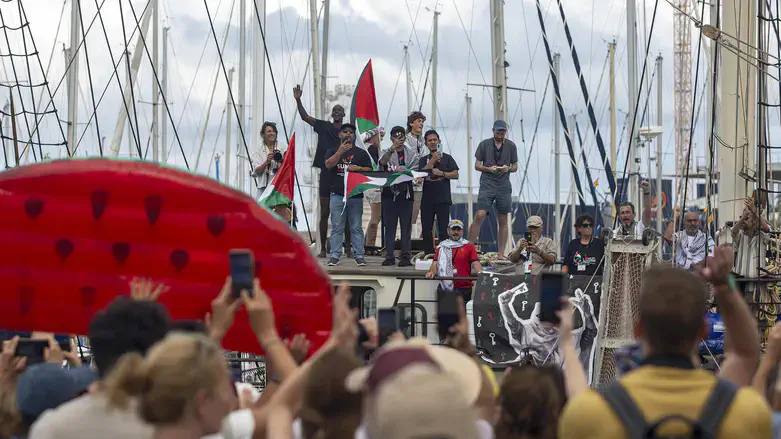
A second theater of this campaign played out in the Mediterranean. The Global Sumud Flotilla, a 22-vessel fleet carrying activists, was intercepted by the Israeli Navy on April 30. International media and UN bodies portrayed the interception as an attack on a humanitarian mission. However, Israeli manifests revealed the cargo consisted only of drugs and preservatives. It contained no medical equipment, food staples, or genuine relief infrastructure.
This matters because it occurred while legitimate aid was entering Gaza at a rate of 600 to 800 trucks per day. The flotilla's cargo was never meant for the pier in Gaza. It was designed to be intercepted and broadcast for the courtroom in The Hague, the editorial board in Brussels, and the parliament in Madrid. It was a narrative weapon designed to produce accusations of Israeli aggression, regardless of what was actually in the hold.
The organizational hand behind this is the Popular Conference for Palestinians Abroad, a Hamas-linked body. This deliberate campaign extends the war into legal and media arenas where military superiority is irrelevant and the rules of engagement favor the aggressor who can most convincingly play the victim.
The PGSA and the flotilla share the same strategic logic: replace lost military depth with bureaucratic permanence and civilian theater. Iran cannot currently launch a coordinated missile campaign, but it can demand international vessels file paperwork. Hamas cannot currently rocket Tel Aviv, but it can sail preservatives toward a blockaded coast and let the cameras do the rest.
Defeating this requires recognizing it as a unified campaign. The PGSA must not be acknowledged as a legitimate authority by any entity. Every transit that pays the toll validates the institution. Every flotilla that generates front-page coverage of Israeli interception validates the tactic.
Amine Ayoub, a fellow at the Middle East Forum, is a policy analyst and writer based in Morocco. Follow him on X: @amineayoubx