

In the months before October 7, Israeli intelligence was not blind. The signals were there, accumulated across years of reports, field assessments, and intercepted communications that described, with increasing clarity, what Hamas was preparing. The failure was not informational. It was conceptual. Decision-makers processed the evidence through a framework of managed deterrence and concluded, repeatedly, that the situation was stable enough.
They were wrong in a way that killed 1,200 people in a single morning.
That framework was never dismantled. It was relocated. Today it is being applied, with the same dangerous confidence, to the Sinai Peninsula.
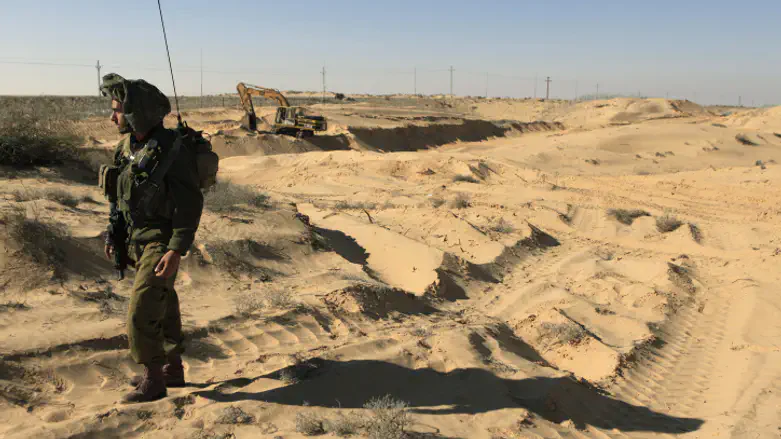
The American declaration of victory arrived, as it always does, before the region had finished deciding what came next. The Sinai had not been consulted. Forty thousand Egyptian troops. Tanks. Armored vehicles. Expanded airfields at Refidim and El-Arish. Underground bunkers. Anti-tank obstacles. Advanced radar systems angled, at least partially, toward Israeli territory. This is not a border garrison. It is a forward deployment.
And Israel has spent the better part of a decade watching it grow while calling it someone else's problem.
The bitter irony is that Israel helped build it. When ISIS affiliates began destabilizing the Sinai in the mid-2010s, Jerusalem quietly agreed to waive certain restrictions of the 1979 peace treaty, allowing Cairo to move heavier forces into zones the Camp David framework explicitly demilitarized. The logic was defensible at the time. A jihadist insurgency on your southern border is not an abstraction, and Egypt was fighting it with genuine cost. So Israel looked away from the treaty language and focused on the shared enemy instead.
What Egypt brought into Sinai to fight ISIS, Egypt has largely kept. The temporary became permanent. The exceptional became structural. Israel now faces a military reality on its southern border that the 1979 treaty existed precisely to prevent.
Netanyahu raised this privately with Washington in September 2025, reportedly asking the Americans to press Egypt on runway extensions and underground facilities. In February 2026, he told the Knesset foreign affairs and defense committee that the Egyptian military was growing stronger and required careful monitoring. These are not the words of a leader comfortable with what his intelligence services are showing him. They are the words of a man trying to handle quietly something that may not survive quiet handling much longer.
The timing could not be worse. America just declared the Iranian chapter closed. Washington needs Cairo right now, for Gaza reconstruction optics, for Red Sea coordination, for the appearance of regional stability that every American administration requires before pivoting homeward. Whatever leverage might have existed to press Egypt on treaty compliance is being spent on other priorities.
Cairo understands this calculus precisely. The bunkers in Sinai are not being built by accident.
What should alarm anyone who remembers the years before October 7 is not that the buildup is happening. It is how Israel is processing it. The Sinai expansion is not a secret. Israeli intelligence knows it. The government knows it. The complaints have been registered through proper diplomatic channels. Yet the framework for processing this information is identical to the framework that absorbed years of Hamas escalation signals before the kibbutzim burned. Watching. Concerned. Monitoring. Managing. Management is not a strategy. It is a waiting room, and Israel has been sitting in it for years on multiple fronts simultaneously.
The Oslo debate unfolding in the Knesset at this exact moment is not unrelated. Netanyahu requested a delay in a ministerial discussion on formally repealing the Oslo Accords. The stated reasons were political. The consequences are strategic. Oslo is not merely a set of expired agreements. It is a psychological architecture governing how Israel's political class understands the conflict, as something requiring indefinite maintenance rather than decisive resolution. As long as that architecture holds, every threat gets filtered through the question of how to preserve calm rather than how to achieve victory. Sinai gets managed. The Rahat terror cell, arrested this week inside an Israeli city, gets treated as a law enforcement success rather than evidence of an ideology that has never been confronted at its source.
The connection between a terror cell in Rahat, a stalled Knesset vote, and Egyptian armor in a demilitarized zone is not geopolitical coincidence. It is the same strategic failure expressing itself through three different symptoms. The failure is the belief that Israel can indefinitely absorb the slow accumulation of threats without ever forcing a reckoning. October 7 exposed that belief as catastrophic. Nothing in Israeli policy since has suggested the underlying assumption has been abandoned.
Israel has a narrow window. Iran is weakened. American forces remain regionally positioned. Egypt still values the relationship with Israel enough to respond to serious pressure if that pressure is actually applied.
This is the moment to draw a hard line on Sinai, not through military confrontation but through the kind of public insistence on treaty compliance that makes the current trajectory unacceptable to sustain. Quietly asking the Americans to quietly ask the Egyptians has not moved the bunkers. A different approach is required.
The next October 7 will not announce itself in advance either.
Amine Ayoub, a fellow at the Middle East Forum, is a policy analyst and writer based in Morocco. Follow him on X: @amineayoubx