
The convergence of the physical sciences and metaphysical frameworks reveals a strikingly consistent model of reality-one in which consciousness is not merely a byproduct of biological complexity but the very frequency that animates the machine. In both Kabbalistic tradition and the frontiers of quantum mechanics, the human being emerges as a layered system: a “transducer" that steps down infinite energy into localized, functional experience.
To understand why Jewish tradition views cremation as a profound violation of this system, one must first map the intricate entanglement between the soul’s five levels and the biological “hardware" it inhabits.
The Jewish conception of the soul, or Neshama, is not a monolithic “ghost in the machine" but a five-stage spectrum of light (Ohr) interfacing with vessels (Kelim), as described in Kabbalistic literature (see Zohar I:206a; Etz Chaim, Shaar HaNefesh). At the most granular level is the Nefesh, the functional life force. Rooted primarily in the blood-" for the blood is the soul" (Deuteronomy 12:23)-and associated with the liver (Zohar II:152b), the Nefesh governs the biological engine: instinct, survival, and cellular homeostasis. In quantum terms, it represents a state of maximal entanglement with physical matter, the point of greatest “decoherence," where soul and mass are most tightly bound. This interface allows the body to resist entropy and maintain its coherence.
In Kabbalistic language, the Nefesh provides the chayus-the animating vitality-of the physical structure (Tanya, ch. 1-2). It is not merely housed in the body; it is the binding field that sustains the body’s ordered complexity. Without it, the body collapses into inert matter governed solely by physical law. With it, the body becomes a transducer, converting Divine light into lived action-dirah b’tachtonim, a dwelling for the Infinite in the finite (Midrash Tanchuma, Naso 16).
Ascending from there, the Ruach resides in the heart-the seat of emotion, moral awareness, and relational depth (Zohar III:29b). Above it is the Neshama proper, associated with the brain and intellect and expressing self-reflection and the pursuit of meaning (Berachot 10a; Tanya ch. 3). From this perspective, the development of higher cognition-what we might call the prefrontal cortex-functions as an “antenna" capable of receiving higher-order consciousness. The brain does not generate awareness ex nihilo; it translates and channels it, much like a receiver renders invisible frequencies into an intelligible signal.
The two highest levels, Chayah and Yechidah, correspond to the surrounding lights (Ohr Makif) described in Chassidic and Lurianic teachings (Etz Chaim; Likutei Torah). These levels are not internalized within the body but transcend its boundaries. Chayah expresses pure will and transcendent desire, while Yechidah is absolute unity-the indivisible point where the soul and the Divine are one (Tanya ch. 2, 19). These levels are never fully “entangled" with the body; they remain in a constant state of superposition, both within and beyond the individual’s localized identity.
Within this framework, life is the period in which these higher levels are coupled to the physical through action, intention, and consciousness-through Torah, mitzvot, and lived experience. This coupling is itself a form of Tzimtzum, a contraction of infinite Divine light into finite vessels (Etz Chaim, Heichal A" K). In sleep-and more definitively in death-this coupling begins to loosen. As the Talmud states, “sleep is one-sixtieth of death" (Berachot 57b), a daily partial disengagement of the soul from the body.
Yet this separation is not instantaneous. In Jewish thought, death unfolds as a gradual unbinding. While the higher levels return to their source, the Nefesh-and elements of the Ruach-remain tethered to the body for a time. The Zohar (I:122b) describes the soul lingering near the body after death, aware of what transpires. Midrashic and halakhic sources echo this sensitivity, forming the basis for K'vod HaMet, the obligation to treat the body with profound dignity (Berachot 18a; Shulchan Aruch, Yoreh De’ah 348).
Within this window of lingering connection, the prohibition of cremation takes on its deepest meaning. Outwardly, it is rooted in honoring the dead; its inner logic is energetic and relational. The body is not a discarded shell; it is a sanctified partner, refined through every mitzvah performed in life. As the Zohar teaches, the limbs of the body become vehicles for holiness through action. Soul and body co-authored the individual’s identity. To violently destroy the body at the moment of separation is to rupture that partnership in its most vulnerable state.
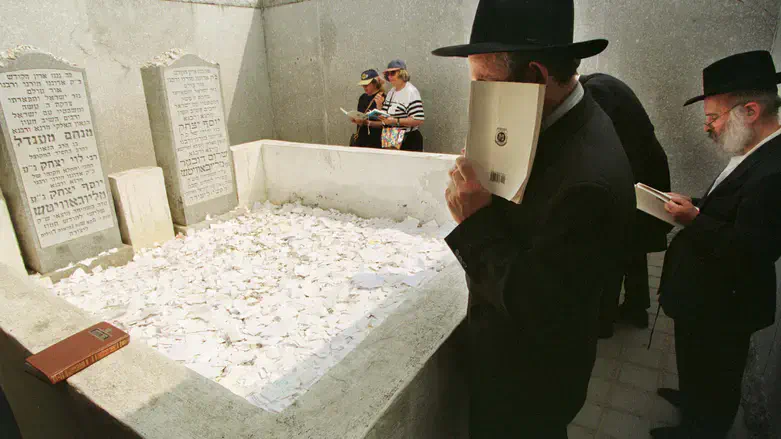
Burial allows for a gradual release. As the verse states, “for dust you are, and to dust you shall return" (Genesis 3:19), and is echoed in Psalms 104:29: “You take away their breath, they perish and return to their dust." This process of decomposition is not merely biological; it is metaphysically calibrated. It allows the Nefesh to gently disengage, transitioning from localized entanglement back to a unified state. The Talmud (Sanhedrin 46b) emphasizes burial as a positive commandment, not only for dignity but also for completing the האדם-אדמה cycle.
Cremation, by contrast, imposes abrupt erasure. It severs the interface instantly, denying the body its role in the soul’s continued unfolding and in the future reality of Techiyat HaMeitim -the resurrection of the dead-a foundational principle codified by the Rambam (13 Principles of Faith). It is not merely a different method; it reflects a fundamentally different understanding of the body.
Jewish tradition also speaks of the Luz bone-an indestructible element from which resurrection will arise (Midrash Kohelet Rabbah 12:5; Pirkei DeRabbi Eliezer 34). The Luz bone signifies continuity: the irreducible imprint of embodied existence. The soul may be eternal, but it is not abstract-it bears a relationship to form, memory, and identity. To incinerate the body is, in this sense, an attempt to erase the very anchor of that continuity.
At the core of Jewish law lies the principle that the body is not owned but entrusted. “The soul is Mine, and the body is Mine," as implied in Ezekiel 18:4. A person is a steward, not a proprietor. Just as one would not destroy a borrowed instrument after composing a symphony, one does not dispose of the body at will. Burial is not primitive-it is precise. It acknowledges that the body’s final role is not utility but dignity and that it must be returned as prescribed: integrated back into the earth.
The “cloud server" analogy sharpens this further: if the soul is the information, the body is the terminal through which it is processed and expressed. Burial places the terminal in a respectful “sleep mode," acknowledging that the hardware has been sanctified by its use. Cremation is not merely decommissioning; it is destruction. Even if the “data" persists, the violent severing of the interface disrupts the system at its most delicate transition point.
Ultimately, the divergence between scientific and spiritual models hinges on a single question: Does the brain produce consciousness, or does it receive it? While modern science demands empirical proof and the Torah operates through revealed truth, both increasingly point to layered, hierarchical realities. Biological systems convert energy into life-mitochondria transform light-derived energy into cellular function-while the soul transforms Divine influx into thought, emotion, and action.
If a plant is severed from its light source, it withers-not because the sun ceases, but because the connection is broken. Likewise, destroying the body by fire is not a neutral act of disposal; it disrupts a finely tuned system of transmission. It forces dissolution through an entropic, consuming medium, rather than allowing reintegration through the earth’s generative, sustaining processes.
In Jewish thought, death is not an end but a reconfiguration-a temporary uncoupling of a system destined for reunion. The body and soul are not accidental companions; they are covenantal partners in a process that extends beyond a single lifetime. Burial affirms that partnership even in separation. It allows the final transition to unfold with coherence, patience, and fidelity to the structure that made life itself possible.
And this is the essential point: the human being is neither merely matter animated for a time nor spirit briefly trapped in flesh, but a deliberate and sacred fusion of the two, willed by the Creator and sustained by Divine energy at every moment. The dignity we afford the body after death is not sentimental-it is a theological statement. Burial declares that the bond between soul and body is real, enduring, and purposeful; that the physical world is not an illusion to be discarded but a vessel to be honored; and that even in death, the story is not over.
To return the body to the earth gently, in accordance with Torah, is to affirm creation itself-to acknowledge that what was formed from dust was never merely dust, but matter elevated, structured, and suffused with Divine intent. It is to respect the slow unwinding of a sacred entanglement rather than tearing it apart. And it is to express trust in the promise that this partnership is not lost, only paused-that the same Divine wisdom that once fused soul and body will do so again, in a future where fragmentation gives way to unity and life, in its fullest sense, is restored.
For more information on Jewish Traditional Burial, I can be reached at rsezagui@gmail.com