
Videos circulating across social media in recent days have documented a wave of violent incidents allegedly carried out by a youth group known as SSQ in the streets of south Tel Aviv, sparking renewed public debate over crime, illegal immigration, and personal security in the area.
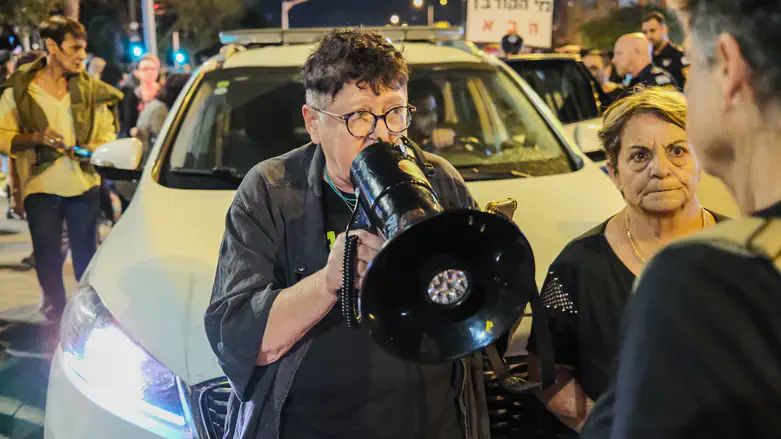
In an interview with Arutz Sheva - Israel National News, longtime south Tel Aviv activist Sheffi Paz, a representative of the “Free South Tel Aviv" campaign, described what she called a growing and dangerous gang phenomenon.
Paz sharply criticized the group’s name, saying the initials stand for “Shapira neighborhood, South Tel Aviv."
“They also steal our identities and that has significance," she said.
According to Paz, the phenomenon began several years ago when graffiti bearing the SSQ name began appearing throughout the Shapira neighborhood.
“We tracked them, found them on TikTok and saw that these were groups of boys aged ten and up with gang characteristics-clothing and music," she said. “At first it was just an identity-building phase. We passed the information to the police, who kept an eye on them."
She claimed the situation escalated rapidly.
“Very quickly it turned into acts of violence and robbery, and it developed until they committed the major stupidity and stabbed someone," Paz said. “There have been robberies and thefts for a whole year in various neighborhoods of Tel Aviv that report these children terrorize people."
Discussing the makeup of the gangs, Paz alleged that many members are children of migrants living in the area.
“Almost every Eritrean child calls himself SSQ," she claimed. “These gangs are mostly Eritrean, some Sudanese, some Filipino, some Arabs from Jaffa and likely two or three children from very poor Jewish families who joined them."
Paz argued that the gang identity has become a substitute for belonging.
“They turned the gang into an identity," she said. “These children don't feel wanted here and in interrogations they say this is their revenge."
She also accused authorities of ignoring warning signs for years.
“When I spray-painted the words ‘school for young criminals’ on their schools I didn't do it to annoy but because I knew what they cultivate there," Paz said. “The lynchings of our children have been happening for a long time."
According to Paz, residents of south Tel Aviv have been living under constant fear.
“They are everywhere," she said. “We have lived in fear for a very long time because of the children."
Referring to one recent alleged assault, she added: “The father of the girl who was lynched is tall, over two meters, a strong man, but they fled the house because he knows he won't be able to protect his children."
Paz estimated that while police may identify around one hundred official SSQ members, the wider influence of the gang culture is much broader.
“For each one there are ten more who call themselves SSQ, who want to be accepted," she said. “It's a kind of pride. They publish everything. Their TikTok tells it all."
She further alleged that gang members frequently upload videos documenting criminal acts.
“They film escapes from the police, they attack and rob many foreign workers," she claimed. “They are extremely racist."
Paz also argued that the extensive media attention surrounding the gang may be fueling its growth.
“They love this publicity," she said. “They became stars, everyone talks about them. They celebrate."
According to her, police arrests have only temporarily disrupted the organization.
“The police managed to eliminate by arrests the top layer of their leaders, but immediately another layer rose that is younger and more violent," she warned.
Paz additionally claimed organized criminal elements are exploiting the youths.
“They are minors not subject to full criminal responsibility who are willing to do anything for not much money," she said. “They have gang discipline; they don't inform."
She rejected arguments that improving legal status or integration opportunities would solve the issue.
“All the nice talk from leftists, humanitarians about giving them status and prospects so they will feel accepted, that's nonsense," Paz said. “They don't feel part of us. They are a subculture and bring cultures from outside."
Calling for tougher action, she declared: “South Tel Aviv is the promo for the whole country and the solution is only expulsion and expulsion and expulsion."
Paz said she and other activists are cooperating with police efforts to identify suspects, but insisted law enforcement is not the primary obstacle.
“The problem is not the police. The problem is the courts," she said, criticizing judicial decisions that return minors to house arrest under the supervision of relatives.
“The judges don't understand what this is and treat them as citizens," she argued.
Paz said she now plans to approach members of the Knesset in an effort to gather signatures supporting organized deportation measures under Israeli immigration policy, while publicly naming lawmakers who decline to support the initiative.