

Before Syria holds elections, before it establishes a functioning judiciary, before its central bank can stabilize a currency decimated by thirteen years of civil war, Ankara has moved in. Two Turkish banks, the state-owned Ziraat Bank and the private Aktif Bank, are expected to begin operations inside Syria imminently. Syria's central bank governor, following a two-day working visit to Turkey this week, described financial cooperation between Damascus and Ankara as "accelerating and becoming increasingly institutionalised."
The guns in Syria's northeast have barely gone quiet. The ink on the January ceasefire agreement with the Kurdish-led Syrian Democratic Forces is still fresh. And Turkey is already building the financial architecture of a client state.
This is not reconstruction. It is absorption.
The distinction matters enormously, and Western governments, including Washington, have been conspicuously slow to make it. Reconstruction implies a sovereign Syria directing its own recovery, drawing on external partners on its own terms. What is unfolding instead is the systematic embedding of Turkish institutional infrastructure into Syrian economic life at a moment when Damascus is too weak, too dependent, and too ideologically aligned with Ankara to resist.
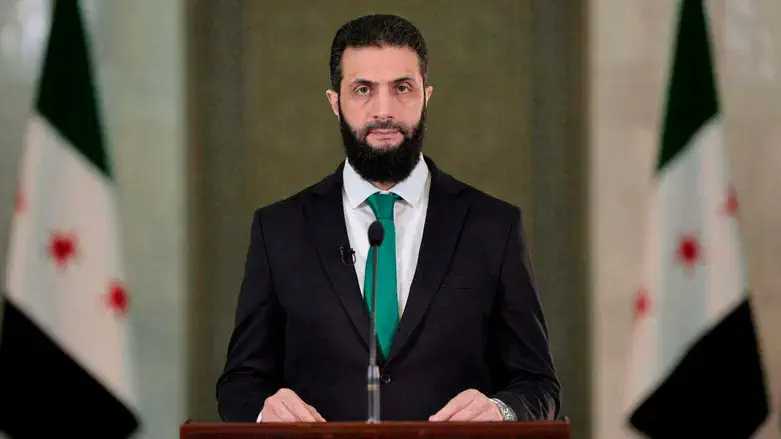
President Ahmed al-Sharaa's transitional government emerged from Hayat Tahrir al-Sham, the jihadist-rooted rebel movement that Turkey backed and cultivated for years. Sharaa owes his position in no small part to Erdogan's patronage. The Turkish military remains deployed across significant swaths of northern Syria under a parliamentary mandate that was extended in late 2025 for an unprecedented three years. Into this environment, Turkish banking is now being inserted as the financial nervous system of the new Syrian state.
The logic of this sequencing is not accidental. Whoever controls a country's banking infrastructure controls its trade flows, its foreign exchange, its salary payments, and ultimately its political loyalty. Turkey has run this playbook before, in northern Cyprus, in parts of Somalia, in Qatar. The difference in Syria is the scale of the prize and the completeness of the opportunity.
Syria's financial sector was hollowed out by sanctions, war, and regime looting. There is no functioning alternative for millions of Syrians who need basic banking services. Ziraat and Aktif are not entering a competitive market; they are filling a vacuum, and they are doing so with the full institutional weight of the Turkish state behind them.
For Israel, the strategic implications are severe and underappreciated. Israeli officials have watched with alarm as Turkey has consolidated military and political dominance in post-Assad Syria. Israeli airstrikes have already targeted infrastructure Ankara intended to use for its F-16 fleet, and the prospect of a Turkish-aligned government in Damascus with hostile orientation toward Israel has become the defining security concern on Israel's northern frontier.
Economic integration deepens and accelerates that alignment in ways that are far harder to reverse than military deployments. Troops can be withdrawn under diplomatic pressure. Banking infrastructure, once established, creates constituencies, obligations, and dependencies that outlast any particular government or agreement.
Washington, for its part, has chosen to engage Syria through Damascus, treating al-Sharaa's transitional government as the primary American partner in the country and effectively endorsing Syrian territorial integrity and sovereignty. President Trump has met with al-Sharaa twice. U.S. envoy Tom Barrack has described recent developments as a major opportunity. That framing is not wrong on its face, but it papers over a fundamental problem: the sovereign Syria that Washington wants to work with is, at the institutional level, being pre-emptively colonized by a NATO ally whose regional ambitions are directly at odds with American interests in stable, pluralistic governance.
The United States should be conditioning any further economic normalization with Damascus, including the lifting of sanctions and the release of reconstruction financing, on explicit guarantees that Syrian financial sovereignty is not being traded away to Ankara. That means insisting on transparency around the terms of Turkish bank operations, including profit repatriation arrangements, currency exposure, and the extent to which Syrian state accounts will be held in Turkish institutions. It means supporting the development of genuinely independent Syrian financial institutions that can serve as alternatives to Turkish ones. And it means signaling clearly to Erdogan that financial penetration of Syria will be treated as a strategic concern, not a bilateral economic matter between two friendly governments.
None of this is currently happening. The Biden administration spent years watching Turkey accumulate leverage in Syria without consequence. The Trump administration, despite its rhetorical skepticism of Erdogan's ambitions, appears to be making the same error through different means, prioritizing a headline deal with Damascus over the structural conditions that would make Syrian sovereignty meaningful.
Erdogan has a long record of patience in the pursuit of strategic objectives. He does not need to announce an Ottoman restoration. He simply needs to ensure that when Syria eventually stabilizes, its banks, its trade, and its political class all run through Ankara. The opening of two Turkish banks is a small step. It is also, in context, a declaration of intent that the region's governments would be unwise to ignore.
Amine Ayoub, a fellow at the Middle East Forum, is a policy analyst and writer based in Morocco. Follow him on X: @amineayoubx