

Every framework for ending a conflict rests on an assumption about what ending actually means. For most of the international community, an end to the fighting in Lebanon would mean a return to some version of the arrangements that preceded the current escalation, a renegotiated ceasefire, a redeployment of Lebanese Armed Forces, perhaps a strengthened UNIFIL mandate with marginally more robust enforcement language.
This is the diplomatic community's definition of success, and it has been tried, in various formulations, since 1978. It has failed every time for the same reason: it treats the absence of active combat as equivalent to the resolution of the underlying conflict, when in fact it is merely the interval between rounds.
There is a different way to think about how conflicts of this kind actually end. They do not end through negotiated arrangements that leave the adversary's fundamental orientation intact. They end when the adversary accepts, as a practical and psychological reality, that the existence and security requirements of the opposing state are permanent facts of the regional landscape rather than temporary impositions to be reversed through the next round of violence.
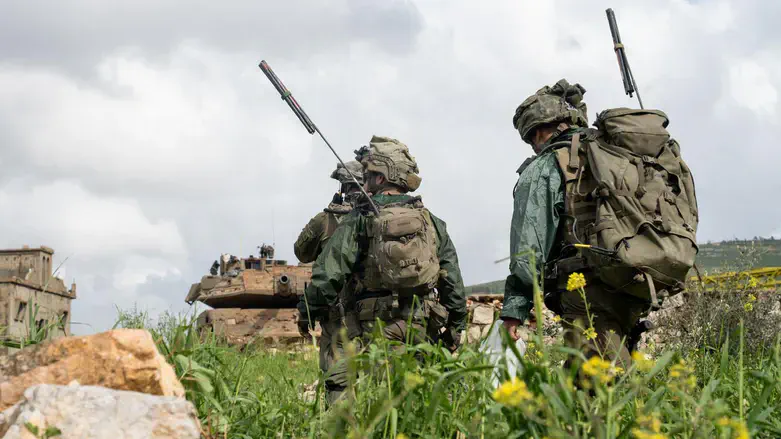
Applied to Lebanon, this logic yields a conclusion that the current Israeli government appears to be reaching by necessity even if it has not yet articulated it with full clarity. A buffer zone is not a strategy. It is a geography. What transforms geography into strategy is the political will to hold it indefinitely, and the clarity to explain why anything less produces the same result as what came before.
Hezbollah's decision to escalate in March 2026 was not an intelligence failure. It was the predictable consequence of a deterrence architecture built on foundations that the organization had spent years quietly undermining. United Nations Security Council Resolution 1701, which ended the 2006 war, was premised on the disarmament of Hezbollah south of the Litani River and the deployment of the Lebanese state as the sole legitimate armed actor in that territory.
Neither condition was ever meaningfully enforced. UNIFIL documented violations. Reports accumulated. The Security Council met. Hezbollah rearmed at a pace that transformed its military capacity from a militia into something closer to a combined-arms force with precision munitions, anti-tank systems, and a drone program sophisticated enough to complicate Israeli air operations. The agreement failed not because its provisions were poorly drafted, but because no party to it was prepared to absorb the cost of enforcement, and Hezbollah understood this with absolute clarity.
The lesson the organization drew from 1701 was the same lesson it drew from every prior arrangement: that Israeli restraint, international supervision, and Lebanese state dysfunction together constituted a permissive environment in which reconstitution was not merely possible but essentially guaranteed.
Every ceasefire was an operational pause. Every withdrawal was a forward position abandoned.
An adversary that does not accept the permanence of the opposing state does not experience a ceasefire as a settlement. It experiences it as a reloading interval.
The argument for a permanent Israeli security zone in southern Lebanon is therefore not primarily territorial. It is psychological and doctrinal. Territory held consistently, governed clearly, and defended without apology, communicates something that rotating peacekeepers and diplomatic communiques cannot: that the strategic equation has changed in ways that are not subject to revision at the next round of negotiations.
The zone must be deep enough to deny Hezbollah the ability to mass forces within rocket and anti-tank range of Israeli communities, and it must be held with the explicit understanding that its evacuation is conditional not on the passage of time or the satisfaction of diplomatic benchmarks, but on the verified transformation of the adversary's fundamental relationship to Israeli sovereignty.
This brings the analysis to the question of Syrian neutrality, which certain regional diplomats have identified as a potential stabilizing variable. The proposition is theoretically appealing and operationally impossible. Syrian territory, particularly in the borderlands connecting the Bekaa Valley to the Damascus corridor, remains the primary logistics infrastructure through which Iran supplies, funds, and directs the network of which Hezbollah is the most capable node. As long as those networks remain physically intact and politically protected by whatever governing arrangement emerges in Damascus, Syrian neutrality is a declaration without content.
Iran does not need Syrian belligerence to sustain Hezbollah. It needs Syrian passivity, and Syrian passivity regarding Iranian logistics has been the consistent condition of the borderlands for decades regardless of who nominally controls the territory.
None of this promises that the path forward is easy or that its costs are low. It argues instead that the alternative has already been tried at enormous cost and has produced the situation Israel confronts today. Agreements that leave the adversary's will intact, its networks functioning, and its orientation toward Israel's elimination unchanged are not solutions. They are postponements.
Southern Lebanon has already paid the price of several postponements. The question now is whether Israel is prepared to impose the conditions under which the other side's definition of the possible is permanently altered. Everything short of that is a buffer with an expiration date.
Amine Ayoub, a fellow at the Middle East Forum, is a policy analyst and writer based in Morocco. Follow him on X: @amineayoubx