

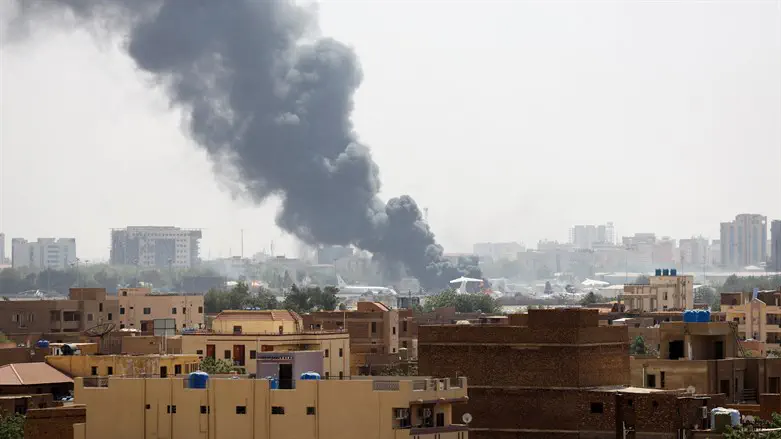
While Gaza, Lebanon, and the Gulf get all the attention, a quieter Iranian move is unfolding across the Red Sea right in the middle of Sudan's civil war, affording another reason the current war must achieve a decisive outcome. Tehran and Khartoum restored their diplomatic ties in October 2023 after being apart for 32 years. Since then, Iran has steadily supplied weapons to General Abdel Fattah al Burhan's Sudanese armed forces. This turned a local power struggle into the western base of Iran's alliance network.
Late March 2026 battlefield videos show Iranian drones flying over Khartoum and Iranian military trainers teaching Sudanese recruits. Tehran's revolutionary ideas are also mixing into Sudan's military culture. This is more than just basic military help. It creates a loyal and dependent ally on Africa's strategic Red Sea coast, looking a lot like what Iran did with the Houthis in Yemen.
Since the civil war between the army and the Rapid Support Forces started in April 2023, Burhan's regular troops have struggled against his rival's fast movements, Gulf funding, and early drone advantage. Tehran stepped in to help. Starting in late 2023, flights from Iran to Port Sudan brought multiple types of attack and spy drones. By early 2025, these weapons changed the army's luck. They took back Omdurman, secured state TV towers, and hit rival positions hard from Darfur to Sennar.
Iran trades its hardware for a great location. They get a foothold on the Red Sea, which is vital after the US and Israel damaged Houthi weapons. Sudan is becoming Tehran's listening post, right across the water, to track naval movements from the US, Saudi Arabia, and the UAE.
Iran's real genius is using belief as a weapon in the middle of chaos. The al Baraa bin Malik Brigade is a perfect example. This group is tied to the Sudanese Muslim Brotherhood and was sanctioned by the US in 2025. Once just a small militia, these fighters are now trained by Iran and fight alongside the main army. They take territory and use religious slogans that link them to groups like Hezbollah and the Houthis.
Recent arrests of rogue commanders by the Sudanese army show some tension, but the core group stays strong. This makes sure any future government answers to Tehran's ideas. Drones will eventually rust, but devotion lasts a long time. Iran is great at turning battlefields into bases for its ideology, and Sudan's military culture is soaking this up.
A Sudan that aligns with Iran completes a trap that squeezes the Red Sea corridor. You have the Houthis in the south and Port Sudan in the north. This waterway carries a huge amount of global trade and links Asian factories to European markets. Houthi drone and missile attacks since October 2023 have already forced ships to take 10 to 14 day detours around Africa. This made shipping costs jump up, delayed products, and made energy bills higher in Europe.
Sudan makes this threat much bigger. While an official naval base is not set up yet because Port Sudan is resisting, trading weapons for access is working. Sudan offers airfields, safe shelters, and a massive coastline for bigger operations. Tehran is tightening its grip on a key part of the global economy.
The real prize in Sudan goes beyond the ocean. Sitting between the Arab north and the African heartland, Sudan is Iran's bridge to the Sahel region. This includes countries like Mali, Niger, Burkina Faso, and Chad. These are places where governments are falling and new military leaders are welcoming partners who are hostile to the West.
Tehran's cheap drone system is flooding south along with mixed militias and a style of ruling that combines strict Iranian military discipline with religious preaching. A single drone factory in Khartoum could supply rebel groups across the Sahel by 2027. Investments in the Red Sea could lead to massive control across the continent.
Leaders in Washington and Europe mostly treat Sudan as a charity crisis. They focus on aid for displaced people, empty towns, and massive hunger. Diplomats keep trying to arrange ceasefires while Iranian engineers strengthen Sudanese airbases. As Burhan demands his rivals surrender amid horrible violence in Darfur, Tehran fills the power gap. They push their religious ideas into the officer ranks to ensure the current leaders stay loyal.
If no one stops them, Khartoum will host permanent Iranian drone teams, electronic spying stations, and naval advisors reaching deep into Africa's interior.
Gulf countries need to treat this as an urgent defense issue. They need financial blocks on money moving between Iran and the Sudanese army. Intelligence agencies must track training camps in places like Uganda, and countries like the UAE, Saudi Arabia, and Egypt should block access to their ports. The supply line needs to be cut now before Sudan's massive army becomes Iran's African legion.
If Tehran locks down both coasts, it changes the map of the world.
The fire in Khartoum is not just a local problem. It is fuel for an expanding empire. Ignoring this will invite a massive Iranian front in Africa instead of just a headache in the Gulf.
Amine Ayoub, a fellow at the Middle East Forum, is a policy analyst and writer based in Morocco. Follow him on X: @amineayoubx