

As the United States and Israel press their sustained campaign against Iran’s military and nuclear infrastructure, the Middle East is undergoing its most profound realignment in decades. Iran’s ballistic-missile production has been severely degraded, its air defenses shattered, and its regional proxy network under unprecedented pressure.
Yet for Egypt, the Arab world’s traditional demographic and cultural heavyweight, this new strategic landscape is not a cause for celebration. It is a high-stakes dilemma that threatens both its economy and its regional relevance.
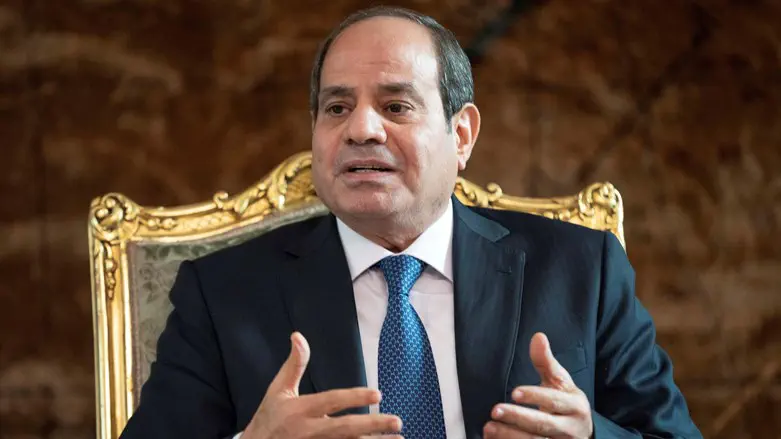
Prime Minister Mostafa Madbouly is racing to insulate Egypt’s fragile economy from the latest shocks. Global energy prices remain volatile amid threats to the Strait of Hormuz, while Red Sea shipping disruptions-already acute since late 2023-have only worsened. Suez Canal revenues, a critical foreign-currency earner, continue to suffer. These immediate pressures, however, mask a deeper structural crisis confronting President Abdel Fattah el-Sisi.
Egypt faces a classic lose-lose proposition. If the current U.S.-Israeli operations against Iran drag into prolonged proxy conflict or sporadic escalation, Cairo’s already strained finances could collapse under the weight of higher energy costs, refugee inflows, and disrupted trade. Conversely, if the conflict ends with a decisively weakened Iran, a Saudi-led security architecture, a more assertive Turkey, and a militarily ascendant Israel, Egypt risks diplomatic marginalization. Once the indispensable Arab mediator, Cairo now watches its traditional leverage erode.
Domestic vulnerabilities compound the external threat. Egyptian households are reeling from persistent inflation, repeated currency devaluations, and soaring prices for bread, fuel, and staples. Behind the walls of the Ittihadiya Palace, the regime’s deepest fear is not an external invasion but a domestic “Hunger Revolution." Sisi’s legitimacy rests on an implicit bargain: the military-backed state delivers stability and subsidized basics in exchange for political quiescence. When that bargain frays, unrest follows.
Cairo has responded with emergency fiscal measures. In recent weeks the government authorized an unscheduled expansion of its “social protection" budget, boosting subsidies for bread, food staples, and fuel-even as the International Monetary Fund continues to press for austerity and structural reform. These moves are defensive, not developmental: fiscal sandbags thrown against a rising tide of public discontent.
At the same time, Prime Minister Madbouly imposed 9:00 p.m. closing curfews for shops, restaurants, and malls to ration electricity and conserve fuel whose import bill has more than doubled in recent months.
The visible spectacle of a state struggling to keep the lights on is a telling admission of weakness.
The war’s economic toll is unmistakable. Suez Canal income has declined sharply due to security concerns and rerouted shipping. Tourism-another vital revenue source-has been hit by regional instability. Foreign direct investment has dried up as capital flees uncertainty.
For decades Cairo extracted bailouts from Gulf patrons and Western institutions by brandishing the “too big to fail" argument: an Egyptian collapse would destabilize the entire region. That leverage is now diminishing. Gulf states, focused on their own post-oil diversification and Vision 2030-style megaprojects, exhibit growing “bailout fatigue" toward Egypt’s chronic deficits. Riyadh’s strategic priorities have shifted; it is less inclined to underwrite Cairo indefinitely while pursuing independent energy and security arrangements.
The Israeli security establishment, for its part, must weigh the generational victory of having crippled Iran’s nuclear and missile programs against the secondary danger of Egyptian instability. An Egypt beset by food insecurity, rolling blackouts, and paralyzed public services would create a vacuum that jihadist groups, Muslim Brotherhood remnants, or opportunistic actors could exploit. The Sinai Peninsula-already a long-standing security concern-could become even more porous. Transnational militancy does not respect borders; an imploding Egypt on Israel’s southern flank would represent a new and volatile threat.
Sisi’s balancing act has no safety net. He must placate international creditors demanding fiscal discipline, manage the impatience of Gulf benefactors tired of repeated rescues, and contain the frustration of 110 million Egyptians squeezed by inflation and scarcity-all while Egypt’s historic role as regional power broker is eclipsed. The military remains the ultimate guarantor of regime survival, but its resources are finite and its domestic legitimacy tied to economic performance.
Amine Ayoub, a fellow at the Middle East Forum, is a policy analyst and writer based in Morocco. Follow him on X: @amineayoubx