

President Donald Trump stood before an audience in Miami and boldly rebranded the world’s most dangerous maritime chokepoint, the Strait of Hormuz, as the Strait of Trump. Pundits in the usual echo chambers dismissed it as mere rhetoric.
They missed the point entirely.
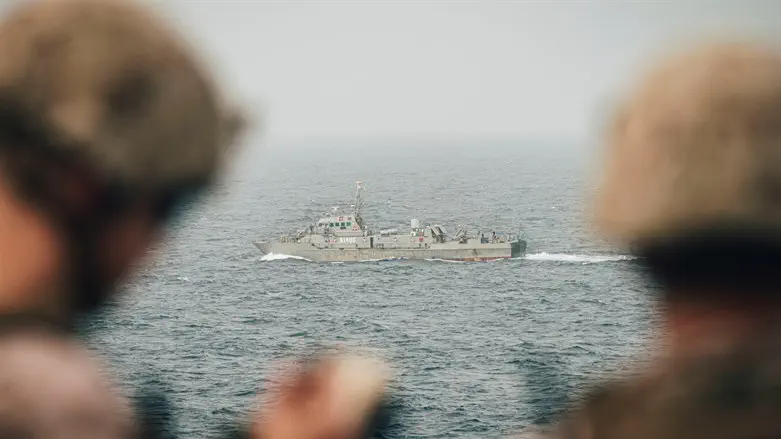
The declaration came at the precise moment Secretary of State Marco Rubio exposed Tehran’s latest outrage: Iran’s brazen plan to impose a permanent Hormuz Toll, extorting millions from every commercial vessel seeking safe passage through the Persian Gulf. This move is not some isolated provocation. It is a calculated assault on the very foundations of international trade and a direct challenge to American and Israeli security interests across the region.
For seventy years, the United States played the role of unpaid global policeman, keeping sea lanes open for friend and foe alike. American blood and treasure guaranteed free navigation even for regimes that actively worked to undermine America and its allies. Beijing built its economic empire on Middle Eastern oil protected by U.S. warships. Tehran funneled petrodollars into its terror proxies while the very nation it calls the Great Satan kept its oil tankers floating.
Successive American administrations clung to this outdated doctrine of selfless maritime guardianship, believing that open seas would somehow foster stability and goodwill. In reality, this approach allowed adversaries to exploit American power without ever contributing to the cost or aligning with shared values.
The Middle East conflicts have shattered the old order. Insurance markets in London and Europe have effectively blacklisted the Persian Gulf, driving shipping costs to unsustainable levels and threatening energy supplies that are vital not only to Europe but also to Israel’s own economic partners. Tehran is now exploiting the vacuum, demanding extortionate fees from some nations while blocking others outright. Secretary Rubio rightly called this an illegal and reckless assault on international order.
But identifying the problem is not enough. The only realistic solution is a decisive shift to a new mercantilist maritime doctrine, one that puts American and Israeli interests first and rejects the fantasy of perpetual free security for everyone.
Maritime security is no longer a free public good. It is a premium service. Nations that want safe passage must align with the U.S.-Israel strategic partnership or pay the full price of chaos. The United States and Israel together possess the naval power, technological edge, and intelligence superiority to create an unbreakable premium security zone covering the Eastern Mediterranean and the Persian Gulf.
This zone would integrate advanced missile defense systems, real-time intelligence sharing, and joint naval patrols that prioritize the protection of allied shipping lanes. Israeli naval expertise, honed through years of defending against threats in the Red Sea and beyond, would combine seamlessly with American carrier strike groups to form a shield that no Iranian asymmetric threat could penetrate.
Allied and partner fleets of the United States, Israel, and paying friendly nations will enjoy absolute protection. Strategic adversaries and free-riders will be left to navigate the Iranian toll booths or risk uninsurable voyages through waters crawling with Iranian mines, drones, and speedboats. The contrast could not be clearer. Countries that stand with the West and contribute to collective defense will sail with confidence, their energy supplies secure and their economies insulated from Tehran’s blackmail. Those who continue to support or tolerate Iranian aggression will face the harsh consequences of their choices.
The economic consequences for non-participants will be immediate and devastating. China, Russia, and their clients will discover that the cost of their anti-Western policies now includes astronomical shipping premiums or outright exclusion from secure energy routes. Supply chains that once relied on cheap and reliable passage will fracture, forcing these nations to confront the true price of their alignment with rogue regimes. Iran’s own extortion racket will collapse in relevance as the most valuable commercial traffic simply bypasses the Iranian-controlled waters entirely. Friendly nations will continue to trade and prosper under American-Israeli protection, while the regime in Tehran and its enablers are economically isolated by the very instability they created. This isolation will starve the Iranian regime of the revenue it needs to fund its nuclear ambitions and its vast network of terrorist proxies that target Israeli civilians and American forces alike.
This is not isolationism. It is strategic realism. American naval forces will no longer protect the oil shipments of countries that fund terrorism, spread antisemitism, or arm those who seek Israel’s destruction. Instead, maritime supremacy becomes a powerful lever: those who want the peace we provide must pay for it, financially and politically. For Israel, this doctrine offers a long-overdue guarantee that its vital sea routes, from the Mediterranean to the Gulf of Eilat, will no longer be at the mercy of Iranian proxies like the Houthis or Hezbollah. The Jewish state, long forced to shoulder disproportionate security burdens, will finally see its strategic partnership with the United States yield tangible economic and military advantages.
Amine Ayoub, a fellow at the Middle East Forum, isa policy analyst and writer based in Morocco. Follow him on X: @amineayoubx