

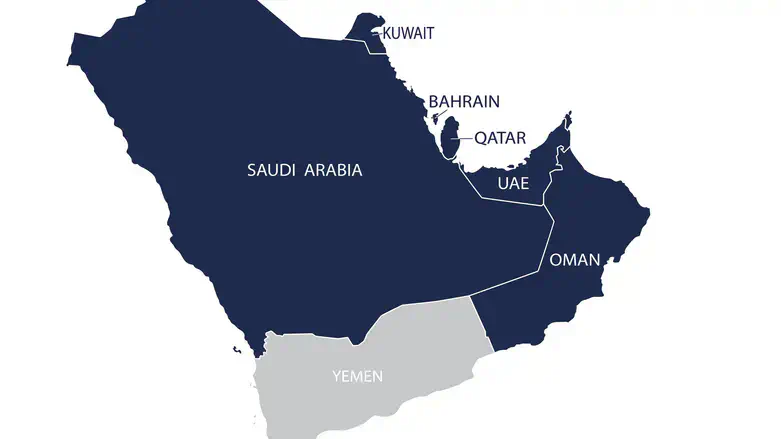
For the better part of a decade, the geopolitical doctrine of the Gulf Cooperation Council (GCC) could be summarized in one word: balancing. Caught between the nuclear ambitions of the Islamic Republic of Iran and their own reliance on wavering Western security guarantees, nations like Saudi Arabia and the United Arab Emirates walked a perilous tightrope:
They pursued ambitious economic modernization-Saudi Arabia’s Vision 2030 and the UAE’s push to become a global tech hub-while simultaneously seeking a cautious detente with Tehran. The 2023 Beijing-brokered normalization between Riyadh and Tehran was the pinnacle of this strategy, built on the desperate hope that diplomatic engagement and economic incentives might finally tame the radical impulses of the ayatollahs.
Following Iran’s brazen, unprovoked drone strikes on energy and civilian infrastructure in Kuwait and Saudi Arabia, alongside the tragic deaths of two civilians in Abu Dhabi, the GCC’s rhetoric has undergone a seismic shift. The Gulf states are no longer calling for "restraint" or "de-escalation," the tired buzzwords of the diplomatic establishment. They are demanding a decisive conclusion.
The GCC has officially labeled Iranian aggression a "turning point," effectively abandoning their neutrality. As UAE Ambassador to the U.S. Yousef Al Otaiba correctly noted this week, ending this war prematurely would be a catastrophic error. The region requires a definitive outcome that neutralizes the full scope of the Islamic Republic's threat once and for all. The Saudis are urging Trump to continue. This is a historic paradigm shift, and both Jerusalem and Washington must seize it to forge a permanent, formalized regional defense command-a Middle East NATO.
To understand the magnitude of this shift, one must look at the ideological foundation of Israel’s security strategy: Ze'ev Jabotinsky’s "Iron Wall." Writing a century ago, Jabotinsky argued that peace with the Arab world would never come through concessions, appeasement, or relying on the goodwill of neighbors. It would only come when Israel established an insurmountable, unbreachable position of military strength, proving beyond a shadow of a doubt that the Jewish state could neither be destroyed nor ignored.
For decades, Israel’s detractors in the West claimed its posture of military strength was an arrogant obstacle to peace.
Yet, today, it is precisely Israel’s unapologetic military strength that is saving the broader Middle East from collapse.
The Abraham Accords laid the economic and diplomatic groundwork, but the crucible of the current war has forged the true alliance. As the U.S. Central Command announces it has struck its 10,000th target in Iran under Operation Epic Fury, and as the IDF systematically dismantles the IRGC’s leadership-highlighted by the recent targeted elimination of IRGC Navy Chief Alireza Tangsiri-the Gulf states are watching closely. They see clearly that diplomacy did not protect Abu Dhabi; American and Israeli hard power did.
Israel is no longer viewed merely as a neighbor with whom the Gulf shares quiet intelligence. Israel is now recognized as the indispensable, load-bearing pillar of regional stability. It is the vanguard of the Iron Wall protecting the free world from radical Islamism.
For the United States, the policy implications of this Gulf awakening are profound and demand immediate action. President Donald Trump has recently signaled a desire to wrap up the conflict, submitting a 15-point ceasefire proposal that Tehran, in its delusion, flatly rejected. While the American public's wariness of endless Middle Eastern entanglements is entirely understandable, returning to the status quo ante is a recipe for a wider, more devastating war in the near future. Leaving a wounded but surviving Iranian regime to rebuild its shattered "Shia Crescent" guarantees another regional explosion on an exponentially larger scale.
Instead of searching for a politically expedient exit ramp, the U.S. must institutionalize the alliance that has naturally formed under the fire of Iranian missiles. A formalized Middle East Defense Command-integrating the air defense networks, intelligence apparatuses, and military capabilities of the U.S., Israel, and the GCC-would achieve Washington’s ultimate strategic goal: permanently containing Iran without requiring a massive, indefinite U.S. ground footprint. It transforms a localized conflict into a durable security architecture.
The Arab states have unequivocally affirmed their right to self-defense against Iranian hegemony. They are openly rejecting Tehran’s frantic, eleventh-hour calls for a "security union" independent of the West. The pre-war geopolitical order is dead, buried under the rubble of Iranian proxy bases. The Iron Wall has been fully realized, and the pragmatic states of the Gulf have chosen to stand safely behind it.
Amine Ayoub, a fellow at the Middle East Forum, is a policy analyst and writer based in Morocco. Follow him on X: @amineayoubx