

While humans often struggle to find a partner who is both physically attractive and a reliable co-parent, yeast may already have cracked the formula for the perfect match. When choosing mates, these single-celled organisms tend to pick partners that may increase the chances of their offspring’s success, according to a new study by scientists at the Weizmann Institute of Science, published in Cell Reports.
The study also revealed a link between the success of the parents and the genetic distance between them, and the success of their offspring, shedding new light on the evolution of sexual reproduction.
The findings emerged from an experiment of unprecedented scale conducted in the lab of Prof. Yitzhak Pilpel. The researchers placed together about 10 million yeast cells from roughly 100 different strains, allowing them to mingle freely while the team tracked their mating choices.
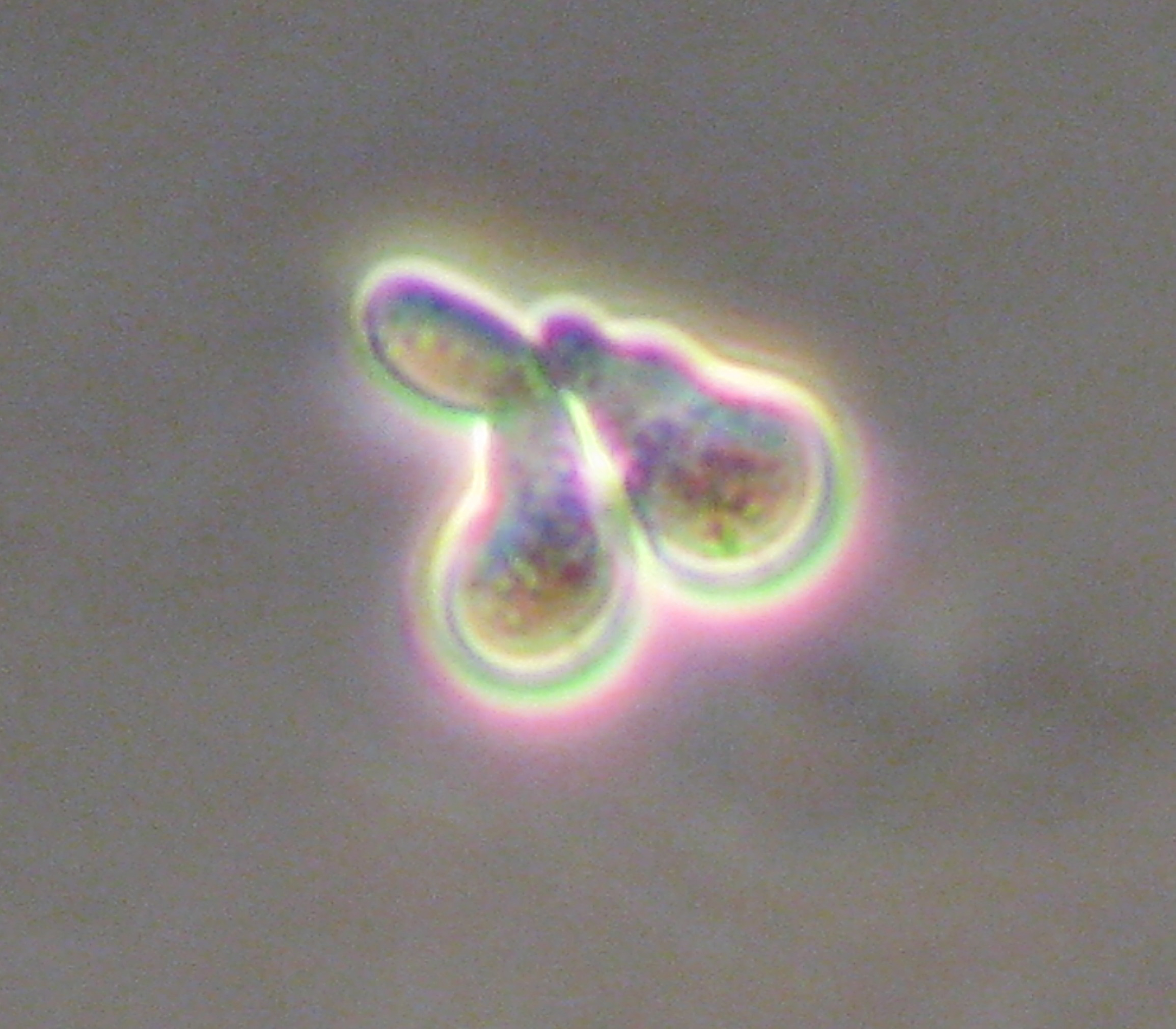
Baker’s yeast, familiar from bread-making and alcohol production, can reproduce in different ways. When environmental conditions are favorable, it multiplies through self-replication. During periods of starvation, however, it forms spores that wait for better times. These spores, each of which carries half of the parent cell’s genetic material, come in two mating types, a and α, roughly analogous to male and female sexes. When conditions improve, both the a and α spores secrete chemical scent signals called pheromones, to court one another; two cells of opposite sexes then fuse to form a single, complete offspring.
Just as humanity is comprised of different populations, baker’s yeast has thousands of strains. In nature, the spores produced by each yeast cell form within a separate sac, and sexual reproduction almost always occurs between siblings within that sac. As a result, mating between different strains is relatively rare. However, such pairings do occasionally occur and are particularly interesting because they can reveal how traits are inherited - and whether these ancient organisms show preferences when choosing a partner.
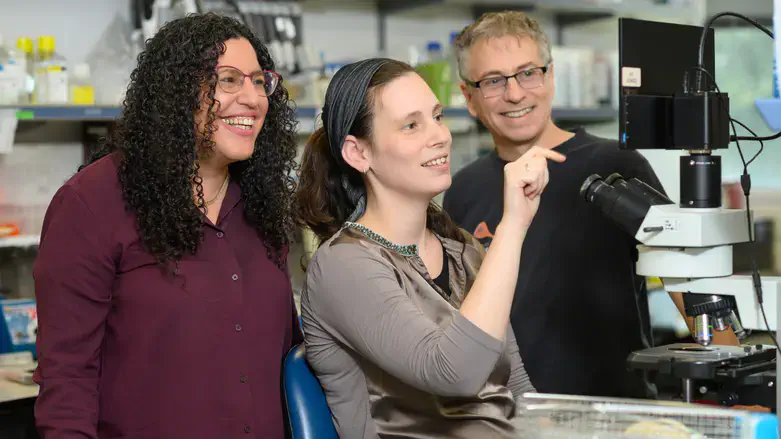
In the study, led by Dr. Sivan Kaminski Strauss under the supervision of Pilpel and Dr. Orna Dahan, the researchers staged the mass mating event among spores from about 100 yeast strains by placing them together in a single test tube for 20 hours. Thousands of copies of each strain were introduced, so that every strain would have ample opportunities to mate with others, allowing the scientists to count exactly how many times each strain chose another particular strain as a partner.
“We inserted an identifying barcode into the genetic code of each parental strain," explains Dahan. “We also introduced a mechanism that is activated only in the offspring, ensuring that the barcodes from both parents link together into a single sequence. This allowed us to determine, at the end of the experiment, who the parents of each offspring were, and how often each parent mated with each potential partner."
The researchers were surprised to discover that some yeast strains systematically avoided mating with one another. By comparing pairs of strains that produced many offspring with those that produced fewer, the team identified differences that could not be explained simply by how sexually active each strain was. The results therefore suggest that yeast exhibit specific mating preferences.
The experiment was conducted under two main environmental conditions: one with a food source preferred by most yeast strains, and another with a food source that most strains find much harder to digest. When the high-quality food was available, the yeast tended to choose partners that produced fitter offspring.
“This discovery brings us closer to answering a fundamental question in evolution: Is the ability to choose a mate an integral part of sexual reproduction, or is it a refinement that evolved later?" says Pilpel. “On the one hand, sexual reproduction, as opposed to self-replication, may have been preserved simply because it creates genetic diversity. On the other hand, the ability to select a partner that improves the offspring might be the real point. The fact that such preferences exist in yeast suggests that this is an ancient and fundamental mechanism."
“To resolve this question, we are now testing whether it is possible to silence the genes responsible for mating preferences in yeast without eliminating sexual reproduction altogether - or whether the two are inseparable. Another open question is how a yeast strain identifies the right partner. One possibility is that each strain’s pheromones contain unique chemical features that reveal information about important traits."
The recipe for successful offspring
The yeast reproduction experiment also provided a rare opportunity to examine how “success in life" is passed from parents to offspring. For evolutionary biologists, success primarily means fitness, a term describing an organism’s ability to grow and reproduce.
Fitness is a complex, quantitative trait: It varies along a range of levels and is influenced by many genes as well as by environmental conditions. Because the generation time of yeast is less than two hours, fitness can be measured quickly and easily through growth competitions in the lab. To trace the inheritance of fitness, the researchers conducted growth competitions both among the parent strains and among their offspring.
“When the preferred food was available, the fitter each parent was, the fitter the offspring tended to be," says Kaminski Strauss. “In the absence of preferred food, what mattered was the genetic difference between the parents. The offspring’s fitness increased as the genetic distance between the parents grew - up to an optimal point, beyond which it declined."
The researchers then developed a statistical model that predicts, based on parental traits such as fitness and genetic distance, the fitness of future offspring under different environmental conditions.
The study marks an important milestone in the development of quantitative genetics, a field that combines genetic and statistical methods to investigate complex traits and how they are inherited. It may also lay the groundwork for studying mate preferences in humans.
“While it’s impossible to conduct a mass mating experiment with people, we can simulate one using quantitative genetic methods and databases containing genetic information on thousands of individuals," says Pilpel. “In a follow-up study led by research student Bar Cohen, we are calculating what the human genome would look like if people chose partners completely at random. We then try to identify regions of the genome that deviate strongly from that random model. These regions may contain genes that influence mate choice."
Also participating in the study were: Ruthie Golomb, Donya Khoury, Dr. Noa Aharon-Hefetz and Hadar Meyer from Weizmann’s Molecular Genetics Department; Dr. Dayag Sheykhkarimli from Toronto University; and Prof. Gianni Liti from Côte d’Azur University, Nice, France.
Prof. Yitzhak Pilpel is head of the Braginsky Center for the Interface between Science and Humanities and of the Kahn Family Research Center for Systems Biology of the Human Cell. His research is supported by the Sharon Zuckerman Laboratory for Research in Systems Biology. Prof. Pilpel is the incumbent of the Ben May Professorial Chair.