

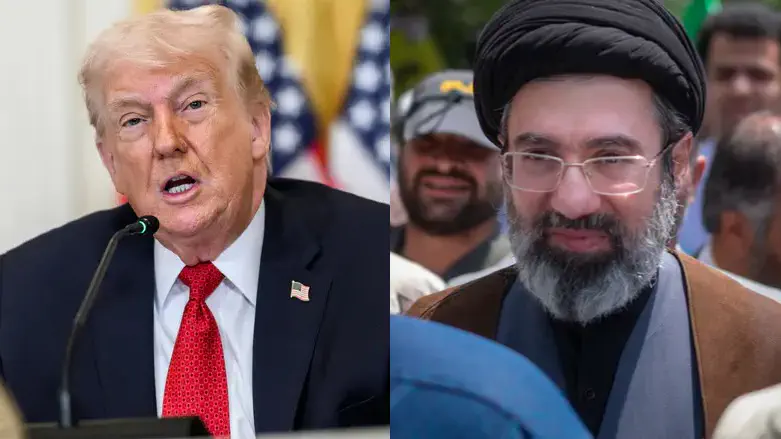
The Islamic Republic of Iran is no longer a functioning geopolitical heavyweight capable of dictating the security architecture of the Middle East; it is currently a state in a phase of advanced, terminal institutional collapse. The regime has rapidly devolved into a headless snake, an entity whose sprawling operational leadership apparatus has been systematically dismantled by relentless, highly precise coalition decapitation strikes.
Following the seismic death of Supreme Leader Ali Khamenei in late February, the rapid installation of his son, Mojtaba Khamenei, as his successor was achieved exclusively through the extreme, naked coercion of the Islamic Revolutionary Guard Corps. Mojtaba lacks the requisite theological credentials and the populist revolutionary legitimacy that his father spent decades cultivating.
Crucially, Mojtaba’s total, paralyzing absence from the public eye since the onset of the wider regional war has created a massive, expanding legitimacy vacuum. This silent void is the regime's ultimate Achilles' heel, presenting an unprecedented opening that the Western and allied coalition must aggressively exploit before the apparatus of state terror can consolidate its grip and find a new strategic rhythm.
The rapid, cascading loss of senior logistical and operational coordinators has fatally crippled the regime's ability to manage its much-touted decentralized defense doctrine. The Iranian military apparatus, particularly the Islamic Revolutionary Guard Corps, was structurally designed to withstand internal uprisings and external kinetic strikes by decentralizing command to provincial levels. However, this complex mosaic relies entirely on the steady hand of experienced middle-management and ideological enforcers to maintain operational flow and unit cohesion. The coalition successfully shattered this vital network in mid-March through a series of unprecedented intelligence-driven operations.
The targeted elimination of crucial figures such as the primary Revolutionary Guard political coordinator, the ruthless commander of the domestic Basij paramilitary forces, and the Minister of Intelligence has left the world's most dangerous state sponsor of terror entirely without a functional, cohesive roadmap. Consequently, local Guard and Basij units are now forced to operate in a state of paranoid isolation. They lack clear strategic directives from Tehran while simultaneously staring down a severely aggrieved domestic population that is overwhelmingly opposed to the continuation of the theocratic order.
The temporal window for achieving military success and absolute strategic victory over the regime is closing rapidly. The strategic objective for the coalition is no longer merely to degrade early warning radar installations or to destroy deeply buried missile batteries, though those remain tactical necessities. The primary, overarching target is the regime’s very claim to absolute authority. The coalition’s most potent tactical opening lies precisely in the exploitation of this glaring succession void.
Theocratic autocracies rely entirely on the unwavering projection of invincible, divinely mandated strength. Every single day that Mojtaba Khamenei remains hidden in a bunker, fearful of his own shadow and coalition munitions, heavily reinforces the domestic perception of a failing, illegitimate hereditary dictatorship. This dangerous perception is festering rapidly not only among the fiercely protesting Iranian public but, far more importantly, among the deeply underpaid, lower-ranking officers of both the regular army and the Revolutionary Guard itself.
This internal dynamic creates a rare and highly volatile strategic window for internal opposition to flourish. The ultimate goal of Western statecraft must be to foster a hybridized insurgency within Iran’s borders. This insurgency must brilliantly combine nonviolent mass civil disobedience with highly targeted, coordinated economic sabotage against state-owned infrastructure. The strategy is not to ignite a prolonged, immensely bloody civil war that would devastate the civilian populace, but to induce rapid, cascading security-force defections. By demonstrating clearly to the enforcers of the regime that the survival of the theocracy is mathematically, economically, and politically impossible, the coalition can strip the clerics of their final line of defense.
The structural conditions for this internal fracture are already universally present across the Iranian plateau.
-The regime is facing a catastrophic existential crisis on every conceivable front. The national currency has experienced a total collapse, entirely vaporizing the life savings of the Iranian middle class and driving millions into absolute poverty.
-Furthermore, the humiliating return of widespread food rationing strips the ruling clerical class of its foundational populist legitimacy.
The regime is entirely out of viable domestic options. By artificially accelerating the succession crisis and keeping the remaining leadership in a state of constant attrition, the coalition can facilitate a genuine indigenous liberation, ensuring that the current leadership void becomes the permanent end of the Islamic Republic.
Amine Ayoub, a fellow at the Middle East Forum, is a policy analyst and writer based in Morocco. Follow him on X: @amineayoubx