

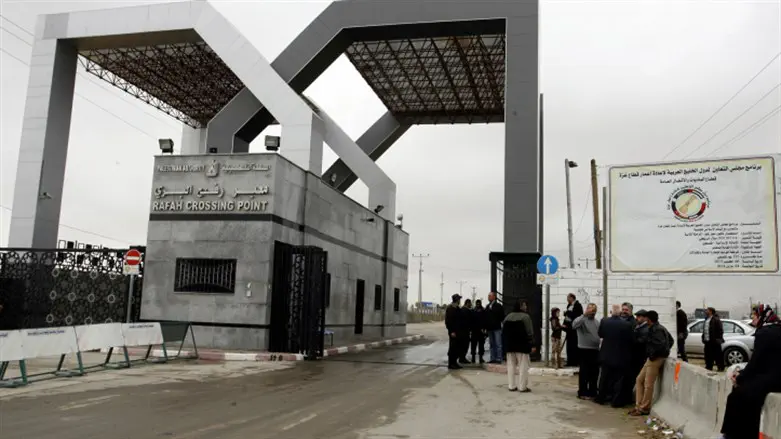
As the smoke from Operation Epic Fury-the joint U.S.-Israeli campaign to dismantle the Iranian nuclear and missile threat-still hangs heavy over the Middle East, a decision has been made in the halls of the Ministry of Defense that has many security hawks looking south with narrowed eyes. Today, March 18, 2026, Israel officially authorized the partial reopening of the Rafah Crossing.
For the international community and the humanitarian apparatus at the United Nations, this is a long-overdue lifeline. But for those who understand the cold, hard logic of Middle Eastern security, the move feels less like a humanitarian gesture and more like a potential Trojan Horse arriving at a moment when Israel can least afford a southern breach.
The Return of the Observers
The most contentious element of today’s reopening is not just the movement of people; it is the return of the European Union Border Assistance Mission (EUBAM) to the gates. For regular observers of regional security, the acronym EUBAM carries the weight of a failed era. Established in 2005 following the Disengagement, the mission’s history is one of watching but not acting.
In the years leading up to the Hamas takeover in 2007, European monitors were notorious for their inability to prevent the flow of dual-use materials and radical personnel. Now, in the middle of a regional war against the head of the snake in Tehran, Jerusalem is once again delegating oversight to a third party that answers to Brussels, not the IDF Central Command.
While COGAT (Coordinator of Government Activities in the Territories) insists that additional screening will take place in an Israeli-controlled sterile zone inside Gaza, the fundamental question remains: Why trust a continental body that has consistently prioritized de-escalation over deterrence?
The Smuggling Reality
The skepticism is not theoretical. Just days ago, a major security breach was uncovered at the Kerem Shalom crossing, where humanitarian aid crates originating from Egypt were found packed with tobacco and nicotine products-traditional currency used by terror factions to fund local operations and pay off smugglers. If these sophisticated smuggling attempts are happening under the direct nose of Israeli inspectors, what will happen at Rafah, where the primary oversight is a mix of Egyptian guards and EU bureaucrats?
The reality is that the Sinai-Gaza corridor remains the primary artery for Iranian-backed elements. Despite the massive strikes on Tehran and the degradation of Hezbollah’s missile arrays, Iran’s long game involves keeping the Gaza front simmering. By reopening Rafah now, Israel risks providing the Islamic Revolutionary Guard Corps (IRGC) with a logistical reset button. Reports suggest that Iranian advisors who fled the initial 2026 strikes may be attempting to re-enter the Strip via the chaotic Sinai land bridge, disguised as returning residents or NGO staff.
The Egyptian Dilemma: Partner or Passageway?
In the context of the Second Iran War, Egypt has been a vital, albeit quiet, partner. They share disdain for the Muslim Brotherhood and Tehran’s regional meddling. However, the Egyptian security apparatus is not a monolith. The corruption that plagues the North Sinai border region is legendary, and the underground economy of the tunnels has never been fully eradicated.
By reopening Rafah, Israel is effectively betting that Cairo can keep a lid on the very smugglers who have made fortunes feeding the Hamas war machine for two decades. It is a high-stakes gamble that assumes Egyptian interests will always align with Israeli security needs. But as we have seen in every conflict since 2005, when the pressure in Gaza reaches a boiling point, the valves at Rafah have a suspicious habit of leaking.
A Policy of Zero Trust
The Ministry of Defense frames this reopening as a calculated risk intended to maintain international legitimacy and keep the Abraham Accords partners on side. They argue that by allowing limited movement of the sick and elderly, Israel prevents the humanitarian narrative from being used by Tehran to distract from the collapse of the Ayatollah regime.
But realism dictates a different perspective. During a time of war, a border is not a lifeline; it is a frontline. Any concession on the buffer zone is a potential vulnerability.
The Second Iran War is being won in the skies over Isfahan and the bunkers of Beirut, but it could still be lost in the shipping container terminals of Rafah.
Today is not just a reopening. It is a test of whether Israel has truly learned the lessons of the last twenty years: that in the Middle East, there is no such thing as a neutral border.
Amine Ayoub, a fellow at the Middle East Forum, is a policy analyst and writer based in Morocco. Follow him on X: @amineayoubx