
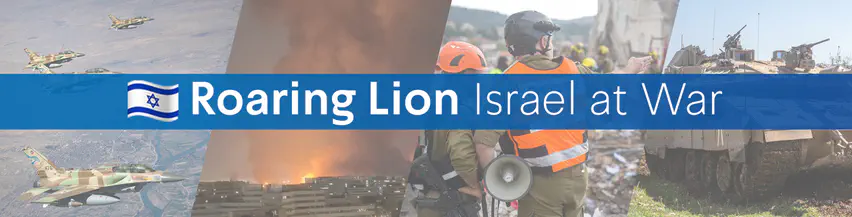

A senior official in the Israeli Air Force has revealed the scale of activity in Operation Roaring Lion, describing an unprecedented pace of flights, the destruction of 85% of Iran’s key superiority components, and simultaneous strikes on hundreds of targets in a major aerial formation.
According to the official, in just 18 days, the scope of aerial activity equaled an entire year of routine operations. “We flew in 18 days what we normally fly in a full year," he said.
Data show that more than 12,000 munitions have been dropped and approximately 8,500 strikes carried out across Iran. In less than three weeks, the air force matched a full year’s operational flight volume. More than 90% of threats launched toward Israel have been intercepted so far.
In the Iranian theater, about 5,700 combat sorties were conducted, alongside more than 540 strike formations over central and western regions and around 50 deep-strike missions. In Tehran alone, roughly 3,600 munitions were dropped.
In the Lebanon arena, more than 2,200 munitions were deployed, about 2,000 targets were struck, along with over 220 “hunt" targets and around 100 “power" targets. In addition, more than 1,000 combat sorties were carried out.
According to the official, the Israel Defense Forces entered the campaign following extensive prior planning based on continuous intelligence, training, and strategic cooperation with the United States. It was also noted that most of the targets were new and had been identified after Operation “Am KeLavi."
The operational plan was designed for a sustained campaign, synchronizing offense and defense, managing risks, and continuously adapting targets across multiple arenas.
Regarding the opening strike, the official said: “The IDF timed 40 munitions that neutralized 40 individuals within 40 seconds." This was followed by “the largest sortie in the history of the Air Force," involving about 200 aircraft that struck launch sites and infrastructure.
The strikes were carried out in part using a method referred to as “metro trains," enabling continuous attacks and synchronization across different arenas. It was also noted that about 20% of sorties change targets during execution.
According to assessments, the damage inflicted on the Islamic Revolutionary Guard Corps has impaired command-and-control capabilities, leading to operations without full coordination and sometimes based on local initiatives. Significant damage was also reported to Iran’s military industry, including the dropping of more than 1,200 munitions on production facilities.
On the northern front, it was noted that resources are being distributed systematically between sectors while maintaining high aircraft readiness. Full success was reported in intercepting all drones, along with high interception rates for other threats.
The official added that there is high operational flexibility, with continuous adaptation to battlefield needs, alongside full aerial support for ground forces and real-time operational assistance.
In conclusion, significant damage has been observed in the morale and operational readiness of the Islamic Revolutionary Guard Corps, with approximately 85% of the Iranian regime’s key air defense and detection systems destroyed, including air defense systems and detection systems.