

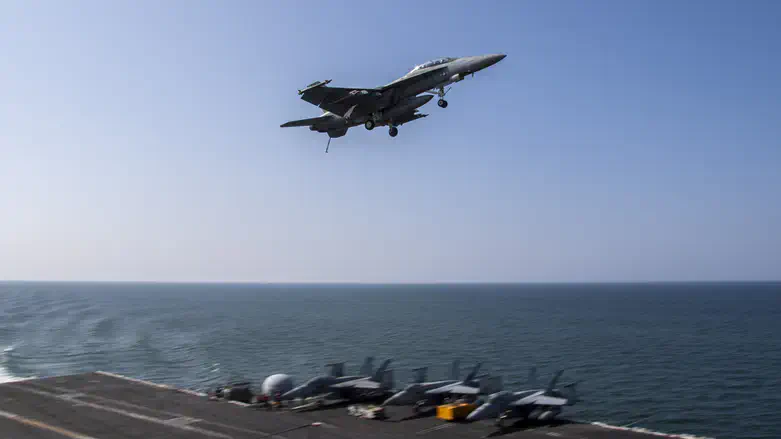
U.S. Central Command (CENTCOM) executed a large-scale precision bombing raid overnight on Friday, March 13-14, targeting military infrastructure on Kharg Island while deliberately sparing the island's vital oil export facilities.
President Donald Trump announced the operation on Truth Social, describing it as "one of the most powerful bombing raids in the History of the Middle East." He stated that CENTCOM had "totally obliterated every MILITARY target" on what he called Iran's "crown jewel," Kharg Island. Trump emphasized that the strikes avoided damaging oil infrastructure "for reasons of decency," but warned that he would "immediately reconsider this decision" if Iran or others interfered with the free and safe passage of ships through the Strait of Hormuz.
CENTCOM confirmed the details, reporting that U.S. forces struck more than 90 Iranian military targets, including naval mine storage facilities, missile storage bunkers, air defense systems, a naval base, an airport control tower, and a helicopter hangar. The command released footage showing precision strikes on these sites, underscoring the operation's focus on degrading Iran's military capabilities in the Persian Gulf without disrupting global oil flows.
Kharg Island, a small rocky outcrop about 15 nautical miles off Iran's coast in the northern Gulf (part of Bushehr Province), handles approximately 90% of Iran's crude oil exports. The island's terminal loads massive volumes of oil onto very large tankers, which then transit the Strait of Hormuz-through which roughly one-fifth of the world's oil supplies pass-to buyers, including China. Revenue from these exports largely funds the Islamic Revolutionary Guard Corps (IRGC).
Iranian officials acknowledged attacks on military sites but reported no damage to oil facilities. Ehsan Jahanian, political deputy to the governor of Bushehr Province, stated that no casualties occurred among military personnel, oil company employees, or residents, and that oil export operations continued uninterrupted. Iranian state media, including Fars news agency, echoed that the oil infrastructure remained operational.
The strikes come amid heightened tensions over freedom of navigation in the Strait of Hormuz. Iran had threatened to close the waterway and deployed naval mines, prompting U.S. warnings and prior actions to neutralize minelaying vessels. Trump has repeatedly pressed allies to contribute warships to secure the strait and has threatened far harsher responses if disruptions persist, including potential future strikes on Kharg's oil assets. He has also suggested additional bombings on the island could occur, telling outlets like NBC News that the U.S. might "hit it a few more times just for fun" if needed.
Israel's ongoing Operation Roaring Lion against Iranian targets since late February, with hundreds of airstrikes aimed at reducing missile threats. Israeli Defense Minister Israel Katz praised the U.S. action as a "heavy blow" and a fitting response to Iranian threats, describing the conflict as entering a "decisive stage" that could force the regime's surrender or collapse through internal pressure.
No casualties were reported from the Kharg strikes, and analysts note the measured approach of destroying military assets while preserving economic infrastructure aims to deter escalation without triggering a global energy crisis or massive oil price spikes (which have already risen over 40% since the war began). The price spikes were drastic enough that several countries have released oil from their strategic reserves to push the price down again, and even staunch supporters of Israel such as US Senator Lindsey Graham cautioned against attacking energy infrastructure.
Iran has issued warnings of retaliation, including against U.S. allies in the region, and claimed U.S. strikes originated from locations in the UAE.