

The Coordinator of Government Activities in the Territories (COGAT), Maj. Gen. Yoram Halevi, on Wednesday held a discussion on supervision of agricultural produce brought from Palestinian Authority areas into Israel.
The meeting included the head of the Civil Administration, staff officers from the unit, and senior representatives from the Health Ministry, the Agriculture Ministry, and the Animal and Plant Inspection Enforcement Unit.
The discussion was held following unusual findings discovered in tests conducted on agricultural produce from the Palestinian Authority, indicating a possible health risk.
As part of the discussion, a series of steps were decided upon to strengthen oversight and enforcement mechanisms, chief among them expanding sampling to include inspections of up to 100% of the produce passing through crossings, in accordance with the risk assessment and the irregularities discovered.
It was also decided that sampled produce would be held in storage warehouses until laboratory results are received, in accordance with Health Ministry procedures and under the responsibility of licensed Israeli distributors.
Additional inspections will also be conducted in the growing areas themselves through authorized laboratories.
Under the decisions, administrative measures will be taken against growers and distributors who violate the law, including fines, forfeiture of guarantees, and removal from the list of authorized suppliers.
Maj. Gen. Halevi stressed during the discussion, "I say clearly and unequivocally: COGAT does not oppose the implementation of the Food Law, and there is no security obstacle to applying the law fully and immediately."
"We will act together with all relevant bodies to fully implement the law, without leniencies and without compromises, out of full commitment to the health of the public in Israel."
He added, "The public criticism that was voiced on the issue was justified. The irregular data discovered are unacceptable and have no justification, and therefore I instructed immediate and comprehensive steps to strengthen control and supervision mechanisms. I would like to thank the Health Ministry, the Agriculture Ministry, and the Animal and Plant Inspection Enforcement Unit for their professional cooperation and involvement in formulating immediate solutions to ensure effective supervision and high food safety standards."
COGAT’s decision follows data revealed several weeks ago during a discussion in the Knesset Health Committee chaired by MK Limor Sohn Har-Melekh.
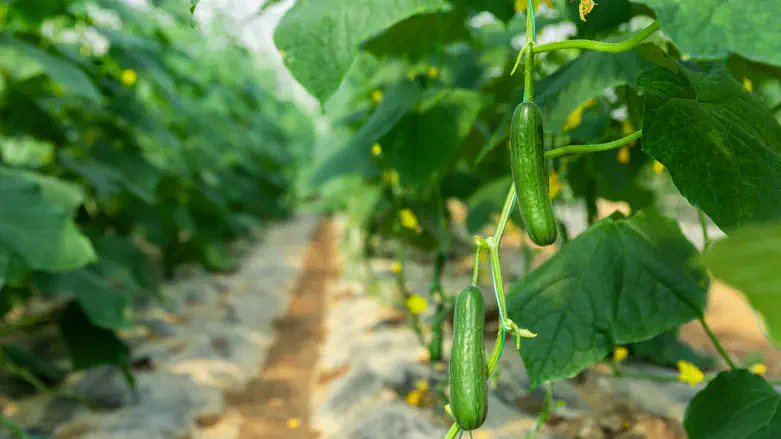
According to the data presented in the discussion, nearly every second cucumber and every second tomato from produce arriving from the Palestinian Authority were found to be contaminated with prohibited pesticides.
Health Ministry representative Dr. Ziva Hamama presented figures showing that 50% of cucumber samples, 49% of tomato samples, and 66% of hot pepper samples were contaminated.
It was also revealed that 14% of the samples contained organophosphate neurotoxins, substances that may harm fetal and infant development and increase the risk of Parkinson’s disease. In addition, 13% of the produce was found to contain more than five different pesticides in a single vegetable.
The discussion further revealed that although procedures require goods to be held until laboratory results are received, in practice the produce was distributed to markets immediately.
As a result, by the time laboratory irregularities were discovered several days later, thousands of tons of vegetables had already been sold to consumers.
MK Sohn Har-Melekh responded: "My principled position was and remains that the State of Israel should not import agricultural goods from the terrorist Terrorist Authority. But until we reach that point, this is the right and necessary step - full sampling and holding the goods in warehouses until laboratory results are received."
"It is very unfortunate that until now the system preferred the livelihood of our enemies over the health of Israel’s citizens, and I hope this decision, which comes after the discussion I initiated in the Health Committee, proves that this irresponsible approach is now changing."