

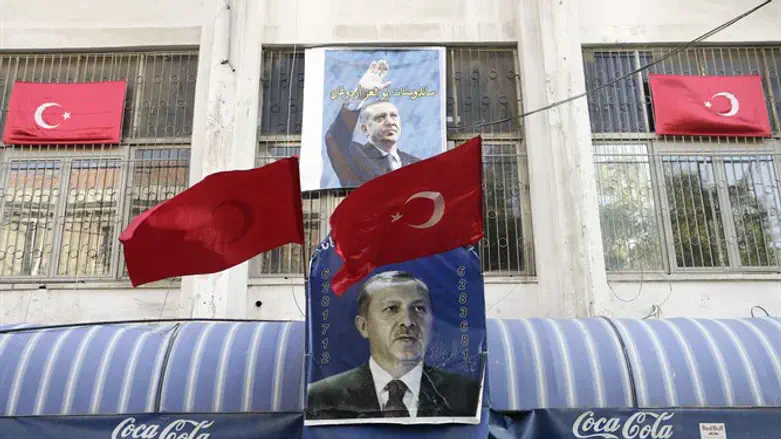
The February 2026 elimination of Iranian Supreme Leader Ayatollah Ali Khamenei in a joint U.S.-Israeli strike marked a watershed moment in the modern Middle East. For decades, Khamenei served as the chief architect of global terror, overseeing a regime that violently crushed its own citizens and exported bloodshed across the region. While Washington, Jerusalem, and millions of liberated Iranians celebrated the end of a tyrant, one reaction stood out for its sheer, unapologetic audacity: Turkish President Recep Tayyip Erdogan’s tearful condolences.
By mourning the Ayatollah, denying crucial airspace to U.S. forces, and scrambling to launch a "mediation" campaign to save Tehran's crumbling regime, Erdogan has made his allegiances undeniable. The mask is finally off. Turkey’s Islamist president did not just hedge his bets; he actively chose the survival of the Islamic Republic over the strategic objectives of his NATO allies.
For years, Western diplomats have bent over backward to excuse Ankara's transgressions, clinging to the outdated belief that Turkey is an indispensable bridge between East and West. Today, that bridge clearly leads straight to Tehran.
A Calculated Betrayal: Guarding Tehran’s Skies
When the United States and Israel launched their historic decapitation strikes against Iran's terrorist apparatus, the operational demands were clear. Quick, decisive action required unfettered access to regional airspace. Yet, Ankara slammed the door shut. Erdogan outright refused to allow U.S. and allied aircraft to utilize Turkish airspace for the operation, forcing allied forces to rely on more complex, distant, and dangerous logistical routes.
This betrayal extended directly to the ground. Incirlik Air Base-long touted by Washington as a vital NATO strategic asset-was strictly locked down, restricted from any offensive or logistical use related to the Iran strikes. By throwing up these bureaucratic and military roadblocks, Erdogan actively functioned as a physical and political shield for the architects of the radical axis. He prioritized the safety of the Iranian Revolutionary Guard Corps over the success of American and Israeli pilots.
Following the strikes, Erdogan immediately pivoted to a self-serving diplomatic "mediation" push. This was not the act of a benevolent peacemaker trying to cool regional tensions. It was a desperate attempt to legitimize the surviving remnants of Iran's theocracy, stall further Western military momentum, and ensure that a deeply wounded anti-Western regime stays afloat in its darkest hour.
Refugee Paranoia and the Syrian Vacuum
To understand Erdogan’s betrayal, one must look at his domestic vulnerabilities and his neo-Ottoman territorial ambitions. The Turkish president is driven by two overriding factors: a crippling fear of demographic shifts and a ruthless desire for regional hegemony.
Following the total collapse of the Assad regime in December 2024, the power vacuum in Syria triggered a chaotic geopolitical scramble. Erdogan has sought to carve out an expanded sphere of influence in post-Assad Syria, treating northern Syrian territory as a canvas for his own empire-building. To secure these gains and prevent the rise of independent democratic factions on his border, he has frequently found it convenient to align with Iranian interests rather than Western ones, viewing Tehran as a partner in suppressing local autonomy.
Furthermore, Erdogan is completely paralyzed by the threat of a new refugee crisis. With Turkey's economy already buckling under extreme inflation and domestic unrest, the prospect of millions of Iranians fleeing a collapsing Islamic Republic-on top of the existing Syrian refugee population-terrifies Ankara.
Instead of working with the West to establish a stable, prosperous, post-clerical Iran, Erdogan would rather prop up the Ayatollahs' brutal successors just to keep the borders violently sealed. He is willing to sacr
ifice the freedom of the entire region solely to save himself from domestic political fallout.
The Delusion of the "Moderate" Ally
Erdogan’s blatant alignment with Tehran should finally shatter the West's most dangerous geopolitical myth: the persistent illusion that Turkey remains a "moderate" or reliable Western partner. Policymakers in Washington and Brussels continue to handle Ankara with kid gloves, but they are enabling a dictator.
This is a regime that systematically jails journalists, eradicates free speech, and has spent the last decade purging the judiciary and military of anyone not fiercely loyal to Erdogan's Islamist AK Party. Domestically, his rule is defined by the very same authoritarian impulses that animate the mullahs in Iran.
Beyond his borders, Erdogan has waged a relentless, scorched-earth campaign against Kurdish populations. He has authorized military incursions across Syria and Iraq, often directly targeting the very Kurdish forces that shed blood partnering with the United States to eradicate ISIS. He demands the protective umbrella of NATO's Article 5 while simultaneously attacking NATO's most effective partners on the ground.
When you combine this with Turkey's long history of hosting Hamas leadership and now publicly mourning the mastermind of the Iranian axis, the conclusion is inescapable. Turkey’s foreign policy under Erdogan is completely indistinguishable from that of a state sponsor of terrorism.
Amine Ayoub, a fellow at the Middle East Forum, is a policy analyst and writer based in Morocco. Follow him on X: @amineayoubx