

As the drums of war beat louder across the Middle East, a quiet but seismic shift is occurring within the Islamic Republic’s military apparatus. Recent intelligence indicates that in the months leading up to the current escalation, desertion rates among Iran’s regular army-the Artesh-hit a staggering 14% in key western border units.
For Western and Israeli war planners, it is easy to view this simply as a symptom of a crumbling regime. However, this fracture presents a fleeting, high-impact strategic opportunity. By understanding the widening chasm between the ideological Islamic Revolutionary Guard Corps (IRGC) and the nationalistic Artesh, the West can implement a strategy of "Selective Immunity"-weaponizing this desertion rate to dismantle the regime from the inside out.
The IRGC "Warlord Scenario"
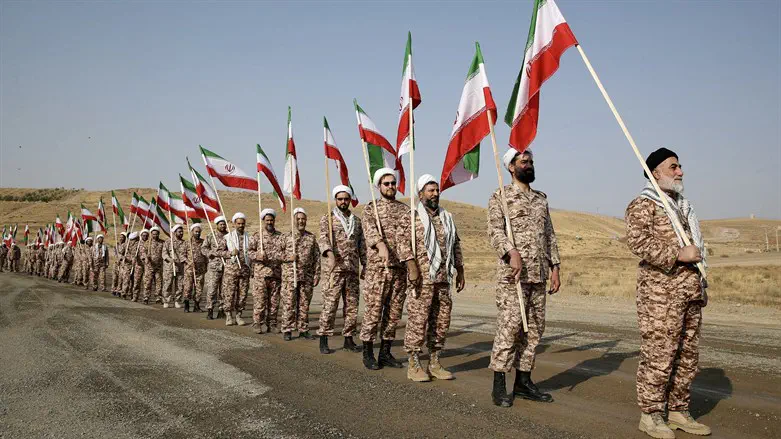
To understand the immense strategic value of the Artesh, we must first understand the endgame of the IRGC. The Revolutionary Guards are not a traditional military force; they are an ideological syndicate designed to ensure regime survival at any cost.
If a full-scale conflict severely degrades Tehran's central command and control, the IRGC will not mount a conventional, unified last stand. Instead, intelligence models point toward a "Warlord Scenario." Under extreme pressure, mid-level IRGC commanders will likely retreat to their respective provinces, taking their deeply entrenched, independent weapons caches with them to establish regional fiefdoms.
Rather than surrender to advancing allied forces or face a domestic uprising, these isolated warlords will prioritize scorched-earth tactics. They will likely target Iran’s own critical infrastructure, such as water desalination plants, oil refineries, and regional power grids. By destroying or controlling these vital lifelines, the IRGC remnants will seek to hold the local civilian population hostage, maintaining asymmetric leverage against both internal rebellion and external intervention.
The Artesh: Patriots, Not Fanatics
Contrasting sharply with the IRGC is the Artesh. While the Revolutionary Guards are unconditionally loyal to the Supreme Leader, the Artesh has historically viewed itself as the defender of the Iranian nation. For decades, the clerics have systematically underfunded and marginalized the regular army, fearing its inherent nationalism and its potential to ultimately side with the people over the regime.
The 14% desertion rate in western border units is not an act of cowardice; it is a profound political statement. It is a refusal by young, underpaid, and disillusioned Iranians to act as cannon fodder for a radical theological agenda. Yet, despite their marginalization, the Artesh remains a rare source of patriotic pride for the average Iranian citizen. They are viewed as soldiers, not oppressors.
This creates a distinct divergence in how these two forces will react under maximum pressure. The ideological Guards are bound by a theological mandate, dedicating their primary loyalty to regime survival. Consequently, their crisis trajectory points toward fracturing into heavily armed warlords whose tactical endgame relies on sabotage. The optimal policy response to this faction is targeted kinetic neutralization.
The Policy Prescription: "Selective Immunity"
Israel and the international community must actively engineer this "Artesh-IRGC Divorce." The policy mechanism to achieve this is Selective Immunity.
Instead of treating all Iranian men in uniform as legitimate targets in a broader conflict, the allied coalition should publicly and privately outline a legal amnesty framework tailored specifically for the Artesh. The terms of this immunity must be straightforward, highly publicized, and conditional upon their actions.
First, Artesh units that actively secure critical civilian infrastructure against IRGC sabotage will be granted full amnesty. Protecting dams, power plants, and oil refineries must be rewarded as acts of national preservation.
Second, units that refuse orders to engage allied forces and instead pivot to maintaining local law and order will not be targeted by coalition airstrikes.
Finally, to ensure long-term cooperation, the coalition must offer a guarantee that Artesh officers who protect the Iranian people from IRGC warlords will retain their pensions, ranks, and livelihoods in a post-theocratic Iran.
Executing the Strategy
Implementing this requires an aggressive psychological warfare and diplomatic campaign. The message must be broadcast continuously via satellite, social media, and clandestine networks directly into Iranian barracks. The narrative must be clear: the IRGC plans to destroy Iran to save themselves; if the Artesh protects the national infrastructure and refuses to fight for the clerics, they will be treated as the heroes of the new Iran.
By offering the regular army a clear, honorable exit ramp, we do much more than just deplete the enemy's fighting numbers. We actively turn a 14% desertion rate into a localized stabilization force, effectively cutting off the IRGC’s ability to execute a scorched-earth retreat.
The collapse of the Islamic Republic will undoubtedly be chaotic. But by driving a calculated wedge between the fanatics and the patriots, we can ensure that when the regime falls, the IRGC warlords are left isolated, outmaneuvered, and facing the wrath of their own national army.
Amine Ayoub, a fellow at the Middle East Forum, is a policy analyst and writer based in Morocco. Follow him on X: @ami