
Sometimes we quietly wonder whether life is fair. Others seem to glide from one simchah to the next, while our own milestones arrive tangled in stress. A wedding overshadowed by tragedy. A birthday marked by conflict. A promotion paired with a crisis. Even our happiest moments feel fragile.
Why does joy come mixed with pain? Why does celebration so often carry interruption? We rarely say it out loud, but many of us carry this question. Purim offers a profound answer - one that reframes not only Jewish history, but our own lives.
G-d always pays His debts. If a moment of celebration is withheld, it is not erased. It is postponed. And when it returns, it returns deeper, stronger, more eternal than before.
The Date That “Won the Lottery"
Why does Purim fall on the fourteenth of Adar? On the surface, it is simple. That is the day the Jews rested after defeating their enemies, as recorded in the Book of Esther. But why did Divine Providence orchestrate the salvation specifically on that date? Why the fourteenth?
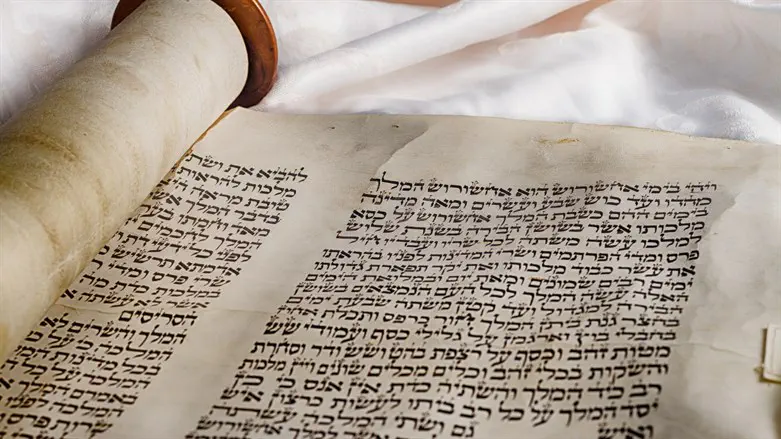
To answer that, we must travel back nearly a thousand years. On the seventh of Adar, Moses passed away. But earlier that very day, something extraordinary occurred. After forty years of transmitting Torah, Moses completed the first Torah scroll and presented it to the tribe of Levi. He appointed them mentors and teachers of the nation.
The people were alarmed. What if the Levites claimed exclusive ownership? What if Torah became tribal property? They demanded that each tribe receive its own scroll.
Moses rejoiced. For forty years, he had planted seeds. On this day, they bore fruit. The people no longer passively received Torah; they longed for it. Moses proclaimed, “On this day you have become a nation" (Deuteronomy 27:9). “G-d has not given you a heart to know, eyes to see, and ears to hear until this day" (29:3). Only now have you matured into true covenantal partners. Only now did you embrace Torah willingly and fully (Rashi Ad Loc.).
It was a day of profound national triumph. But that very evening, Moses passed away. The celebration collapsed into mourning. Instead of rejoicing, they sat shivah. What should have been a moment of shared joy became a day of devastating loss. Seven days later, when the shivah ended, they reflected with aching regret. The milestone had come and gone. The celebration was never realized. When was that seventh day? The fourteenth of Adar.
The First True Test
Nearly a thousand years later, that date returned. In Persia, under Haman’s decree, the entire Jewish nation faced annihilation. This was the first time since Sinai that the Jewish people collectively faced destruction. Any Jew could theoretically escape death through assimilation. Abandon your faith. Dissolve your identity. Blend in. Not one did.
The Gemara (Shabbat 88a) teaches that when the Megilah says the Jews “upheld and accepted," it means that on Purim, they upheld the Torah they had accepted at Sinai. What had been accepted under overwhelming Divine revelation was now accepted freely, under threat of death. This was not inspiration in comfort. This was loyalty in darkness. At Sinai, they accepted Torah amid thunder, lightning, and revelation. In Persia, they accepted Torah amid fear, exile, and concealment. Which acceptance is deeper?
Choosing Torah
The Megilah describes Haman’s decree with the words, “The law was given in Shushan, the capital." On the surface, it refers to Haman’s genocidal edict. Rabbi Yeshayahyu Halevi Hurwitz, the Shalah HaKadosh (in his commentary to Mesechet Megilah, Derech Chaim), uncovers a breathtaking layer of meaning:
The verse does not merely say a law was issued. It says, “the law". On that day, in Shushan, the law of Moses was truly given. Not because Haman strengthened Torah, but because his decree elicited a response that sealed Torah into Jewish identity forever. When the decree was proclaimed, every Jew was forced to confront a choice: Live without Torah or die with it. And they chose Torah.
Thus, the Torah was “given" again in Shushan - not from Heaven downward, but from the Jewish soul upward. Sinai was about G-d giving Torah to Israel. Shushan was about Israel giving themselves to Torah. And that happened on the fourteenth of Adar.
The Debt Repaid
Now we can see the pattern. On the seventh of Adar, the Jewish people demonstrated mature longing for Torah. It was beautiful, but it was not tested. That very night, their joy was interrupted by loss. Seven days later, on the fourteenth of Adar, they emerged from mourning with a celebration unrealized.
Heaven did not forget. G-d delayed the celebration; He did not deny it. Affirming Torah in a moment of security is beautiful. Affirming Torah in the face of annihilation is eternal. It is as though G-d said, “I can allow you to celebrate today - or I can wait and give you a bond that nothing can ever sever."
The fourteenth of Adar was not random. It was repayment. G-d always pays His debts.
The Personal Message of Purim
Now return to your own life; the celebration that felt diminished, the milestone that arrived tangled in pain, the joy that seemed stolen. From our vantage point, it looks like a loss. From Heaven’s vantage point, it may be a delay. We see moments. G-d sees centuries. We see an interruption. G-d sees deepening.
The Jews once lost a celebration on the fourteenth of Adar. Nearly a thousand years later, that very date became the day when their bond with G-d became indestructible. Nothing is forgotten. In the end, life does not simply “work out." It unfolds according to a design in which no tear is wasted, no yearning ignored, and no sacred moment permanently denied.
Because G-d always pays His debts. And when He pays, He pays with eternity.