
Yael Davidowitz is the director of Last Kindness, a division of the National Association of Chevra Kadisha (NASCK), and works extensively to educate Jews of all backgrounds about the importance of dignified Jewish burial. Learn more at: lastkindness.org.
(JNS) On Feb. 24, most Jews will go about their day unaware that it marks a remarkable date on the Jewish calendar: Zayin Adar, the yahrzeit- the anniversary of the death- of Moses, the greatest Jewish leader in history. (Our Sages say it was also his birth date, ed.)
At the very end of the Torah (Deuteronomy 34:5-6), we are told something extraordinary. Moses was not buried by family, disciples or any members of his beloved people. He was buried by God Himself.
From that singular act flows one of the most sacred and least known institutions in Jewish life: the chevra kadisha, or Jewish burial society.
The chevra kadisha imitates that Divine act of kindness. Just as God cared for Moses at the moment of his passing, members of the chevra kadisha care for their fellow Jews in death with humility, gentle care and reverence. That is why Zayin Adar has become a day of reflection and recognition for these quiet volunteers, who perform what Jewish law calls chesed shel emet-the truest form of kindness, since the reciipient can never show his gratitude.
It is a day that most Jews have never heard of.
The chevra kadisha is almost always made up of volunteers: doctors, teachers, attorneys, retirees-ordinary people who step away from daily life when their phone buzzes. Often, even their closest friends do not know they serve in this role.
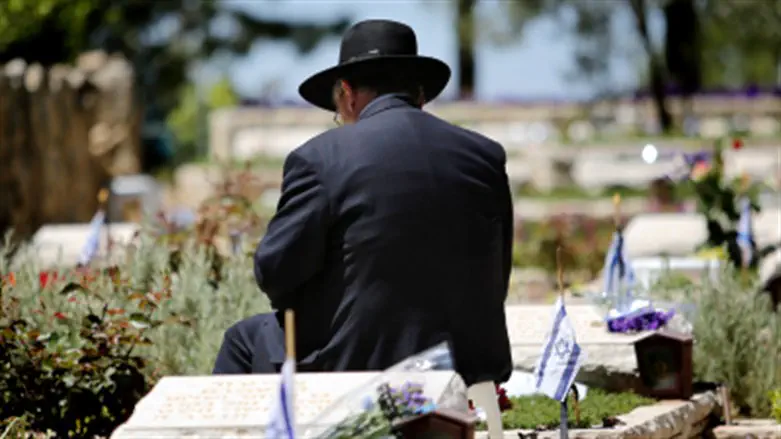
In Israel, Zayin Adar is known as Chevra Kadisha Day and officially designated as the yahrzeit, memorial day, of IDF soldiers whose burial place is unknown.Chevra kadisha members in Israel fast on Zayin Adar and pray for forgiveness if they have erred in any way in their efforts to honor the dead. After October 7, the IDF Rabbinate's Chevra kadisha at the Shura base performed their holy work non-stop, identifying bodies and bringing them to Jewish burial, continuing when the murdered hostages' bodies were eventually returned home.
My introduction to it began as a child. I remember the phone ringing at our dinner table. I would hear the word tahara, though I didn’t yet understand what it meant. I knew only that a Jew had died, and that my mother or father would quietly get up and leave to help.
The chevra kadisha prepares a Jew for burial through a process that is both physical and deeply spiritual.
First, the body is gently returned to its most natural state. Anything external-medical devices, bandages, makeup, even nail polish-is carefully removed. The goal is simplicity. We enter this world unadorned, and we return unadorned.
Then comes washing, performed with modesty and respect. Only the area being cleansed is uncovered at any time. There is no casual conversation. The atmosphere is reverent.
Next is the tahara itself, a ritual purification in which water is poured continuously over the body-or, when possible, the body is immersed in a mikvah, a natural body of water associated in Jewish life with profound transitions. There is no greater transition than moving from this world to the next.
Finally, the deceased is dressed in tachrichim, traditional Jewish burial shrouds. They are a full set of clothing-pants, shirt, outer garment, belt, and head and face covering-made of natural fibers such as linen or cotton. They are plain and white, symbolizing purity. There are no pockets or ornamentation since wealth and status do not accompany a person beyond life. What endures are deeds, character and our choices.
The casket used is a simple pine box, ideally without metal or any lining (the simpler, the better) allowing the body to return naturally to the earth. A small amount of earth from Israel is placed inside, linking the deceased to the land and people of Israel.
As a nurse for decades, I have stood in operating rooms with living patients under anesthesia while background music played and weekend plans were discussed. The first time I witnessed a tahara, I was struck by the contrast. There was no extraneous speech. Jewish tradition teaches that while the body has died, the soul-the essence of the person-remains present and aware.
Those performing the tahara are mindful that the individual before them is at a vulnerable moment of transition. They even pause to ask forgiveness if they have not acted with sufficient gentleness or respect.
I was also struck by the parallels to birth. I’ve been a nurse in labor and delivery, and when a child enters this world, we quickly clean, dress and swaddle the baby before returning them to their mother. At the other end of life, the chevra kadisha cleans, dresses and prepares the person for their next journey with efficiency and the same tenderness.
In an era when cremation rates continue to rise, the Jewish approach to caring for the deceased stands in sharp contrast to modern trends. Cremation is often presented as poetic or environmentally friendly. But it is neither gentle nor natural. It involves intense heat and industrial processes that incinerate the body and release pollutants into the air. It is also fundamentally at odds with a core Jewish mandate: the mitzvah to bury the dead.
In Jewish tradition, holiness is not burned.
Even a Torah scroll-the holiest physical object in Judaism-when it becomes unusable is not destroyed by fire. It is buried with reverence. History has shown us who burns holy objects: our enemies. From the Nazis in the 1930s to Hamas in 2023, the desecration of sacred objects and bodies has been a weapon of humiliation and erasure.
Judaism responds differently. We bury what is holy. And every human being is considered infinitely more sacred than a Torah scroll.
Zayin Adar is not merely a date. It is a reminder that how we care for those who have died matters deeply. It is an act of kindness that affirms that life has meaning beyond its final breath.
The chevra kadisha does its work quietly, behind closed doors, without applause. But their message is profound: Every human deserves to be cared for with gentleness and ultimate respect.
In a world that often measures value by productivity and visibility, this idea reminds us of something enduring: that quiet kindness may be the most powerful kind of all and that how a person is treated after death matters for the soul who has departed and for the living who remain.
Dignity for those who have died is not a formality or mere tradition; it is a declaration of belief in the innate sanctity of every human being.