
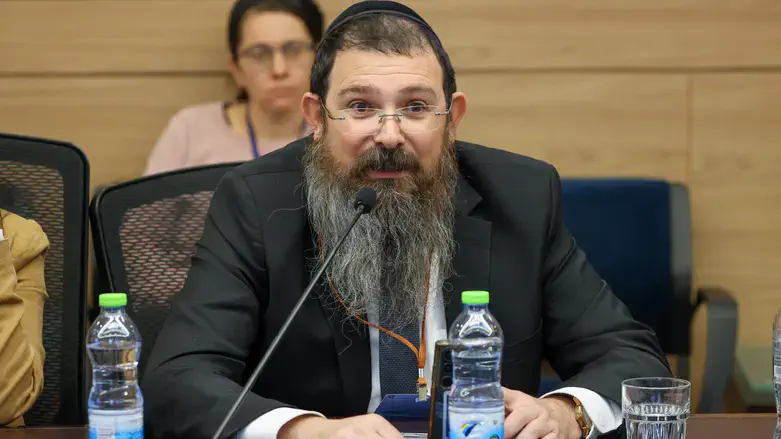
The Knesset Labor and Welfare Committee convened a tense session Sunday to examine the mental health support provided to soldiers who served in the casualty identification units at Shura Base and other sites following the October 7th massacre.
Chaired by MK Michal Woldiger of the Religious Zionism party, the hearing exposed significant gaps in care for Hesder and reservist soldiers who were exposed to traumatic scenes while handling the dead.
Opening the discussion, Woldiger said the state bears a “paramount moral obligation" toward those who carried out what she described as some of the most difficult duties imaginable. She stressed that soldiers who worked with victims’ bodies endured experiences no one should have to face and insisted the state must ensure none are left without support.
The committee focused on roughly 200 Hesder soldiers who served at Shura at the start of the war. Data presented showed that soldiers who served fewer than 45 days are not eligible for in-depth resilience workshops or the “Amit Program," which is designed to help service members transition back to routine life.
Lt. Col. Uriel Zamir explained that during the unpaid portions of the Hesder program spent in Yeshiva, the soldiers are not considered under active military responsibility and instead receive treatment through civilian health funds. He noted that 209 Hesder soldiers were called up to Shura at the war’s outset, 101 of whom were directly involved in handling the deceased.
According to Zamir, in September 2024 the IDF invited participants to a mental resilience workshop. 122 registered and 98 attended, about 47% of those who served at Shura. He added that new support measures are being developed for reservists at the base and would also be extended to Hesder soldiers.
Lt. Col. Uzi Bachor, commander of the Combat Response Unit in the Medical Corps, acknowledged the unique nature of the unit’s work and the trauma involved. He said that while soldiers are in active service they receive support through unit chaplains. After discharge, those without a clinical diagnosis may join the Amit Program for holistic assistance, while those diagnosed with significant symptoms can seek recognition and treatment through the Rehabilitation Department. He conceded that the army must assess whether existing responses are sufficient.
Testimonies from soldiers and reservists highlighted their ongoing distress. Shraga Dehan, a former military rabbi who served at Shura, described the emotional toll. “We entered with one soul and came out with another, broken and aching with the nation’s pain," he said. He emphasized that not only frontline personnel but also cleaners, logistics staff, drivers and technicians were exposed to harrowing sights and smells that “the soul does not forget."
Noam Ron, who served 580 days in reserve at Shura in the C4I section, said she and her colleagues worked seven days a week in treatment rooms at close proximity to the bodies. She reported that only one mental resilience meeting was held early in the war and that she did not encounter a chaplain until July 2025. After persistent requests, a two-day workshop was eventually organized, but she said many issues remain unresolved. “We are asking for a framework that will allow us to start our lives properly," she told the committee.
Capt. (res.) Shmuel Malul, an officer in the northern casualty identification unit, said similar gaps exist outside Shura. His unit, which includes 420 reservists, handled hundreds of fallen soldiers through every stage of the identification and separation process. He personally completed more than 400 consecutive days of reserve duty.
Representatives of advocacy groups also voiced criticism. Yehuda Ish-Shalom of the IDF Disabled Veterans Organization argued that promised programs have not been fully implemented and that Hesder soldiers remain excluded. Shamrit Toviana of the Forum of Women Reservists said many members of the casualty-care system feel “invisible to the system," with some unable to return to work or normal family life.
Woldiger called for immediate inclusion of Hesder soldiers in the Amit Program and a reassessment of the 45-day eligibility threshold. She urged the IDF to coordinate with yeshiva heads to locate those in need of treatment and pressed for accelerated implementation of a dedicated support program for casualty identification units. The committee, she said, expects regular progress reports to ensure that those who carried out this mission receive comprehensive care.