
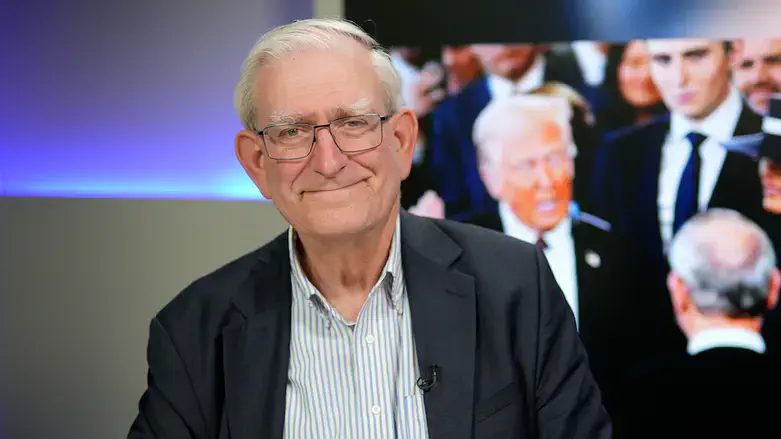
Ahead of Prime Minister Benjamin Netanyahu’s upcoming meeting with US President Donald Trump, Israel National News - Arutz Sheva spoke with attorney Marc Zell, chairman of the Republican Party in Israel, about the key issues expected to be discussed, including Iran, security coordination, and reports that Trump opposes Israeli moves toward sovereignty in Judea and Samaria.
Zell dismisses claims of tension between Jerusalem and Washington. “Every time the Prime Minister travels to Washington, the media talks about pressure or a crisis," he says. “In my view, there is no pressure and no crisis, only very close coordination between Israel and the US. That’s what I hear both here in Israel and from Washington." He believes the meeting is simply another opportunity for coordination of policy and positions between the two leaders.
Addressing the ongoing negotiations between the US and Iran, Zell is highly skeptical. “This is a negotiation that will not lead anywhere," he says. “It’s a last-ditch effort to try to reach some kind of arrangement. Both the Americans and we in Israel know that it’s impossible to reach a sustainable agreement with the Iranian regime." According to Zell, the talks nevertheless serve a political purpose in Washington, allowing the administration to later say it attempted to reach an agreement.
Asked whether the US is making concessions to demonstrate seriousness, Zell says Washington has already taken steps toward Tehran. He notes that the Iranians refused to hold talks in Istanbul, and the US agreed to move them to Oman. “The Americans also agreed to focus primarily on the nuclear issue," he says, stressing that the US did not abandon its other demands, including limits on Iran’s ballistic missile program, severing ties with regional proxies, and demands related to the regime’s treatment of its own citizens.
At the same time, Zell points to signs that the negotiations are not being taken seriously by Tehran. He cites Iranian objections to the inclusion of the CENTCOM commander and Trump’s peace council in the talks, opposition to the presence of US naval vessels in the Persian Gulf, and threats against American ground forces in the Middle East, alongside threats to destroy Israel and drag the region into a broader war. “The Americans understand that this negotiation does not look serious, and they need to prepare for the next serious step," he says.
Zell estimates that discussions in Washington may focus on operational coordination between Israel and the US ahead of a possible strike on Iran. He recalls that in June, assessments pointed to a specific timetable, but events unfolded earlier than expected. “Even in the middle of negotiations, Operation Rising Lion and the US strike began," he says. “Everything is possible."
Turning to reports that President Trump opposes Israeli sovereignty moves in Judea and Samaria, Zell says there is nothing new in such statements. “What Trump said recently is exactly what he said months ago. He is not in favor of formal Israeli annexation in Judea and Samaria," he explains. At the same time, Zell emphasizes that Trump has given a green light to significant developments related to settlement in Judea and Samaria, including the E1 area, and that senior US officials have spoken openly about the rights of the Jewish people in the area.
“Precision is important," Zell says. “He is against formal annexation, but his administration supports our rights in Judea and Samaria and the development of settlement infrastructure there. Trump is trying to balance US relations with the Arab and Muslim world, particularly regarding Gaza, while continuing to support Israel. He’s maneuvering between the drops."
Despite the uncertainty, Zell says he remains optimistic. “We should all be optimistic," he says. “I assume there is an attack on the way, either before or after Ramadan." At the same time, he cautions that Israel must remain alert to the possibility of an Iranian strike, as occurred in June. “We need to be prepared and attentive to the instructions of the Home Front Command," he concludes.