

Following the conclusion of the latest round of US-Iran talks, representatives from both sides have emerged to describe the atmosphere as "positive" and "constructive." For the architects of Western diplomacy, this "good atmosphere" is a victory. For the people of Israel and the broader Middle East, it is a death warrant wrapped in a handshake.
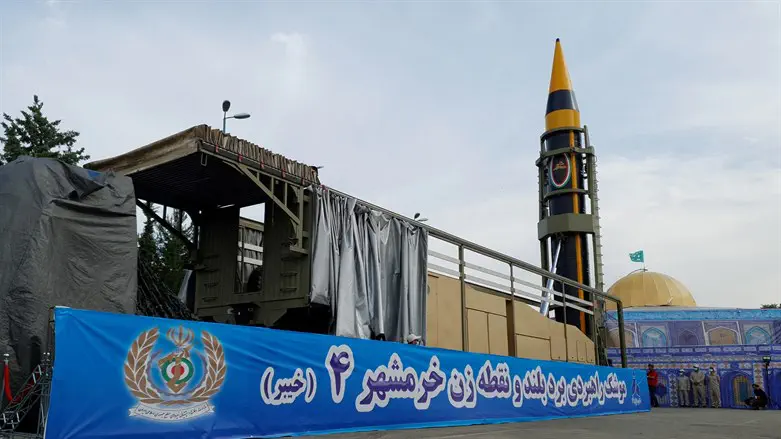
While Washington whispers about a new "nuclear framework" to replace the tattered remains of previous agreements, Iranian Foreign Minister Abbas Araghchi delivered the cold reality from Doha today. With the bluntness that only a regime sensing Western weakness can afford, Araghchi declared that Iran’s ballistic missile program is "non-negotiable."
In those few words, the "Muscat Trap" was sprung.
The Bazaar of Deception
To understand the danger of the current moment, one must look back at the "Bazaar" tactics of 2015. The original JCPOA was built on the fatal conceit that the "fuel" (the uranium) could be separated from the "delivery system" (the missiles). The West chose to treat Iran’s nuclear ambitions as a technical problem to be managed through inspections, rather than a theological and strategic imperative to be dismantled.
History is repeating itself, but with higher stakes. The Iranian regime has spent the last decade perfecting the art of the strategic pause. They offer "transparency" in their aging nuclear facilities while simultaneously perfecting the hypersonic reach of the Fattah missiles. By taking missiles off the negotiating table in Oman, Araghchi has ensured that even a "nuclear-free" Iran remains a nuclear-capable hegemon.
A nuclear warhead without a missile is a paperweight; a precision-guided ballistic missile without a warhead is a conventional threat today and a delivery system for a "dirty bomb" tomorrow. By ignoring the delivery system, the West is effectively granting Tehran a green light to build a nuclear umbrella over the Middle East.
The Missile Gap in Western Logic
The Western obsession with a "freeze-for-freeze" deal-where Iran pauses enrichment in exchange for sanctions relief-ignores the reality of 2026. Iran is no longer a pariah state struggling for spare parts; it is the hub of a global "Axis of Tyrannies," supplying drones to Russia, missiles to the Houthis, and ideology to the streets of Western capitals.
When Araghchi says the missile program is non-negotiable, he is stating that Iran’s ability to strike Tel Aviv, Riyadh, or even Rome is a fundamental pillar of the Islamic Republic’s existence. A deal that leaves this arsenal intact is not a peace treaty; it is a tactical retreat by the West that funds the very weapons designed for its destruction.
The Lesson for Israel
For Israel, the "Muscat Trap" serves as a final, clarifying moment. The lesson of the last decade-and specifically the post-October 7 era-is that Israel cannot, and must not, outsource its existential security to international "guarantees" signed in foreign luxury hotels.
If the world chooses to believe Araghchi’s lies, that is their folly. But Israel does not have the luxury of being wrong. The "Araghchi Doctrine" confirms that the Iranian regime views its survival and its expansion as one and the same. They will not negotiate away the tools of their "Resistance"; they will only negotiate for the time and money needed to perfect them.
The Israeli right has long warned that diplomacy with a regime that calls for your "erasure from the map" is a form of managed surrender. The talks in Oman are the latest iteration of this surrender.
When the West speaks of "de-escalation," Tehran hears "concession." When Washington speaks of "frameworks," Tehran prepares "firepower."
No Room for Ambiguity
The time for diplomatic "understandings" is over. Israel must lead the charge in demanding that any conversation regarding Iran’s nuclear program must begin and end with the total dismantling of its ballistic and drone infrastructure. There can be no "nuclear deal" that does not include the destruction of the silos in Semnan and the factories in Isfahan.
If the "Muscat Trap" is allowed to close, the result will not be a new era of regional peace. Instead, we will see a emboldened Iran, its coffers refilled by sanctions relief, standing behind a wall of non-negotiable missiles, daring the world to stop it.
Israel must remain the sole arbiter of its own red lines. The atmosphere in Oman may be "good," but the reality for the Middle East is a gathering storm. Israel must trust only in its own strength, its own intelligence, and its own resolve to ensure that the "loaded gun" in Tehran is never allowed to fire.
Amine Ayoub, a fellow at the Middle East Forum, is a policy analyst and writer based in Morocco. Follow him on X: @amineayoubx