

The return of Master Sgt. Ran Gvili’s body marked a cathartic and bittersweet moment for the State of Israel. The "hostage file" in Gaza is effectively closed, with no living or dead Israelis remaining in the enclave. While this offers a sense of solemn relief and provides a closure to the agonizing national trauma of the last two years, it also marks a dangerous strategic pivot point. As the primary emotional lever used against the Israeli government by both domestic protesters and international diplomats disappears, Israel now faces an accelerating rush toward "Phase Two" of a U.S.-led reconstruction framework that threatens to "shackle" Israel’s future security.
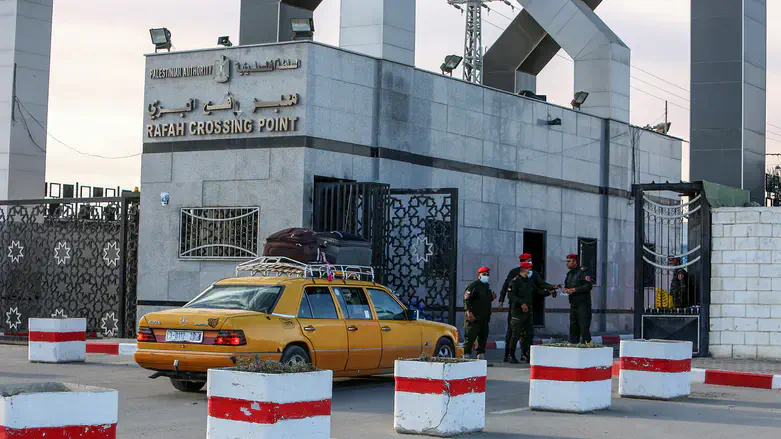
The return of Gvili has removed the final domestic barrier preventing the U.S. administration from pushing for the full reopening of the Rafah Crossing which was accordingly opened on February 1, 2026, and and the initiation, still postponed, of large-scale reconstruction. However, symbolic wins must not be mistaken for strategic victory.
Victory is not defined merely by the return of hostages; it is defined by the total neutralization of the enemy's ability to threaten citizens. This requires three non-negotiable pillars:
1. The absolute neutralization of Hamas’s ability to fire rockets,
2. The elimination of its activists everywhere-from the hills of Judea and Samaria to the luxury hotels of Qatar-and
3. The preservation of Israel's total operational freedom of movement across the Gaza Strip.
Currently, Israel’s control over the future of Gaza appears to be slipping. The Trump administration’s push for a "managed transition" risks leaving an armed Hamas entrenched in "Yellow Zones" while international funds pour into the territory. There is a troubling rise in polarization in global public opinion, where growing segments of the West view the conflict not through the lens of security, but through the lens of delegitimization.
This "existential delegitimization" is more dangerous than the military threats posed by Iran’s missiles or Hezbollah’s drones. It seeks to strip the Jewish state of its fundamental right to self-defense by framing its survival as a moral crime. This sentiment is most pronounced among the younger generation, where propaganda has successfully turned the Palestinian Arab cause into a primary weapon against Western interests.
To secure a true endgame, Israel must move beyond the "deterrence" model that collapsed on October 7 and pursue "absolute victory." Deterrence is a psychological state that can be eroded; victory is a physical reality that cannot be ignored. This means rejecting any reconstruction plan that begins while Hamas remains an armed organization. The proposal for a "technocratic" government is a dangerous fantasy in a region where power grows only from the barrel of a gun. Instead, the enclave requires a transition toward a "police state" model, similar to the stability found in Egypt or Jordan. Under this model, "decent Gazans" who are willing to cooperate with the regional security order would administer daily life-hospitals, schools, and sanitation-under the watchful and uncompromising eye of Israeli security forces.
This approach is not about permanent "occupation" in the traditional sense, but about the "liberation" of the population from a nihilistic cult. The goal of Israeli policy should be to radically increase the percentage of the local population that accepts the existence of the Jewish state. This task cannot even begin as long as the "foul Palestinian Authority" or the remnants of Hamas are viewed as legitimate stakeholders. Peace is not a product of conferences or signatures; it is the result of the enemy accepting that they have lost. Only once the foundational concept of Israeli victory is accepted can any discussion about the future relationship begin.
Israel still retains a potential pathway to asserting its sovereignty through its relationship with the White House, but this requires a concerted effort to convince the American leadership that a "rush toward reconstruction" is actually a recipe for a Hamas revival.
The bittersweet finality of the hostage crisis should not be seen as the signal to wind down the war, but as the moment to intensify the campaign for "organizational finality." Israel must win the war of ideas by insisting that its security cannot be outsourced to international stabilization forces or technocratic committees. The "Iron Wall" remains the only barrier between Western civilization and the advancing anarchy of the Middle East. If Israel is shackled by an unfavorable peace, the "Ring of Fire" that Tehran has built will only continue to grow until it consumes the entire region. Victory is the only exit strategy.
Amine Ayoub, a fellow at the Middle East Forum, is a policy analyst and writer based in Morocco. Follow him on X: @amineayoubxj