
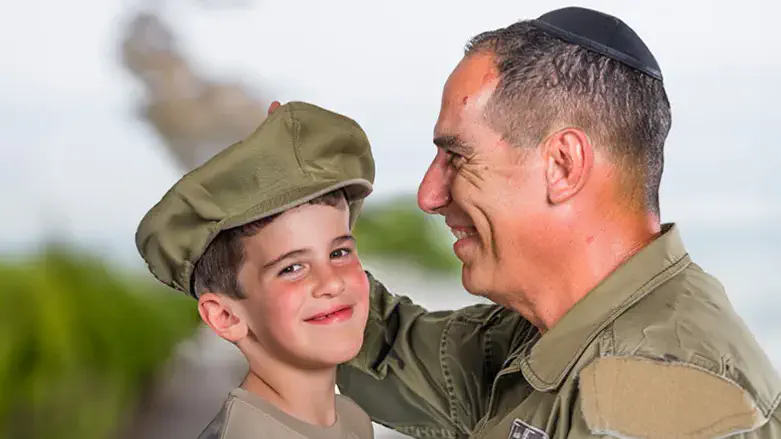
Dedicated to the memory of my great-uncle Alf (Avraham) Tropp, who passed away 12 years ago this Shabbat, 13th Sh’vat 5774 (14th January 2014) at 95 years old. A true mensch, a war-hero who fought in the British Army in the Second World War. Yehi zichro baruch.
It was the best of times, it was the worst of times.
At the time of Parashat Beshallach, the Nation of Israel was very newly liberated from Egyptian slavery, had just lived through the Ten Plagues, had witnessed and experienced G-d’s direct intervention in human affairs for their direct benefit. They stood at the pinnacle of spirituality.
Yet at the same time they were demoralised, at a spiritual ebb. Both the Rambam (Guide for the Perplexed 3:24-32) and the Ibn Ezra (commentary to Exodus 14:13) note the peculiarity that when the Children of Israel stood on the shores of the Red Sea and saw Pharaoh and his army approaching, they were terrified.
Terrified? Terrified of what?! This was no nation of lawyers, doctors, and accountants with hunched shoulders, clutching their briefcases. They were a nation of slaves who had been doing intensely hard physical labour their entire lives. They must have been muscled like gladiators - while the Egyptian Army had just been devastated by the Ten Plagues, had had all their top commanders killed in the final Plague, the Slaying of the Firstborn.
But the Children of Israel, however physically strong they may have been, were still afflicted by their slave mentality. They had just been physically emancipated - but emotionally and spiritually they were still slaves. They were unable to fight for themselves - which was why they would have to spend 40 years in the desert, time for the generation of Egypt to pass away, and a new generation that had never known slavery to arise and fight for their freedom in their Land.
The Haftarah (abstracted from Judges 4:4-5:31) recounts events which happened some two centuries later:
The Children of Israel had been ensconced in their Land for generations, but the Canaanites and their allies were still around, and still sporadically harassing them. There was no unified national leadership in Israel, and such spiritual guidance as existed was provided by the Judges - popularly-appointed arbiters of justice.
One such popular leader was Deborah, Judge and Prophetess, one of the heroes of our Haftarah, whom the Tanach identifies as אֵשֶׁת לַפִּידוֹת (Judges 4:4).
This phrase is highly ambiguous:
The simple meaning is “the wife of Lappidot" (Targum), without however identifying who Lappidot was. The Midrash (Tanna de-Bei Eliyahu 10, s.v. ודבורה אשה נביאה) identifies Lappidot as Barak - who will emerge as the true hero of our Haftarah.
The name לַפִּידוֹת (Lappidot) is the plural form of לַפִּיד (lappid), meaning “fiery torch", similar in meaning to Barak which means “lightning" - hence the identification of Barak with Lappidot, and Deborah as his wife.
The Talmud (Megillah 14a) and the Midrash (Midrash ha-Gadol, Exodus 1:15) understand אֵשֶׁת לַפִּידוֹת to mean “a woman of fiery torches", meaning that she made the wicks which were used in the Sanctuary (which explanation Rashi cites in his commentary to Judges 4:4).
This is consistent with geography: Deborah “dwelt between Ramah and Beit-El in the Mountains of Ephraim" (Judges 4:5) at the time when the Mishkan (Sanctuary or Tabernacle, precursor to the Holy Temple) was located in Shiloh, also in the Mountains of Ephraim, just 16 km (10 miles) to the north and a little east of her home-town.
Metzudat David explains אֵשֶׁת לַפִּידוֹת to mean “a woman of valour, swift of actions like a burning torch".
Indeed the Ba’al ha-Turim (Rabbi Ya’akov ben Asher, Germany and Spain, c.1275-1343) notes that the word וְשָׂרַי appears twice in the Tanach: the first time with the meaning “and Sarai", in the verse “And Sarai, Abram’s wife, had not borne him children" (Genesis 16:1), and the second time in Deborah’s Song of Victory, “וְשָׂרַי, and the Princes of Yissachar were with Deborah" (Judges 5:15).
The Ba’al ha-Turim deduces from this that Deborah was just as important as Sarah (commentary to Genesis 16:1)
It was Deborah, the Judge and Prophetess, אֵשֶׁת לַפִּידוֹת (however we choose to understand the term), who summoned the Judge Barak to war by exhorting him:
“Did Hashem, G-d of Israel, not command: Go to Mount Tabor, drawing with you ten thousand men of the Tribes of Naftali and Zevulun? And I will draw Sisera, commander of Yavin’s army, with his chariots and all his hordes, to you at the Kishon River, and I will deliver him into your hand" (Judges 4:6-7).
This is a war which was to happen in the north of Israel:
Mount Tabor is in the Galilee, about 18 km (11 miles) east of the Kinneret, in the territory of the Tribe of Yissachar.
The source of the Kishon River is in Mount Gilboa, 22 km (14 miles) due south of Mount Tabor, also in the territory of Yissachar. From there the Kishon flows to the Mediterranean Sea at Haifa Bay, 53 km (33 miles) north-west, where it marks the border between the Tribes of Zevulun (north of the river) and Menashe (south of the river). The river’s meandering course makes it 70 km (43 miles) long.
When Deborah mobilised Barak to command this campaign, his response to her was:
“If you will go with me then I will go; but if you don’t go with me, I won’t go" (Judges 4:8).
Deborah’s response to Barak was:
“I will certainly go with you! However - you will get no glory for your journey, because it will be into a woman’s hand that Hashem will deliver Sisera" (v. 9).
So off they went to war together, and G-d indeed gave the victory to two women: it was Yael, the wife of Heber the Kenite, who killed Sisera in her tent (vs. 17-21), and it was Deborah who was remembered and celebrated as the victor of the war.
Our Haftarah records her song of victory, opening with the words:
וַתָּשַׁר דְּבוֹרָה וּבָרָק בֶּן־אֲבִינֹעַם בַּיּוֹם הַהוּא לֵאמֹר:
This is usually translated as “Then Deborah and Barak, son of Avinoam, sang this song…" (Judges 5:1), but this translation is wrong: the Hebrew verb וַתָּשַׁר is feminine, “she sang"; hence a more accurate translation would be “Then Deborah sang this song, as did Barak…".
The Tanach unequivocally gives the main credit for this victory to Deborah, as she had told Barak would happen. The nation as a whole hailed Deborah as the heroine of the war, not Barak.
The Ba’al ha-Turim (apparently following the Bamidbar Rabbah 14:11) notes an oblique prophetic reference to this war in the blessings which Jacob conferred on his sons, progenitors of the Tribes, on his death-bed, specifically in his blessing to Naphtali:
נַפְתָּלִי אַיָּלָה שְׁלֻחָה הַנֹּתֵן אִמְרֵי־שָׁפֶר:
“Naphtali is a hind sent forth, giving beautiful words" (Genesis 49:21).
Says the Ba’al ha-Turim: “He prophesied about Barak’s war against Sisera, when he took ten thousand [warriors] from Naphtali. And he used the feminine form for ‘a hind sent forth’ to honour Deborah" (commentary to Genesis 49:21).
And he continues that the phrase “giving beautiful words" refers to Deborah’s song: the initial letters of אַיָּלָה שְׁלֻחָה הַנֹּתֵן give the word אִשָּׁה, “woman".
And this was Barak’s greatness:
Why was he so insistent that he would only go to war if Deborah would accompany him? He certainly didn’t need her physical strength to wage war: he had 10,000 armed soldiers, so one more woman wasn’t going to make the difference between victory and defeat.
He knew that for Israel, success and victory depend upon our spiritual strength, not our physical might: “Some rely on chariots and some on horses - and we call on the Name of Hashem; they buckle and collapse - while we arise and are strengthened. Hashem saves! The King will answer on the day that we call" (Psalms 20:8-10).
So, knowing that Israelite victory in this war depended upon our connexion with G-d, Barak insisted on being accompanied by a Prophetess. Not by muscle-bound warriors, not by skilled archers, not by seasoned veterans, but by a Prophetess.
It mattered not to him that the forthcoming victory would be ascribed to a woman. He didn’t fight for his own fame or vainglory, he wasn’t seeking medals or honour. He was fighting for Jewish freedom and sovereignty, for Kiddush Hashem (Sanctification of the name of G-d), for truth.
We saw earlier that, according to the Ba’al ha-Turim, Deborah was as important as our mother Sarah. The Midrash (Bereishit Rabbah 40:4) cites Rabbi Pinchas, who cited Rabbi Avon [1] as saying that “there were two people who were central yet who made themselves of minor importance: Abraham and Barak".
We won’t hear of Barak again throughout the Tanach. He led his nation to victory in a war, Deborah mentioned him twice in her song of victory - and then he disappeared from history. If he did anything subsequently, the Tanach keeps quiet about it.
Maybe he was content with his one magnificent victory, and then retired into obscurity.
This is the greatest tribute to a true hero: the man who led Israel to victory, who defeated the enemy nations who were oppressing us - and never requested recognition, honour, prestige, or wealth as his reward. As humble and as self-effacing as our father Abraham himself.
This is the profile of a Jewish hero.
Endnote
[1] It is unclear who Rabbi Avon was. There were three rabbis called Avon: Rabbi Avon bar Chiyya, a 4th-generation Israeli Amora; Rabbi Avon the Levi, also a 4th-generation Israeli Amora; and Rabbi Avon bar Bisna, a 5th-generation Israeli Amora. Rabbi Pinchas was a 5th-generation Israeli Amora, so he could have been citing any of them.