
The Knesset Education Committee convened a special session on Sunday to examine Israel’s preparedness for large-scale events involving Israeli citizens held abroad.
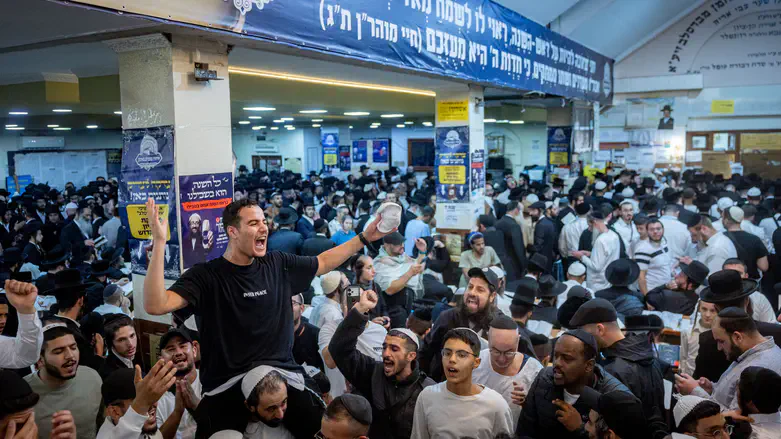
The discussion, initiated by committee chairman MK Tzvi Succot (Religious Zionist Party), centered on the annual mass pilgrimage of Breslov Hasidim to Uman, Ukraine, ahead of Rosh Hashanah. However, the conversation broadened to address the state’s overall responsibility toward tens of thousands of Israelis attending cultural, sporting, and religious events around the world.
The meeting was attended by representatives from the Foreign Ministry, the Ministry of Diaspora Affairs, the Culture and Sport Ministry, the Justice Ministry, and the National Security Council, alongside representatives of the Breslov Hasidic movement. Participants noted that there is currently no single government authority responsible for coordinating preparations for such mass events, and that significant gaps exist between the needs on the ground and the state’s response.
A representative of the Breslov Union criticized the authorities’ conduct, saying that a comprehensive system is needed to address consular and diplomatic aspects. “The state always remembers us at the last minute," he said. “If we were not proactive, we would not even receive the minimal assistance that exists today."
MK Succot described the situation as troubling, stating, “This is a large and significant event that currently lacks an organized state response. There are deficiencies in public order arrangements, consular services, medical support, and interministerial coordination. There is no single government body managing these events professionally, and this is a situation the state must fix. We will continue to monitor the implementation of the conclusions and develop clear operational recommendations for the government. The era of last-minute preparations must come to an end."
Government representatives pointed to steps taken in recent years, including the operation of a consular command center in Uman, coordination with Ukrainian security forces, the issuance of travel warnings, and preparations for additional events abroad. However, public representatives argued that these measures are implemented only after prolonged pressure and not as part of systematic, forward-looking planning.
During the discussion, participants called for the establishment of a permanent government mechanism to oversee all aspects of such events, including personal security, medical services, consular and diplomatic support, and border-related challenges.