
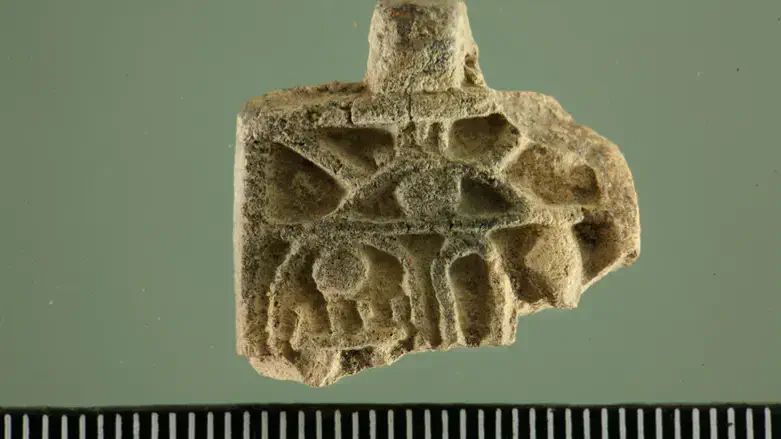
Parashat Bo opens with G-d telling Moshe to warn Pharaoh of the impending Plague of Locusts. There are still three plagues to come: Locusts, Darkness, and the Slaying of the Firstborn.
Parashat Bo concludes with the Children of Israel, a free nation, triumphantly exiting Egypt in a blaze of glory having despoiled it, leaving the erstwhile slave-house “like a bird-trap without grain" in Rabbi Ammi’s graphic metaphor, or “like the depths of the ocean in which there are no fishes" as Reish Lakish equally graphically described it (Berachot 9b).
(The Hebrew phrases have a beautiful euphony:כִּמְצוּדָה שֶׁאֵין בָּהּ דָּגָן. ... כִּמְצוּלָה שֶׁאֵין בָּהּ דָּגִים.)
The Haftarah for Parashat Bo is abstracted from Jeremiah 46:13-28 - appropriately for a riposte to the Parashah, a prophecy directed against Egypt:
“The word which Hashem spoke to Jeremiah the Prophet, that Nebuchadnezzar, King of Babylon, was to strike Egypt: Proclaim it in Egypt, make it heard in Migdol and make it heard in Noph and in Tahpanhes! Say: Stand erect and prepare yourself for the sword that will devour your surroundings".
Migdol was a fortress-town on Egypt’s eastern border, associated with Ba’al-Tzephon (vide Numbers 33:7), on the edge of the Sinai Desert. Ba’al-Tzephon, literally “the Lord of the North", was the Egyptian god who protected Egypt’s northern approaches - both the coastal road along the northern edge of the Sinai Desert and Egypt’s northern coastline, protecting the country’s crucial maritime trade.
Noph is the Tanachic name for Menefer (which the Greeks would later rename Memphis), the capital and most important city of ancient Lower Egypt, located on the west bank of the River Nile, 21 km (13 miles) south of Cairo, the present-day capital of Egypt.
The ancient Egyptian name Menefer connotes “enduring" or “beautiful"; the city was considered sacred to the god P’tah, one of the chief gods of Egypt, the god who created the world and the other gods.
Indeed so dominant was P’tah that the temple dedicated to him in Menefer, called Hut-Ka-P’tah, the Shrine of the Soul of P’tah, morphed into Greek as “Aiguptos", which is the origin of the modern name “Egypt".
Tahpanhes was a garrison-city on the Egypt’s eastern border, on the edge of the Sinai Desert, built by Pharaoh Psamtik I (first pharaoh of the 26th Dynasty, 664-610 B.C.E.).
So when the Prophet Jeremiah called for his prophecies of Egypt’s eventual destruction to be broadcast in Migdol, Noph, and Tahpanhes, he was prophesying Egypt’s economic, religious, societal, and military collapse in the future.
Just as Egypt collapsed economically, religiously, societally, and militarily over the course of the ten Plagues, the Exodus, and the Splitting of the Red Sea (in next week’s parashah).
The Prophet continues with the theme of Noph:
“Equip yourself with what you will need for exile, O daughter who dwells in the land of Egypt; for Noph will become a desolation, a scorched wasteland without inhabitants. Egypt is a beautiful calf - but the destroyer from the north is assuredly coming" (Jeremiah 46:19-20).
The Ba’al ha-Turim (Rabbi Ya’akov ben Asher, Germany and Spain, c.1275-1343) posits that the Prophet’s depiction of Egypt as “a beautiful calf" is an oblique reference to Pharaoh’s dream of seven fat cows emerging from the River Nile, followed by seven scrawny cows who also emerged from the Nile and devoured them (commentary to Genesis 41:2).
The Ba’al ha-Turim continues by positing that these seven cows correspond to the seven nations which are the descendants of Mitzrayim (Egypt): Ludim, Anamim, Lehabim, Naphtuhim, Pathrusim, Casluhim, and Caphtorim (Genesis 10:13-14).
We noted above that the god most directly associated with Noph was P’tah, and that the name of his temple, Hut-Ka-P’tah, is the origin of the modern name for the entire country, Egypt. We also noted that the Egyptian name for Noph, Menefer, connotes “beautiful".
So the Prophet’s words foretelling the destruction of this “beautiful calf" is exceptionally powerful.
The Haftarah concludes with words of comfort and reassurance to Israel:
“As for you - do not fear, O My servant Jacob, and do not be demoralised, O Israel, because behold I will save you from afar, and your seed from the land of their captivity; and Jacob will return, he will be calm and tranquil, with none to terrorise him. You - do not fear, O My servant Jacob, says Hashem, because I am with you; though I put an end to all the nations to whom I have banished you, to you I will put an end. Though I chastise you with justice, I will never eliminate you completely" (Jeremiah 46:27-28).
(This final phrase is often mistranslated “I will not leave you unpunished". This is a terrible rendering, which originated with Christian Bible translators who were unfamiliar with Hebrew idiom. The words וְנַקֵּה לֹא אֲנַקֶּֽךּ mean “I will not eliminate you completely". Unfortunately, this misunderstanding has found its way into too many Jewish translations of the Tanach.)
These two verses which conclude this prophecy are an almost word-for-word repetition of Jeremiah 30:10-11, which concludes one of his many prophecies of the Messianic era.
It is intriguing that the Prophet uses the almost identical words to conclude two different prophecies - Israel’s future redemption and Egypt’s downfall.
The inference is inescapable: the downfall of the oppressor and Israel’s redemption are one and the same.
This goes right back to the first redemption, the redemption from Egypt. The ten Plagues, the destruction of Egypt, the punishment that G-d meted out to the tyrant, was an inevitable component of our redemption.
The Exodus and the drowning of the Egyptians in the Red Sea were one and the same thing.
As with the first redemption, so with the final redemption, the redemption which we are living in our days as we return home. Israel’s return to its Land and the destruction of evil have to occur together. The one without the other is an incomplete process.
As the wisest man who ever lived, King Solomon, said: “At the good fortune of the righteous the city rejoices - and at the destruction of the wicked is joyous song" (Proverbs 11:10).