
Dr. Rafael Medoff is founding director of The David S. Wyman Institute for Holocaust Studies and author of more than 20 books about Jewish history and the Holocaust. His latest is America and the Holocaust: A Documentary History, published by the Jewish Publication Society & University of Nebraska Press.
Hamas terrorists “were born with rifles in their hands," President Trump said this week, to dramatize the difficulty-and necessity-of disarming them.
But that rhetorical flourish also raises an important question: just where did Hamas obtain its weapons in the first place?
One source was Iran. In January 2002, the Israeli navy intercepted the Karine A, a ship carrying 50 tons (!) of Iranian weapons that Yasir Arafat was trying to bring into Gaza.
The Karine A was captured, but one may assume that other such ships got through-and that Arafat gave some of those weapons to Hamas, since the Palestinian Authority leadership, then and now, has always regarded Hamas as its ally, not its enemy.
Unfortunately, the U.S. and its European partners were busy seeking deals with Iran instead of confronting Tehran and stopping the flow of weapons to terrorist groups.
A second source of guns for Hamas was the smuggling of weapons from Sudan and Libya, through tunnels that Hamas built along the Gaza-Egypt border.
The Egyptian authorities could have shut down those tunnels long ago. But Egypt’s allies-including the U.S., which gives Egypt $1.5-billion in aid annually-didn’t press the matter.
A third major source was Hamas manufacturing its own weapons. How did it keep that activity secret from Israel’s drones and other surveillance? By setting up weapons production facilities in the tunnels it built under Gaza.
And how were those tunnels built? Former U.S. Mideast envoy Dennis Ross explained it in a Washington Post op-ed on Aug. 8, 2014.
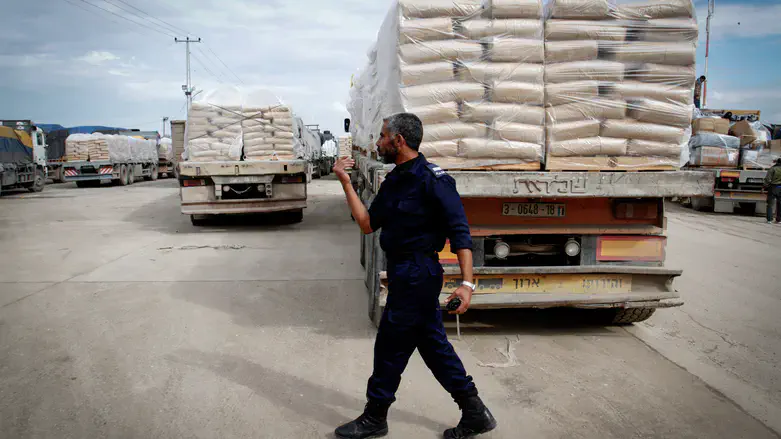
Ross described how, at the behest of then-Secretary of State Hilary Clinton, he urged Israel to allow Hamas to import cement. He did so even though he knew that Hamas had been using cement for military purposes.
“At times," Ross wrote, “I argued with Israeli leaders and security officials, telling them they needed to allow more construction materials, including cement, into Gaza so that housing, schools and basic infrastructure could be built." The Israelis “countered that Hamas would misuse it," but in the end, they succumbed to Ross’s pressure and allowed Hamas to import cement. The rest is history.
In short, the arming of Hamas was preventable-if the U.S. and the international community had cared enough to prevent it. Will they prevent it from happening again?