

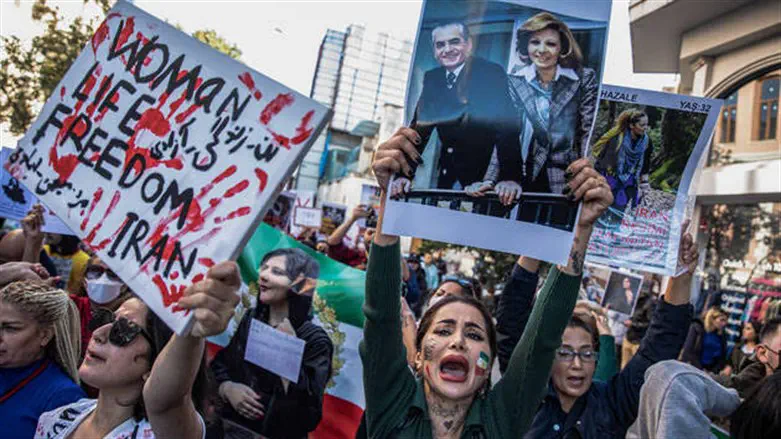
The streets of Iran have transformed into a visceral battlefield, where the traditional boundaries of Middle Eastern geopolitics are being rewritten in real-time. What began as a localized economic protest against soaring inflation, a collapsing currency, and systemic kleptocracy has snowballed into the most significant existential threat to the Islamic Republic since the 1979 Revolution.
Thousands of Iranians have poured into the streets, not merely demanding bread, but demanding the dismantling of a theocracy. In return, they have been met with a scorched-earth policy of state repression: internet blackouts, mass disappearances, and a lethal use of force that has claimed thousands of lives.
Yet, as the smoke clears from the plazas of Tehran and Isfahan, a startling moral and political asymmetry has emerged. While the broader Muslim world remains paralyzed by silence or strategic indifference, the Iranian people have begun to look toward an unlikely beacon of support: Israel.
The Great Ideological Divorce
For over four decades, the Iranian regime has staked its legitimacy on the export of "Islamic Revolution" and a virulent, state-mandated hatred of the "Zionist Entity." The "Death to Israel" chant was intended to be the heartbeat of the nation’s identity. However, the current wave of unrest reveals that this ideological foundation has crumbled.
Videos circulating on social media show a paradigm shift that would have been unthinkable a decade ago. Protesters are filmed carefully walking around Israeli and American flags painted on the ground-flags the regime placed there specifically to be trampled. Instead of burning the Star of David, Iranians are holding handmade signs addressed to Prime Minister Benjamin Netanyahu. They are calling for "regime change" and openly identifying the Islamic Revolutionary Guard Corps (IRGC), not the Mossad, as their true oppressor.
By naming Israel and the United States as their desired partners, the Iranian youth are performing a radical act of domestic subversion. They are telling the world that they no longer view the "Little Satan" as an enemy, but as a potential lifeline against a domestic "occupier."
The Deafening Silence of the Ummah
In contrast to this domestic bravery, the international response from Islamic institutions has been characterized by a profound and troubling vacuum. The Organization of Islamic Cooperation (OIC), which frequently convenes emergency sessions to condemn perceived slights against Islam or territorial disputes involving Israel, has remained largely mute regarding the slaughter of fellow Muslims in Iran.
This silence is not merely a matter of diplomatic protocol; it is a calculated byproduct of regional realpolitik. Many Arab capitals fear that vocal support for Iranian protesters could provoke the IRGC to activate its "Grey Zone" proxies-Hezbollah in Lebanon, the Houthis in Yemen, or militias in Iraq-against them. Others, particularly those with their own records of stifling dissent, are loath to validate a popular uprising that demands democratic accountability.
This creates a bitter irony: the very "Islamic Solidarity" that Tehran claims to lead has failed its own people. For the Iranian student or shopkeeper facing down a Basij paramilitary member, the lack of support from neighboring Muslim nations feels like a profound betrayal of the Ummah. While the regional status quo is maintained through silence, the moral authority of these Islamic institutions is being permanently eroded in the eyes of the Iranian public.
Israel’s Strategic and Moral Outreach
In this vacuum, Israel has emerged as the most vocal advocate for the Iranian people. Israeli leadership has broken sharply from traditional diplomatic norms, which usually dictate a "wait and see" approach to internal foreign unrest. Instead, Prime Minister Netanyahu and other high-ranking officials have released direct-to-camera messages in Persian, bypassing the regime to speak directly to the "noble Iranian people."
Israel’s messaging emphasizes a shared history-recalling the era before 1979 when the two nations enjoyed a fruitful partnership-and a shared future. From a strategic standpoint, Israel recognizes that the greatest threat to its security is the current clerical regime; conversely, its greatest potential regional ally is a secular, democratic Iran. By acknowledging the courage of the protesters, Israel is engaging in a sophisticated form of public diplomacy that seeks to build a bridge to the "day after" the mullahs.
A Litmus Test for the Region
The protests in Iran have become a litmus test for the moral and political future of the Middle East. The failure of the Muslim world to rally behind a population confronting a brutal autocracy suggests that "Islamic Unity" is often a hollow slogan used for political leverage rather than a genuine commitment to human rights.
For the ordinary Iranians who are currently risking execution, the world has been divided into two camps: those who watch in silence and those who acknowledge their struggle. The fact that Israel-the regime’s ultimate boogeyman-is the country providing the loudest moral support is a historical irony that will have long-lasting consequences.
It suggests that the future of the Middle East may not be defined by the old religious and ethnic fault lines, but by a new divide between those who cling to oppressive theocracies and those who yearn for a modern, integrated, and free region.
Amine Ayoub, a fellow at the Middle East Forum, is a policy analyst and writer based in Morocco. Follow him on X: @amineayoubx