

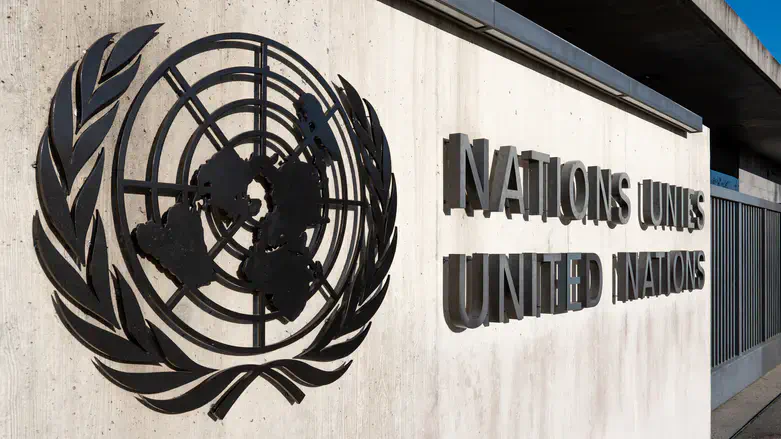
Israel’s ongoing War of Redemption has forced a fundamental reassessment of the assumptions that shaped its pre-October 7 strategic posture. Chief among these discarded illusions is the belief that international approval is a prerequisite for national security. That mindset, long known as the “Conceptzia," collapsed alongside the border fence. In its place has emerged a doctrine rooted in sovereignty, clarity, and victory, a shift formalized when Foreign Minister Gideon Sa’ar ordered Israel’s withdrawal from several United Nations bodies that have become engines of institutional hostility rather than vehicles for peace.
This decision reflects a broader recognition that much of the contemporary international system no longer functions as a neutral arbiter of disputes. Instead, it has evolved into a political battlefield where legitimacy is weaponized against democratic states confronting asymmetric warfare. Following the United States’ own withdrawal from dozens of global organizations that had drifted from their original mandates, Israel is signaling that it will no longer subsidize institutions that treat its self-defense as a moral failing.
Conflicts end only when rejectionism is defeated, not accommodated. Yet for decades, international agencies have done precisely the opposite, cushioning rejectionist actors from accountability while constraining Israel’s freedom of action.
The specific organizations Israel has abandoned illustrate this structural rot. The U.N. Alliance of Civilizations has systematically excluded Israel while offering platforms to states and movements that deny its legitimacy altogether.
-U.N. Energy has become a bloated and largely symbolic bureaucracy, disconnected from the strategic realities of a region in which Israel is now a major natural gas exporter to Egypt and Jordan. '
-The Global Forum on Migration and Development goes further still, promoting an ideological framework that erodes the sovereignty of nation-states by challenging their right to enforce borders, define citizenship, and prioritize national cohesion.
Disengaging from these bodies is not isolationism. It is an act of strategic hygiene, a refusal to fund mechanisms that undermine the very concept of democratic self-determination.
This diplomatic realignment is inseparable from Israel’s evolving military and security doctrine. In Gaza, Israel has decisively abandoned the failed model of disengagement and containment. The IDF’s sustained control over key areas of the Strip reflects a hard-earned lesson: reconstruction without victory simply rebuilds the infrastructure of the next war.
Proposals for a post-conflict governance framework centered on a Board of Peace, potentially involving international figures but explicitly excluding the U.N., represent an attempt to break the cycle whereby humanitarian structures are captured by terrorist organizations. And Israel has rejected Trump's first proposal for that board.
The goal is not perpetual occupation, but the denial of political oxygen to groups that thrive on chaos and international indulgence.
Nowhere is the moral and operational bankruptcy of the old system clearer than in the case of UNRWA. Israel’s decision to bar the agency from operating within its territory followed mounting evidence that it functioned not as a neutral humanitarian body but as an enabler of Hamas’s dominance in Gaza. The forced dismissal of hundreds of UNRWA employees amid financial collapse is not an unfortunate accident; it is the consequence of years of institutional failure and complicity. Testimonies from freed Israeli hostages describing indifference from senior U.N. officials toward sexual violence and other atrocities committed against them further expose the depth of the system’s moral decay.
Crucially, Israel’s pivot away from multilateral dependency has been matched by a renewed investment in national resilience. The 2026 state budget prioritizes innovation, defense integration, and human capital, including significant funding for venture capital, advanced technologies, and accelerated pathways for new immigrants into reserve military service. These initiatives reflect a state focused on strengthening its internal foundations rather than outsourcing legitimacy to hostile or indifferent bureaucracies abroad.
This assertion of control extends to sensitive internal flashpoints. As Ramadan approaches, Israeli authorities have made clear that sovereignty will be enforced at sites such as the Temple Mount to prevent their exploitation as stages for political violence. This is not provocation but prevention. It is the domestic counterpart to Israel’s diplomatic disengagement from institutions that have consistently failed to curb incitement or uphold their own standards.
By severing ties with institutions that reward rejectionism and embracing a doctrine grounded in sovereignty and deterrence, Israel is not retreating from the world. It is asserting its right to shape its future on its own terms, as a secure, victorious, and unapologetically Jewish state.
Amine Ayoub, a fellow at the Middle East Forum, is a policy analyst and writer based in Morocco. Follow him on X: @amineayoubx